The Blog.
Essays and analysis on content automation, repurposing, publishing workflows and the systems underneath them — the applied version of what we build. We write because sharing what we know makes us better at what we do. These aren't marketing posts built to sell you something. They're genuine attempts to understand hard topics and pass on what we learn. For the same thinking as a finished, working system, read the case studies.
Higgsfield AI Text in Generated Video
Generated video draws letters as shapes, so a sign or a label can look right in one frame and wrong in the next. This guide covers where text goes wrong and where it should be added instead.
ReadHiggsfield AI for Agency Client Work
Agencies that make generated visuals for clients inherit questions most tools never answer for them. This guide reads Higgsfield's own terms and help pages on accounts, workspaces, credits, outputs and deletion.
ReadHiggsfield AI Video for a LinkedIn Company Page
Generated video can work on a LinkedIn company page when it explains something the business really does. This guide covers the job it suits, LinkedIn's own specs and captions, and the content credentials label.
ReadWhich Higgsfield Model to Use for Each Business Content Job
Higgsfield offers many model families, and each is good at something different. The right choice starts from the job the content has to do, not from the model the team used last time.
ReadHiggsfield AI Avatar Videos for Business: Spokesperson or Fake Testimonial?
An AI presenter reading the menu is a spokesperson. The same presenter saying it lost weight on the menu is a customer who does not exist. The script decides which one you made.
ReadHiggsfield Image to Video Workflow: Animate an Approved Still Without Losing It
The still was approved. The clip made from it was not, and a few seconds of motion can change the shape, the surface and the details the approval was about.
ReadHiggsfield Soul ID for Brands: One Recurring AI Character, Kept Consistent and Honest
A brand character that looks the same in every post is easy to make now. Making it honest, and keeping it honest as the posts pile up, is the part that takes a plan.
ReadHiggsfield AI Video Workflow Audit: Ready to Scale, or Ready to Multiply Mistakes?
Scaling an AI video workflow multiplies whatever it already does, good or bad. A six-part audit with evidence shows which it is before the volume goes up.
ReadHiggsfield AI Clip vs Source Video: Does It Still Say What Happened?
When a real video becomes a generated clip, the clip can add a cleaner floor, a bigger team or a faster job than the original ever showed. A claim audit catches it.
ReadHiggsfield AI Generated Media Rights: What to Check Before Posting
A generated image can be yours to use commercially and still not be safe to post. The gap is everything that went into it and everyone who appears in it.
ReadHiggsfield AI Explainer Storyboard: Turn a Blog Diagram Into Video
A diagram lets the reader look in any order. A video decides the order for them. Turning one into the other is mostly a decision about sequence, labels and what the motion is allowed to add.
ReadHiggsfield AI vs Real Video: When the Founder Must Be on Camera
A generated presenter can say anything, which is exactly why it cannot prove anything. Four kinds of content need a real recording; everything else is a choice.
ReadHiggsfield AI Brand Asset Library: Name, Store and Reuse Approved Visuals
A shared drive full of generated images is not a library. A naming scheme, a folder taxonomy and a usage record turn approved visuals into assets the next post can safely reuse.
ReadHiggsfield AI n8n Workflow: What n8n Should Do With Every Export
n8n has no Higgsfield node, and it does not need one. What it needs is a clear job: name the export, record it, tell the reviewer, and never publish what nobody approved.
ReadHiggsfield AI Product Visual Accuracy: Keep the Product Exactly as It Is
Generated product shots drift in predictable ways. Real reference photos and a four-part check, shape, feature, label and packaging, stop the product changing before anyone sees it.
ReadHiggsfield AI TikTok Visual Testing Without Chasing Every Trend
Most TikTok visual tests change five things at once and learn nothing. A matrix that changes one visual per row, on the same idea, turns a guess into a result.
ReadHiggsfield AI YouTube Thumbnail Concepts That Keep the Video's Promise
A generated thumbnail can promise almost anything, and YouTube treats a thumbnail that misleads as a policy problem. Start from what the video really delivers.
ReadHiggsfield AI Video Approval Workflow: The QA Form Every Generated Clip Passes
A generated clip can pass a glance and still show a result nobody had or a hand with six fingers. One QA form per asset, with a named approver, catches it before it is public.
ReadHiggsfield AI Images for a Medium Article: One Image per Section It Clarifies
Medium's own rules ask for images that add value, alt text, credits and a caption on any AI image. Here is how to match each generated image to the section it clarifies.
ReadHiggsfield AI Content Variations: Three Versions, One Message
Variations are useful until one of them starts saying something new. Lock the claim and the product facts, vary only the picture, and check every version against one brief.
ReadHiggsfield AI Prompt Library: Keep the Prompts That Worked, With Their Records
The prompt that made last month's best image is usually lost in a chat or a history tab. A prompt library keeps each one with the record that makes it safe to reuse.
ReadHiggsfield AI Storyboard Workflow: Approve the Story Before You Pay for Video
Video is the expensive step to redo. A storyboard of four, six or eight frames, each tied to a line of the script, lets a short be fixed while it is still cheap.
ReadHiggsfield AI Visual Style Workflow: One Style Brief for a Whole Campaign
A campaign generated asset by asset drifts into several looks. A one-page style brief, built from a reference board, keeps every Higgsfield output in one brand.
ReadHiggsfield AI vs Stock Footage: Which Content Jobs Need Generated Visuals?
When a business video needs a shot it cannot film, Higgsfield and a stock library answer different questions. Four tests decide which one each shot needs.
ReadHiggsfield AI Visual Brief Workflow: From a Finished Article to an Approved Asset
How to turn a finished article into a visual brief Higgsfield can work from: audience, scene, message and the claims the picture must not make.
ReadSubstack Newsletter Workflow Audit: Score the System Before You Send More Often
Sending more often is a decision about the workflow, not the calendar. A scored audit of six areas, with the evidence each score needs, before a newsletter increases its cadence.
ReadSubstack Newsletter Process Documentation: A Handover Guide So the Newsletter Is Not One Person
A newsletter run by one person stops when they do. What a Substack handover guide records: ownership, recovery, roles, sources, the send routine and how to recover a failed issue.
ReadSubstack Newsletter Correction Policy: What to Do When a Sent Issue Is Wrong
A sent issue cannot be unsent. How to fix a wrong link or an outdated fact on Substack, tell the readers who saw it, and keep a version log that shows what changed.
ReadSubstack Research-to-Content Workflow: One Source Sheet, an Issue and a Website Article
One piece of research, two readers: how a dated source sheet feeds a Substack issue for subscribers and a website article for search readers, each with its own structure.
ReadSubstack n8n Newsletter Workflow: Intake, Drafts and Reminders, With a Person Sending
Substack has no n8n node and no publishing API, so n8n carries everything around the send: intake, the drafting run, approval, reminders and the check that the issue went out.
ReadSubstack Newsletter vs Promotional Email: Keep the Issue and the Offer Apart
An issue teaches, an offer asks. How a business keeps the two apart on Substack: purpose labels, direct emails for offers, consent, the inbox, and a taproom brewery’s three outlines.
ReadSubstack Newsletter Archive Structure: Built for the Reader Who Arrives Late
A newsletter archive in date order shows a new reader last week's issue. The homepage, a pinned post and a few tags decide where they start.
ReadSubstack Brand Voice Guidelines: A Company's Rules for a Personal Medium
Substack is built around people: sender names, bylines, profiles, Notes. A company newsletter needs written rules for whose voice it is.
ReadSubstack Newsletter Performance Measurement: Audience Numbers and Workflow Quality
Substack measures what readers did with an issue, not whether it went out on time or needed a correction. A newsletter needs both ledgers.
ReadSubstack Evergreen Content Update: Edit It, Send a New Issue, or Leave It
An edit to an old Substack issue never reaches the inbox, and the date field moves to any day. Each old issue needs a rule: edit, new issue or leave it.
ReadSubstack Audience Question Research: Where Readers Already Ask
Replies, hidden comments, Chat, the New Reader survey and sales calls all hold questions. One queue keeps them, in the asker's words.
ReadSubstack Podcast to Newsletter: Publish the Episode, Then Write the Letter
A Substack episode already carries its own transcript. The letter should carry one idea from it, written to be read, with a link back.
ReadSubstack Newsletter QA Checklist: Check How the Issue Arrives Before You Send It
Gmail clips an email over about 102KB, and links and images count toward it. Check how the issue will arrive before it is sent.
ReadSubstack Newsletter Sections Strategy: When a Second Group of Readers Earns Its Own Stream
A Substack section is a second newsletter readers choose. Create one only when a group of readers wants its own stream, not just its own topic.
ReadSubstack Welcome Email Content: Four Emails and the Pages That Finish the Welcome
Substack sends one welcome email, not a sequence. Write the four versions, then let the welcome page, About page and a start-here post do the rest.
ReadSubstack Publishing Approval Workflow: Who Drafts, Who Approves, Who Presses Publish
On Substack a Contributor can publish a draft, so approval has to be a written rule: who drafts, who approves and who presses publish.
ReadSubstack Newsletter Fact-Checking: Check Every Claim When You Schedule, and Again Before It Sends
A scheduled issue can wait weeks before it sends. Check every claim when you schedule it, and re-check dated facts the day before.
ReadSubstack Voice Note to Newsletter: Turn a Founder’s Phone Memos Into a Reviewed Issue
Turn a founder’s two-minute phone memos into a Substack issue, with every sentence in the draft marked as said, tidied or newly written.
ReadSubstack Newsletter Series Planning: Issues a Reader Can Join at Part Three
Plan a Substack series from the questions customers already ask, so a reader who subscribes at part three can still find part one.
ReadSubstack Newsletter Brief Template: Decide Every Setting Before You Draft
One page per issue: the angle, the reader question and the material, then every setting Substack’s publish screen will ask for, filled before the draft.
ReadSubstack Newsletter Content System: A Weekly Issue From What Your Business Knows
How to run a weekly Substack issue without a blank page every week: one research block a month, a ledger of what each issue drew on, and a fixed weekly edit.
ReadSubstack Article to Newsletter Workflow: Turn One Website Article Into a Fresh Issue
Why a pasted copy of your article is the wrong Substack issue, and the workflow that turns an approved article into a letter that adds judgement, a case and a decision.
ReadAnswer Pages vs. Existing Content: What Should Businesses Do?
Most businesses do not need to rewrite their library as answer pages for AI search. Map each buyer question to the page that should answer it, and change only what the map says.
ReadHow to Use OpenAI Prompt Caching to Reduce AI Content Automation Costs
Prompt caching only cuts the cost of the part of a prompt that never changes. How to order a content prompt so that part comes first, and how to read the usage fields to see what it saved.
ReadBuild a Semantic Keyword Clustering System with Python in Claude Code
Who does what in a semantic keyword clustering system: Python runs it, an embedding model reads meaning, an algorithm groups, Claude Code helps build it, and a person corrects the clusters.
ReadHow Should a Growing Agency Choose a Publishing Automation Provider?
A growing agency competes with bigger ones on a smaller payroll. Here is how to choose who automates its publishing, and why owning the system beats renting one.
ReadBuild an SEO Keyword Clustering Engine in Claude Code
How to package keyword clustering as a Claude Code skill: the folder, the scripts, the table of pages you already own, and the tests that catch a bad merge before it becomes a page.
ReadCost of Content Automation with Claude and n8n
Every price for a content system built in Claude Code and n8n, in two tables: our five setups, all ten platforms, the optional care plans, and what Claude and n8n bill on their own.
ReadContent Automation in n8n for Businesses
What an n8n content system takes off your desk, what n8n can and cannot publish to Instagram and LinkedIn, what n8n bills per execution, and what we promise and charge.
ReadContent Automation in Claude Code for Businesses
What a business gets when its content system is built in Claude Code: what is automated, which platforms allow posting through an API, what we promise and what it costs.
Read
Where Medium Sits in a Content Operating System
Medium is a second home. The website keeps the original, the system adapts and checks the story, and a person imports it.
Read
TikTok Speed Without Skipping the Review: A Content Operating System for TikTok
TikTok rewards speed. The system approves facts and answers once, so each clip is checked in minutes, and a person still posts.
Read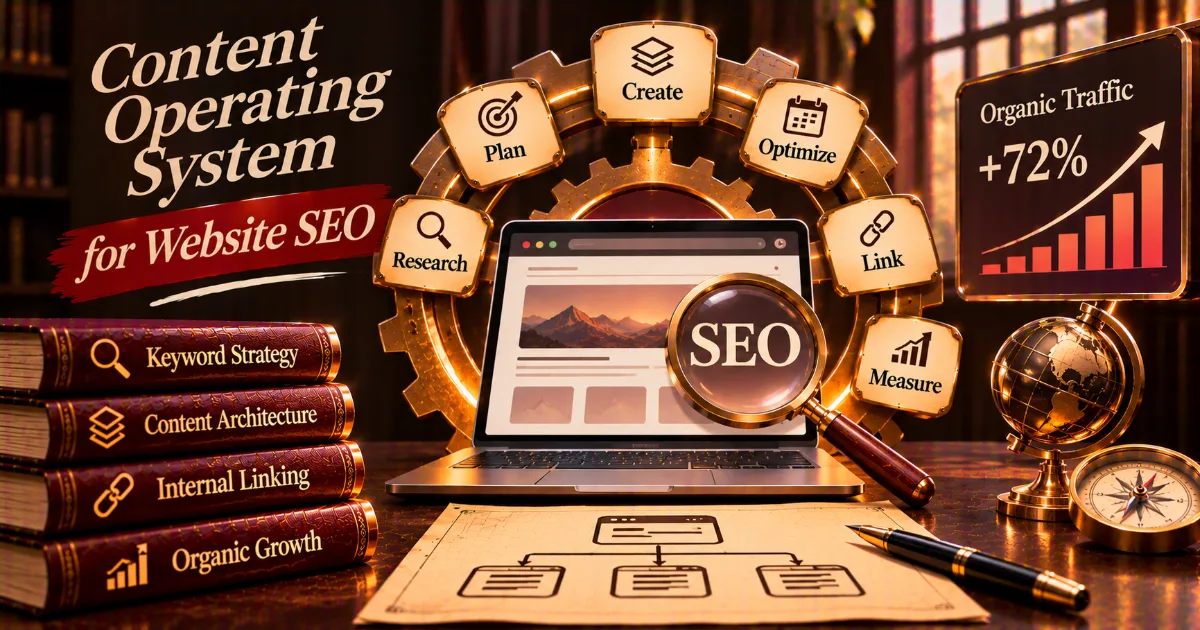
Which Website SEO Chores a Content Operating System Can Run Without You
Website SEO is mostly upkeep. The system runs the checks on a schedule, inside Search Console's limits, and a person decides what to refresh.
Read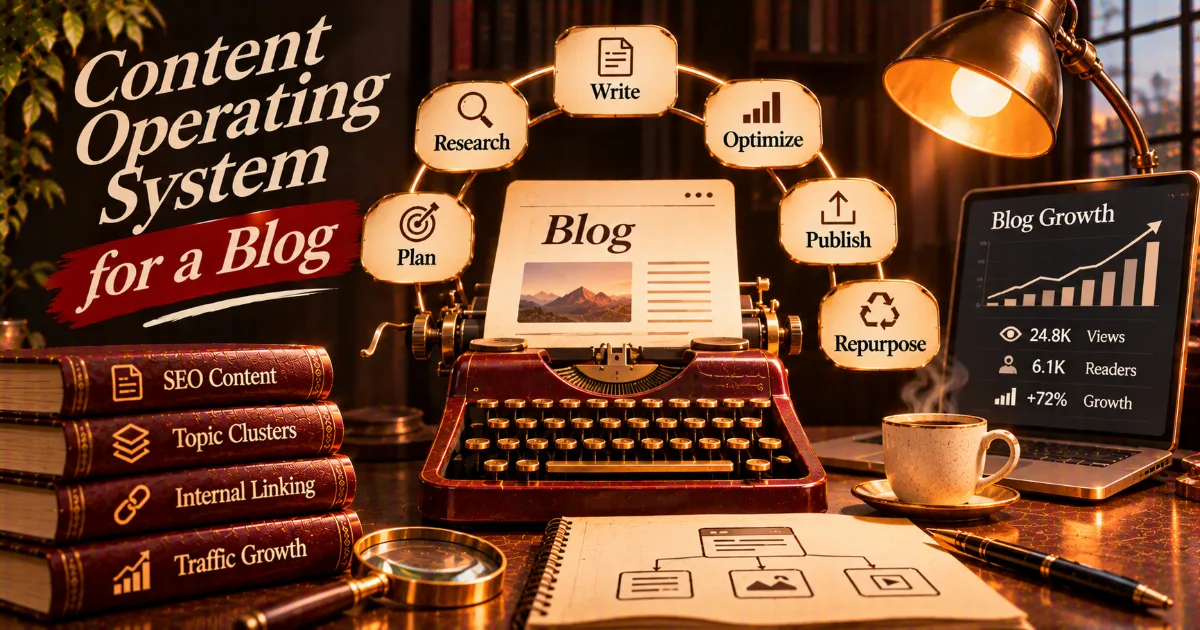
A Blog Content Operating System Should Slow You Down Before Google Does
The blog is where every channel points back to, so its content system publishes fewer, checked posts, at permanent addresses the business owns.
Read
Why a Content Operating System for Instagram Starts With the Asset Library
On Instagram the system starts from the pictures: an asset library of approved, rights-checked visuals and templates, then the caption.
Read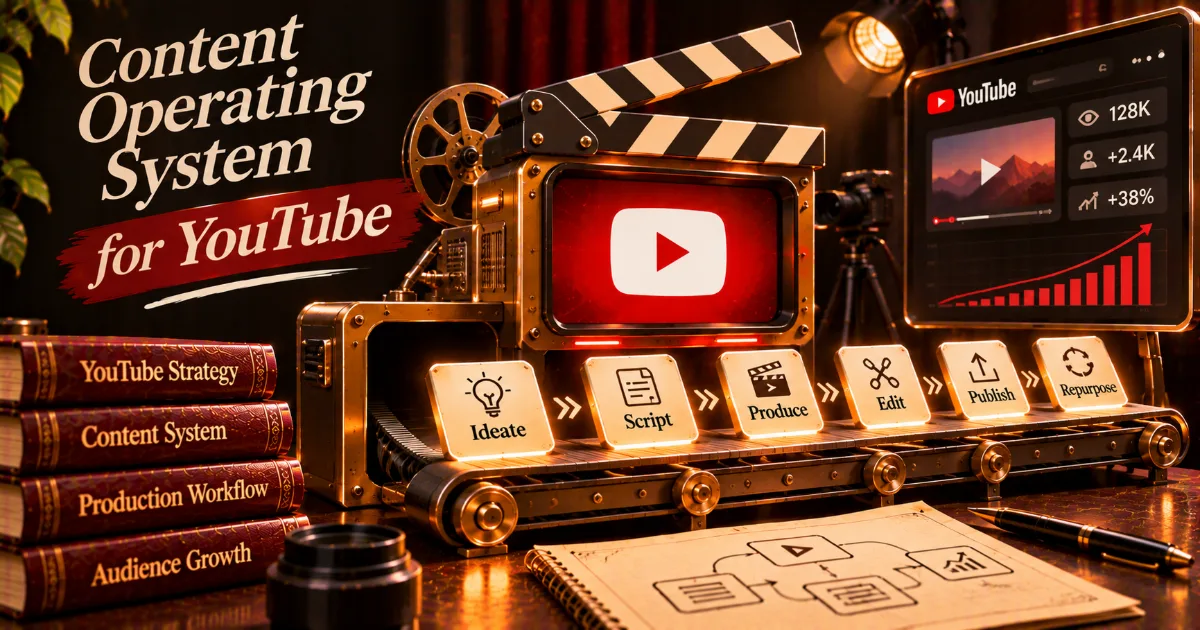
A Content Operating System for YouTube Is Built Around the Part You Cannot Automate
On YouTube the recording session is the fixed point: the system prepares briefs before it and turns the transcript into metadata and knowledge after.
Read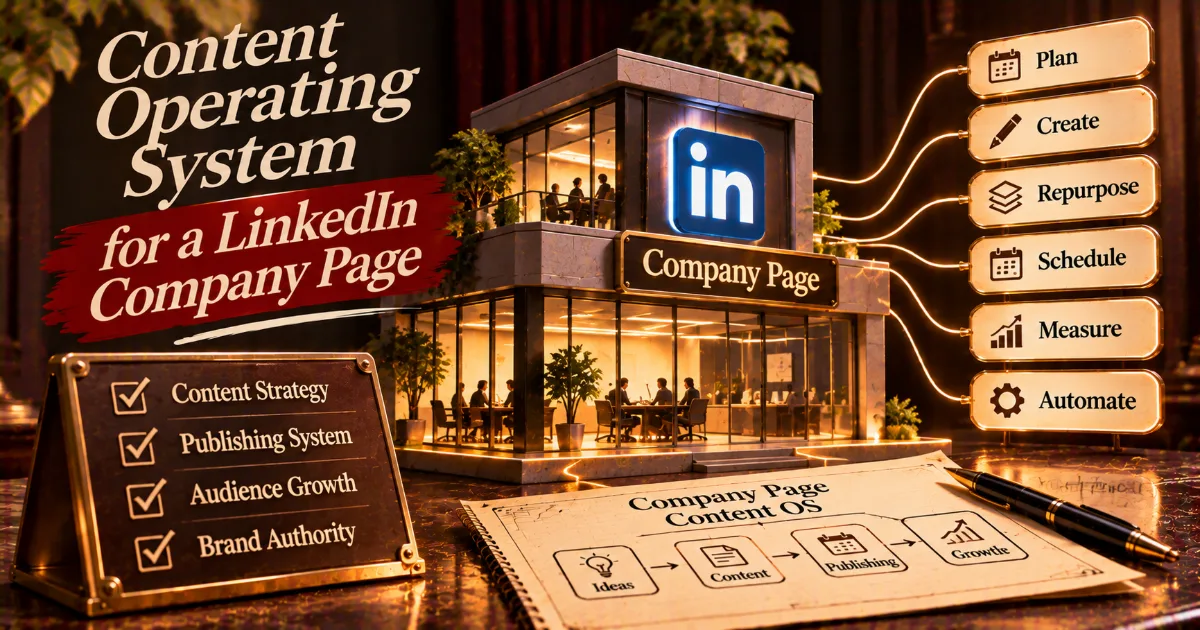
One Company Voice From Five Contributors: A Content Operating System for a LinkedIn Page
Several people can feed a company page without it sounding like several people: a role map, a contributor brief, one approver and a log.
Read
What a Content Operating System Runs on a LinkedIn Profile, and What the Founder Keeps
On a LinkedIn profile the system drafts and publishes from the founder's own thinking, and the founder keeps every comment, like and reply.
Read
What a Content Operating System Can Still Do on X (Formerly Twitter)
On X the system schedules original posts and a person keeps the replies, because X forbids keyword auto-replies and automated likes.
Read
A Content Operating System for Substack Has to Pass Substack's Purpose Test
On Substack the system prepares the issue and a person sends it, because Substack has no posting API and forbids a newsletter that exists for SEO.
Read
Can a Content Operating System Run Reddit Without Breaking Its Rules?
On Reddit the system mostly listens. It finds the questions people ask, drafts answers from what the business knows, and a person who belongs to the community posts them.
Read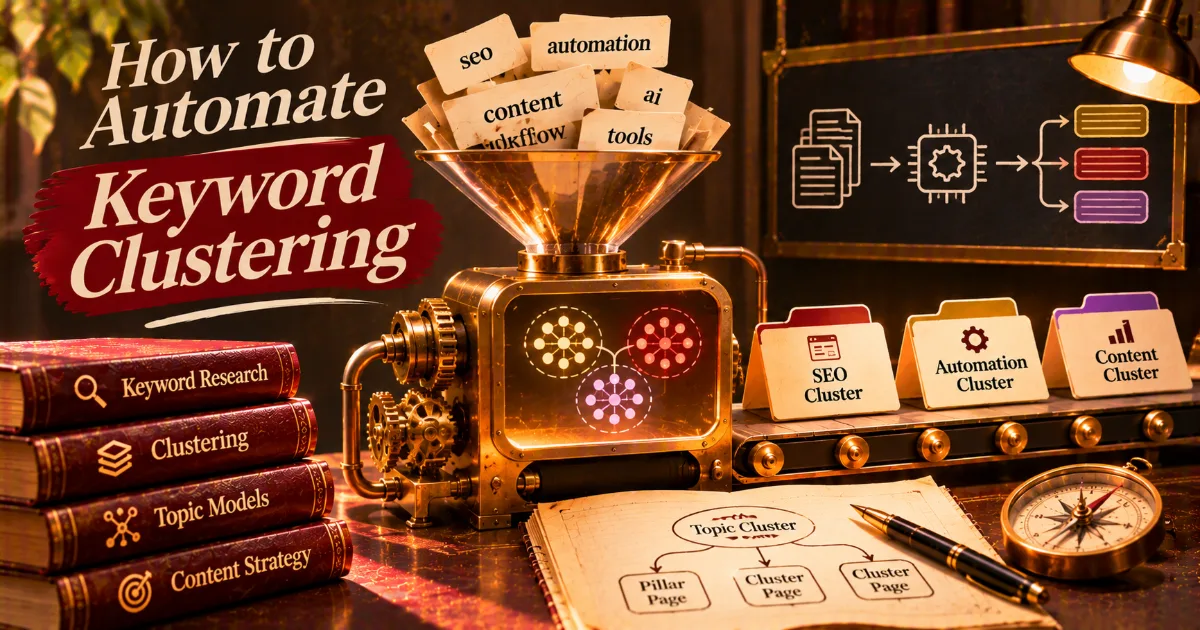
How to Automate Keyword Clustering: From a Keyword List to an SEO Content Cluster
A keyword export is not a content plan until it is grouped by intent and checked against the pages you already have. Here is how to automate that grouping, and what a person still decides.
Read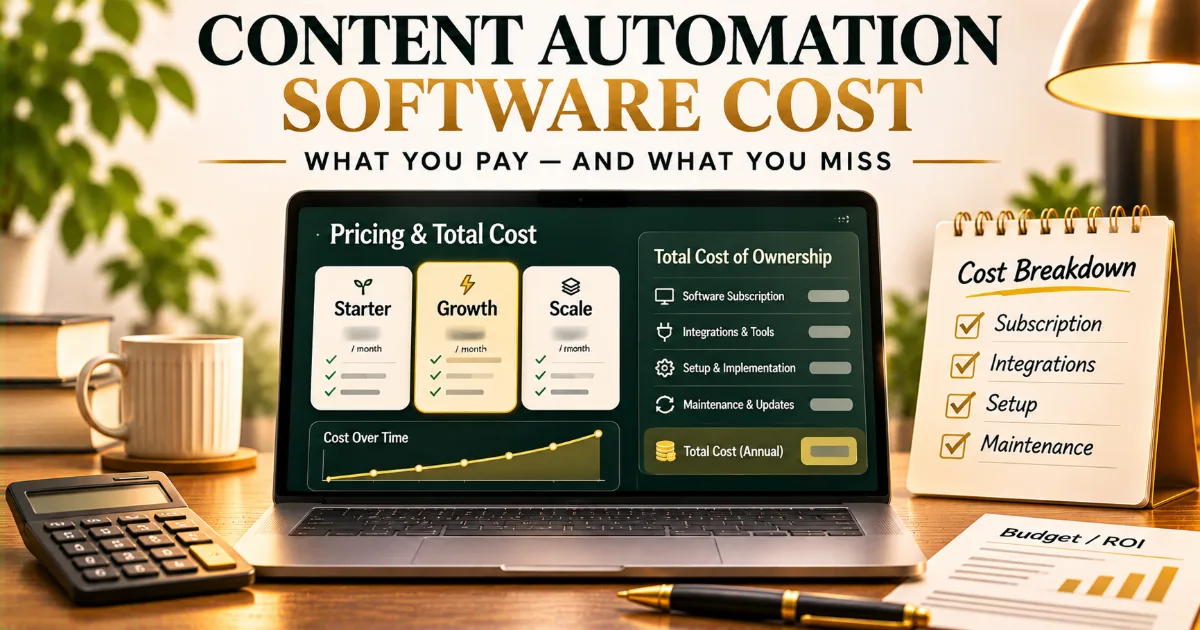
How Much Does Content Automation Software Cost?
The subscription is the smallest line on the bill. What the software leaves you to do, the platform rules no tool can lift, and what building your own system costs instead.
Read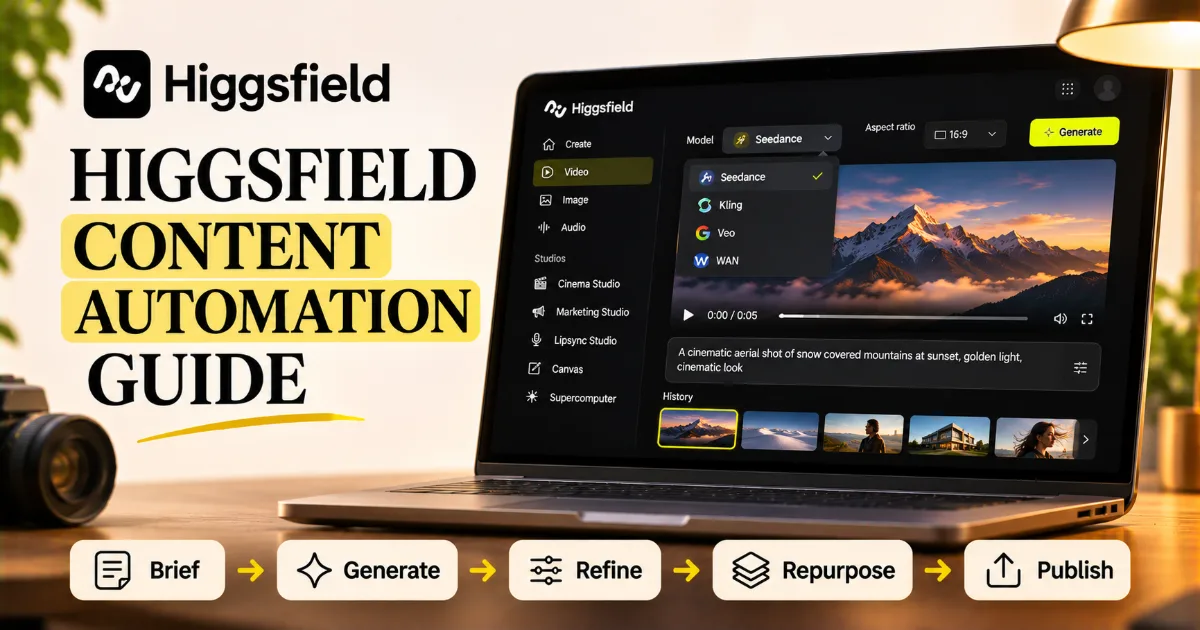
Higgsfield Content Automation Guide for 2027
What Higgsfield's plans cost in five countries, how many seconds of video each one makes, how to prompt and edit your own footage, and how to price single videos and bulk work.
Read
How to Audit a Medium Publishing Workflow With One Tested Article
Send one real article from your website to Medium, then score the canonical, headings, images, links and status on one audit sheet, with evidence.
Read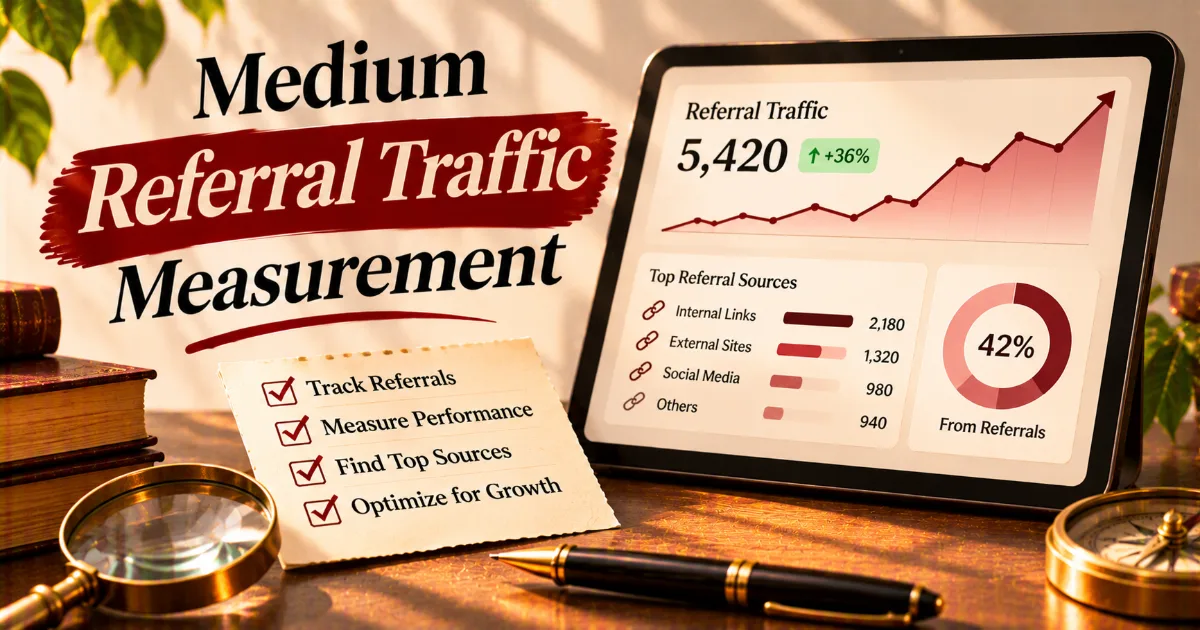
Medium Referral Traffic Measurement: Visits and Actions, Not Claps
Claps and reads say a story was liked, not that it sent anyone useful to your site. Tag the link back, mark the actions that matter as key events, and read visits and actions per story.
Read
Medium Publication Style Guide: One Page Every Contributor Follows
Five contributors, five styles, one publication. One page fixes it: who the reader is, how the publication sounds, how headings work, what counts as evidence and how AI help is disclosed.
Read
Medium SEO Content Research: From a Search Console Query to a Brief
Search Console shows the questions people already ask when your site appears. Group them into themes, turn one into a reader question, and brief a Medium explainer without treating impressions as volume.
Read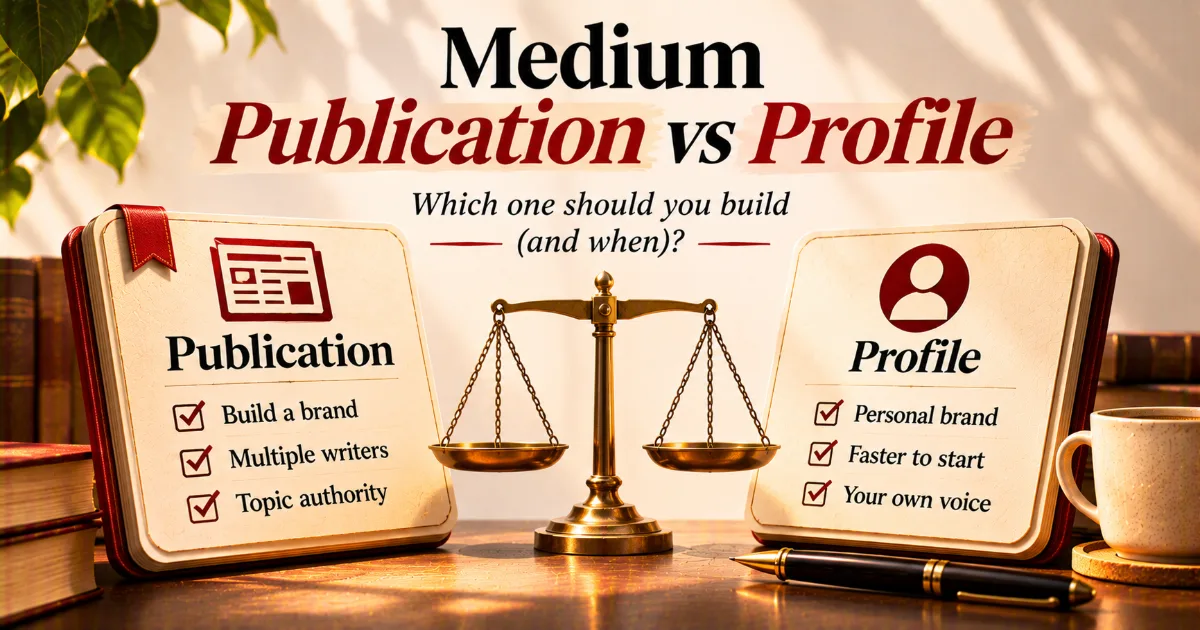
Medium Publication vs Profile: Where a Business Should Publish
A profile is one person's voice and simplest to run. A publication is an editorial home that outlasts any writer, at the cost of an editor's time. The team and the review model decide.
Read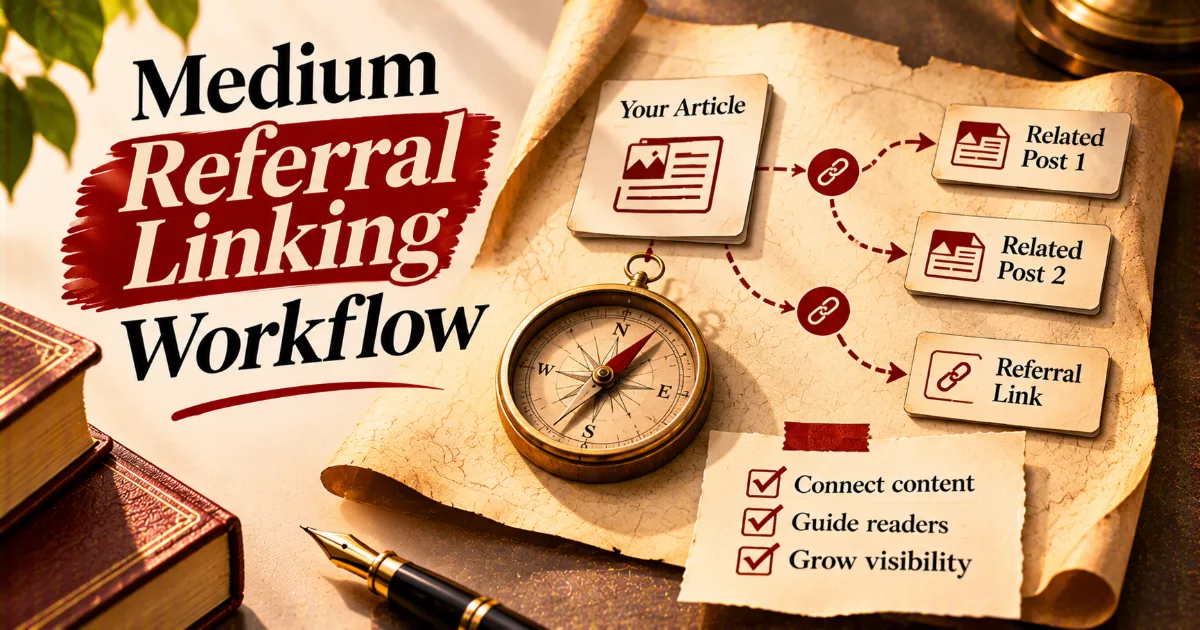
Medium Referral Linking Workflow: One Useful Link Back per Story
A Medium story does not need a sales link in every section. Give it one link to the website resource that answers the reader's next question, placed where that question comes up.
Read
Medium AI Editorial Workflow: A Five-Check Review Gate Before Import
Run five checks on every AI-assisted draft before it reaches Medium: voice, claims, originality, structure and sources. Record each result, then decide the disclosure on the evidence.
Read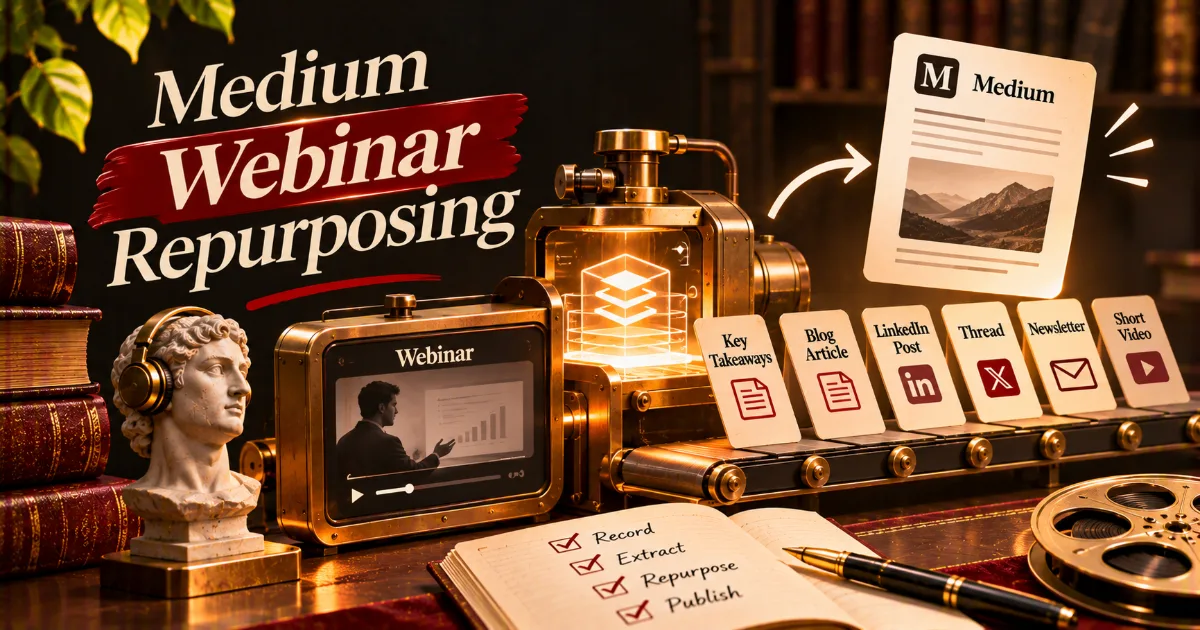
Medium Webinar Repurposing: One Transcript, Three Essays That Never Repeat
A recorded webinar usually holds three separate arguments. Map them in the transcript, test that each stands alone, give each new evidence, and publish essays that never repeat.
Read
Medium Content Library Structure: Organise Stories by Reader Problem and Stage
Group a Medium archive by the problem each reader has and the stage they are at, write the map down once, and build the publication's sections, lists and website hubs from it.
Read
Medium Article Update Workflow: Keep Stories True as Products Change
Stories about software go stale quietly. Check features, limits and links on a schedule, fix the website then Medium, and keep a dated log.
Read
How to Write a Content Automation Case Study for Medium
Keep measured outcomes, observations and limits apart, disclose scope and costs, and publish only after the client agrees.
Read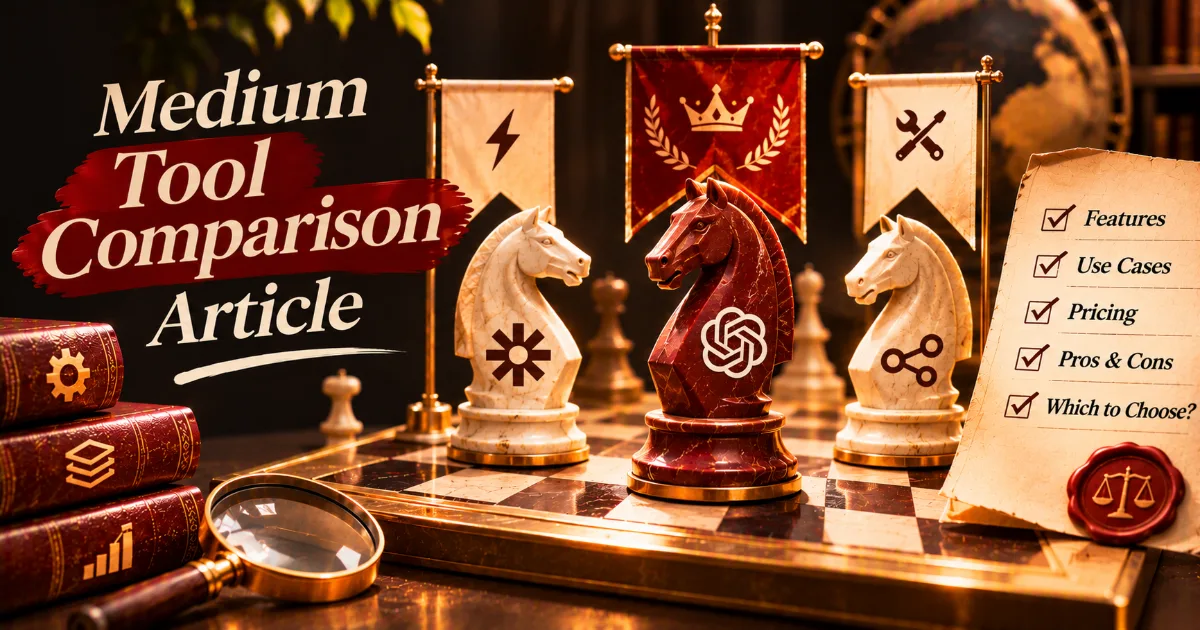
Medium Tool Comparison Article: Compare by the Reader's Job
Compare tools on Medium by the reader's job, not features: one scenario, a matrix of words not scores, dated facts, and any relationship disclosed.
Read
Medium Technical Tutorial Workflow: A Working Automation, Explained
Turn a working workflow into a Medium tutorial for beginners: plain steps, the assumptions it depends on, and the ways it fails.
Read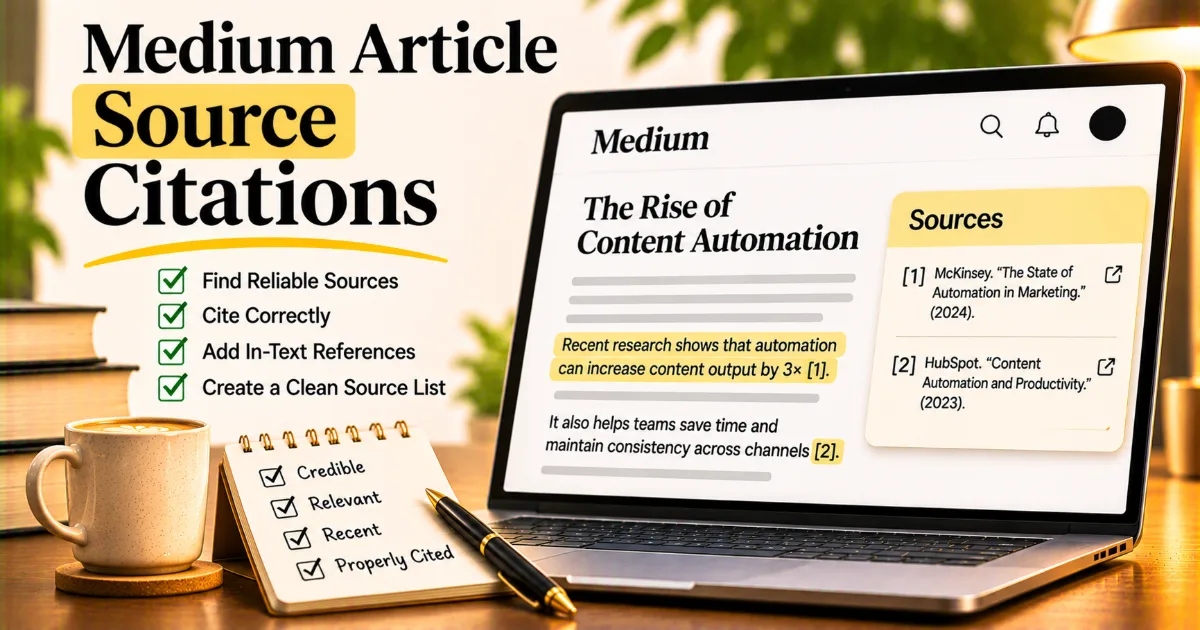
Medium Article Source Citations: Links in the Sentence, Not a List
Cite sources on Medium inside the sentence that makes each claim, to the primary source, with link text that names it, not in a list at the end.
Read
Medium Content Angle Testing: A Small, Honest Test of a New Angle
Test a new angle on Medium small: one change, a guess written first, a fixed window, an honest log, and no benchmark you did not measure.
Read
Medium Editorial Calendar: One Reader Question per Slot
Plan a Medium calendar from real reader questions at different stages, give every slot a written reason, and fill in the dates last.
Read
Medium Founder Thought Leadership: An Essay From the Founder's Words
A founder essay for Medium built from an interview: every sentence from the transcript, nothing invented, every line approved by the founder.
Read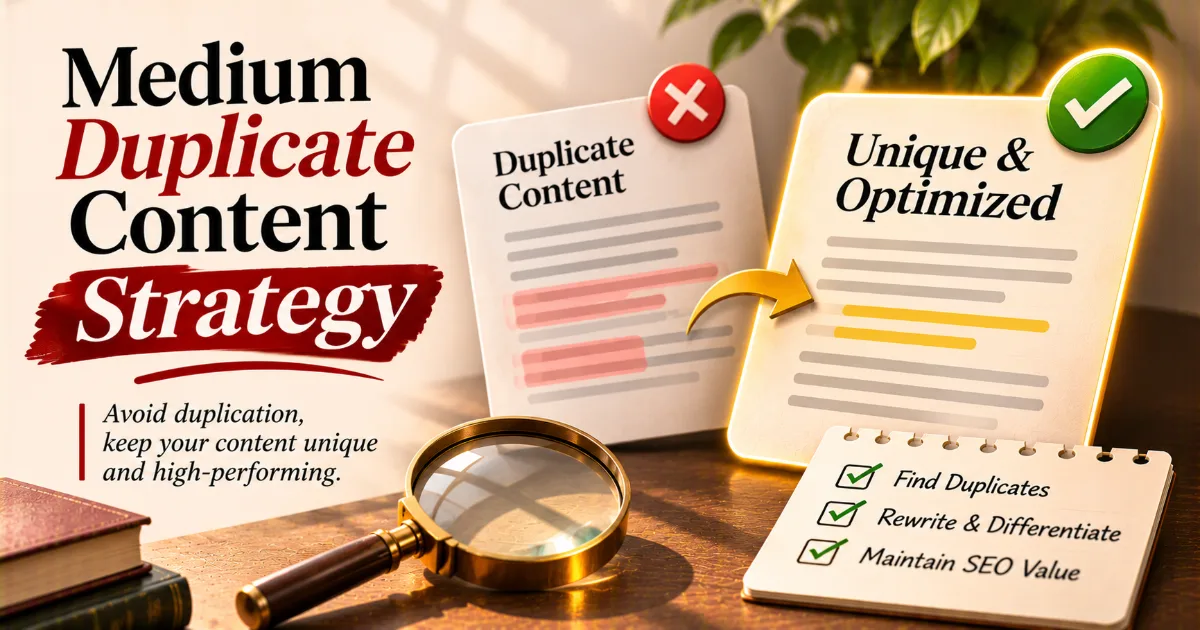
Medium Duplicate Content Strategy: Adapt, Republish or Leave It
Not every article belongs on Medium. Sort each one: adapt it, republish it with a canonical, or leave it on the website, with a reason.
Read
Medium Article Tags Strategy: Five Topics From What the Article Says
Medium allows five topics a story. Choose them from the article's own claims, give each a reason, and record why the near-misses were left out.
Read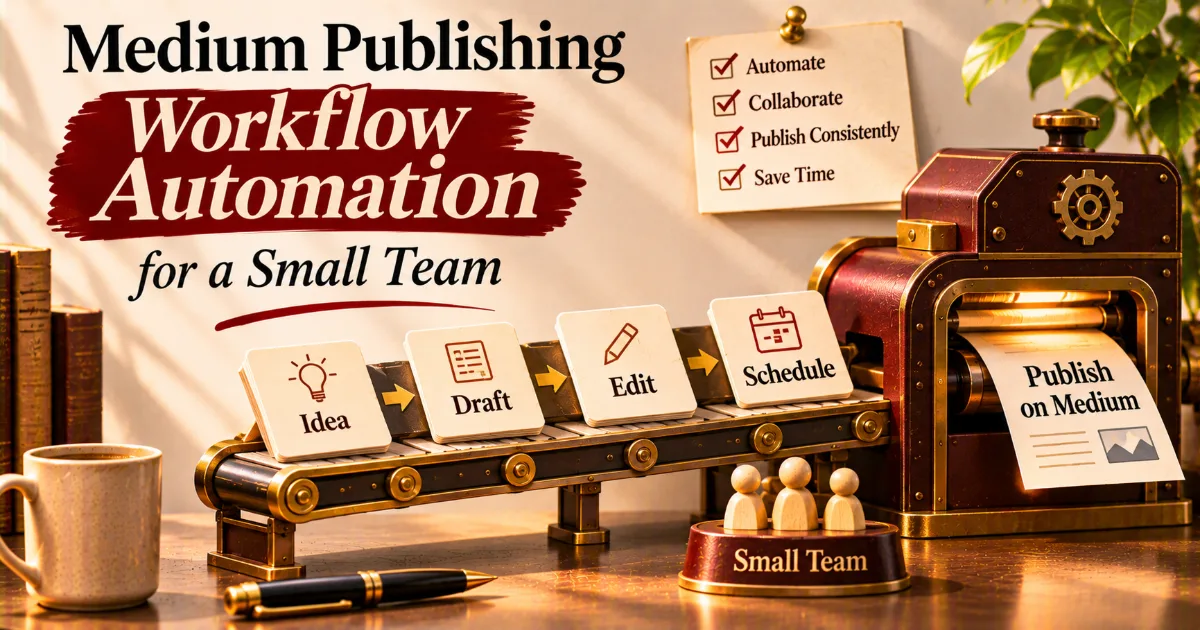
Medium Publishing Workflow Automation for a Small Team: Draft to Import
Six stages from brief to a verified Medium story, one owner and one status each, so a small team always knows whose turn it is. Medium's closed API decides where the automation stops.
Read
Medium AI Article Fact Checking: The Source Checklist Before You Publish
Before an AI-assisted article goes to Medium, every claim gets one verdict: a published source, the owner's confirmation, or removal. The table that holds it, and what a workflow can catch.
Read
Medium Case Study Article: Turn a Customer Story Into a Useful How-To
Turn a verified customer story into a Medium how-to a stranger can learn from, with the client's written consent, an approved facts list and a claims check before it goes out.
Read
Medium Publication Topic Series: Several Stories From One Knowledge Pillar
Divide one subject your business knows into Medium stories that each answer a different reader question, using a topic map and a near-duplicate test before anything is written.
Read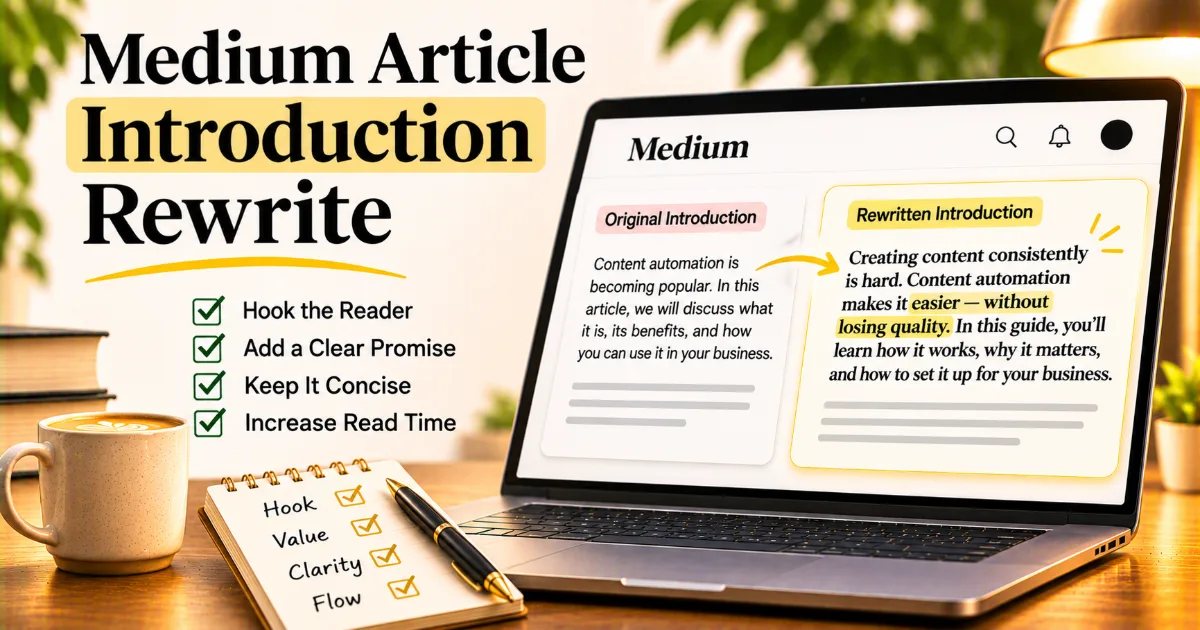
Medium Article Introduction Rewrite: Adapt a Business Blog Opening for Editorial Readers
Rewrite the opening of a business article for a stranger on Medium in four moves, with a display title to match, and lock every fact, claim and conclusion below it.
Read
Medium Article Republishing Workflow: Keep Your Website the Original
Publish on your own site, import to Medium, then open the Medium story and check its canonical points home. The order of the steps is what keeps your website the original.
Read
How to Audit a TikTok Content Workflow Before It Grows
Before adding Reels or Shorts, find out where the TikTok pipeline already leaks. Score every stage on evidence, from the brief and the rights record to who holds the account, and fix the worst gap first.
Read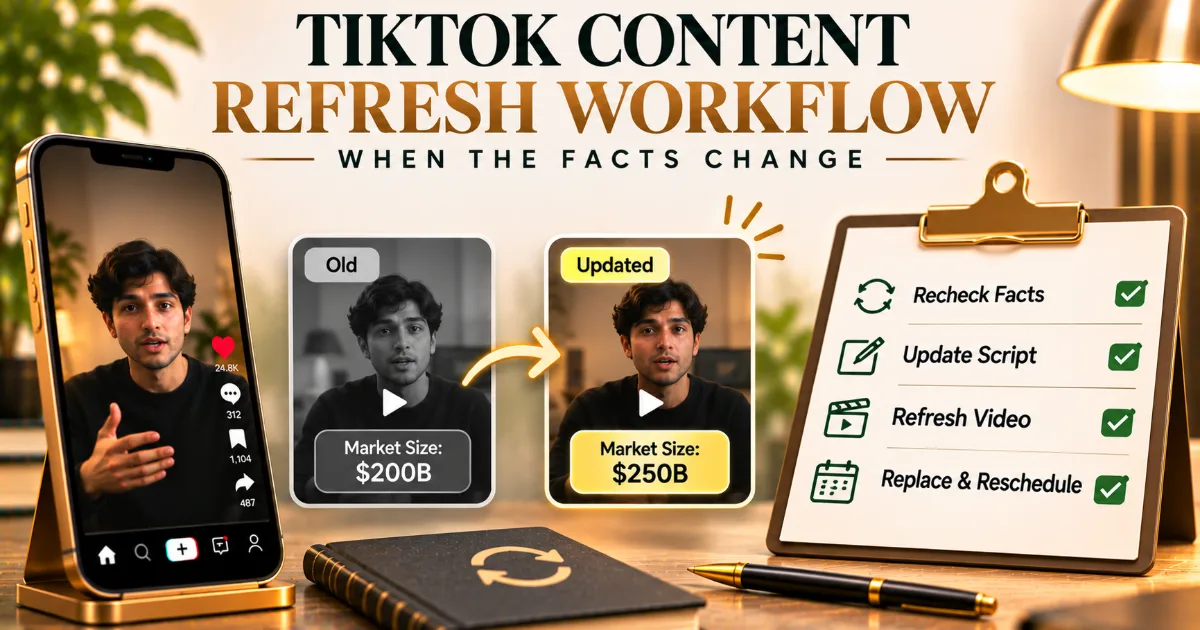
TikTok Content Refresh Workflow: When the Facts Change
A price, a warranty or a rule changes, and old clips keep saying the old thing. Keep a register of the facts each clip states, so one change finds every clip, page and reply that repeats it.
Read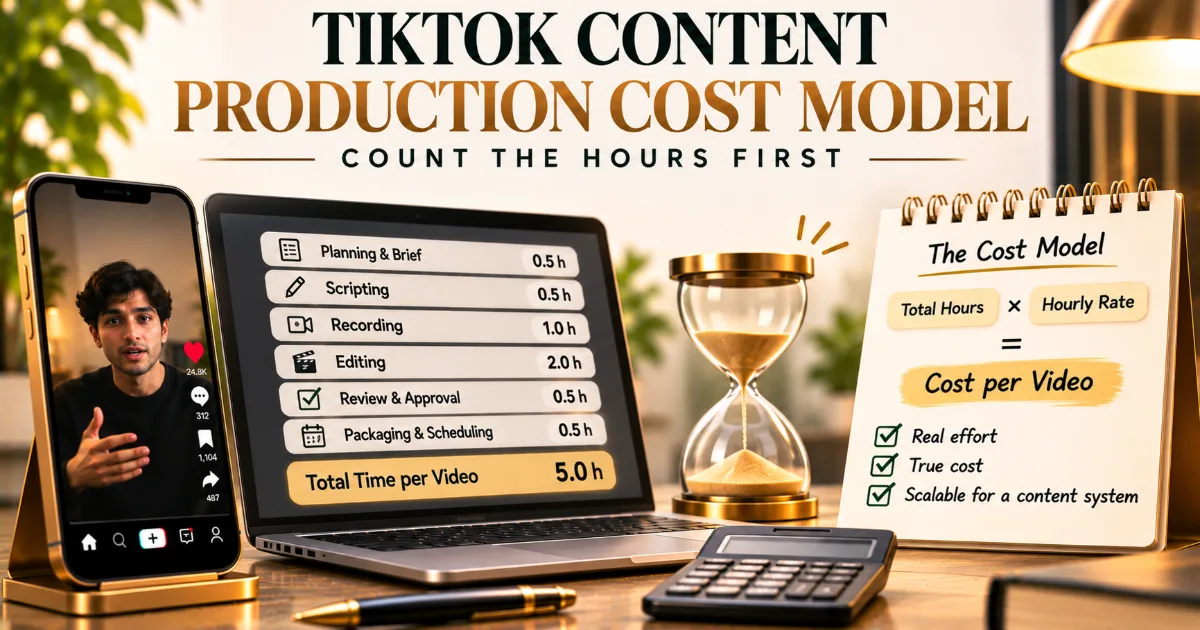
TikTok Content Production Cost Model: Count the Hours First
Before pricing tools or freelancers, count the hours. Write down the assumptions, time each stage per clip, and see which hours automation can take and which stay with a person.
Read
TikTok to Blog Content Workflow: Every Clip Points to Its Page
Clips that mention an article rarely send anyone to it. Pair each clip with the page it came from, tag the link the same way every time, and check the links before they break.
Read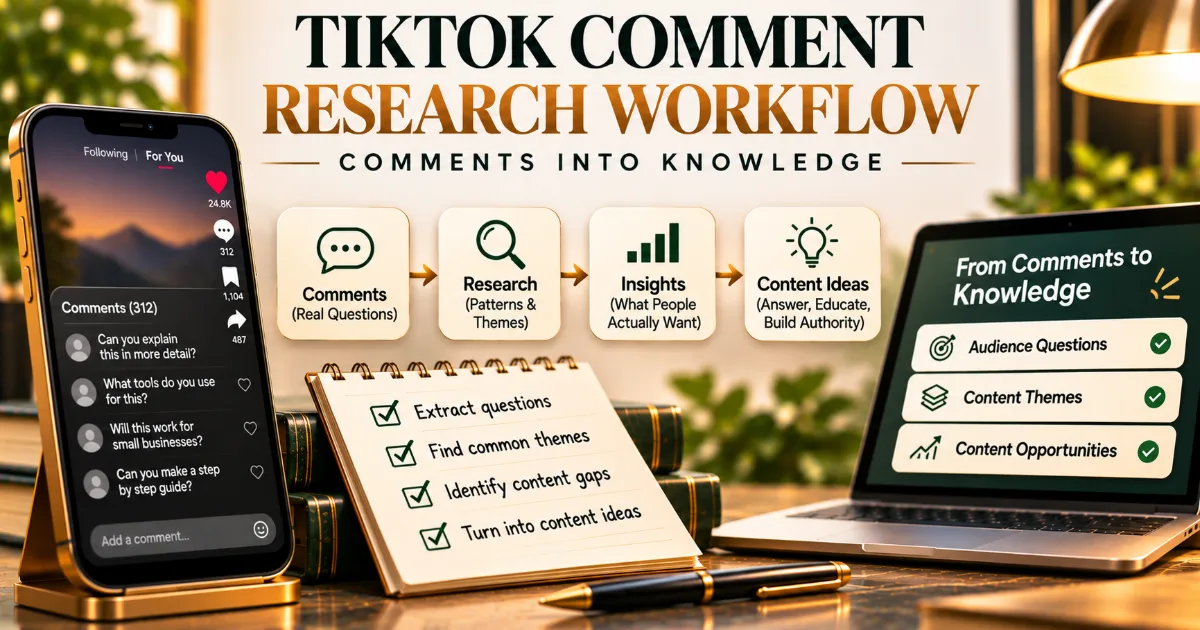
TikTok Comment Research Workflow: Comments Into Knowledge
The questions under your clips are research you already own. Read them through TikTok's business API rather than a scraper, group the repeats, and admit only checked answers to the knowledge base.
Read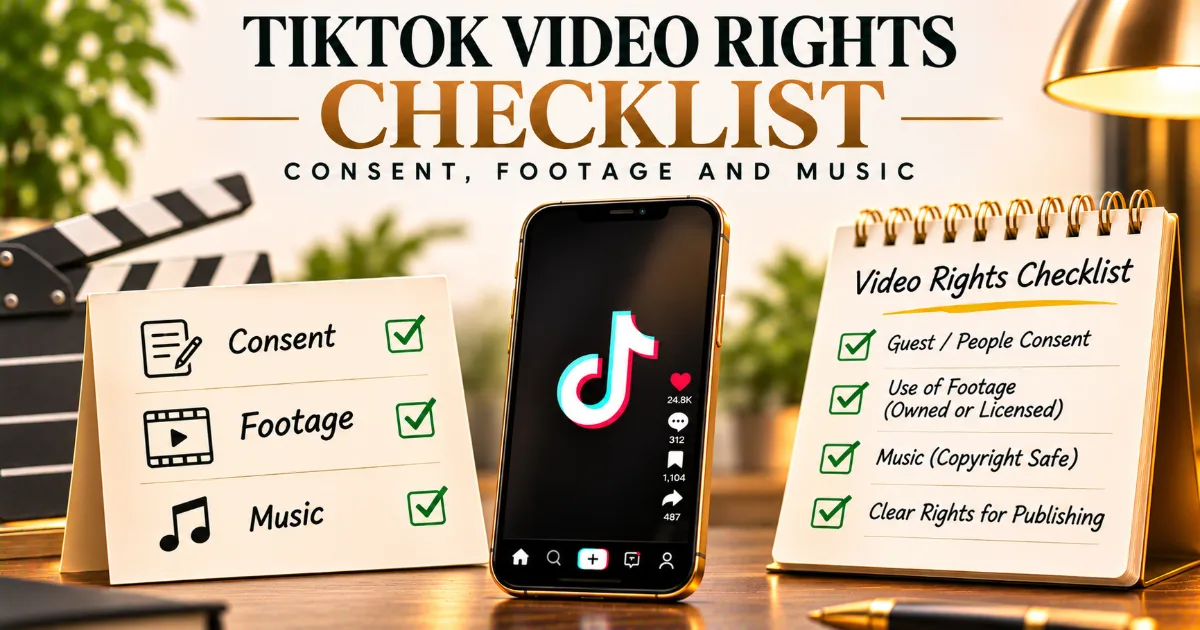
TikTok Video Rights Checklist: Consent, Footage and Music
One clip can need four permissions: the people on camera, the footage, the music and every platform it goes to next. Record each one, with its end date, before the clip is posted.
Read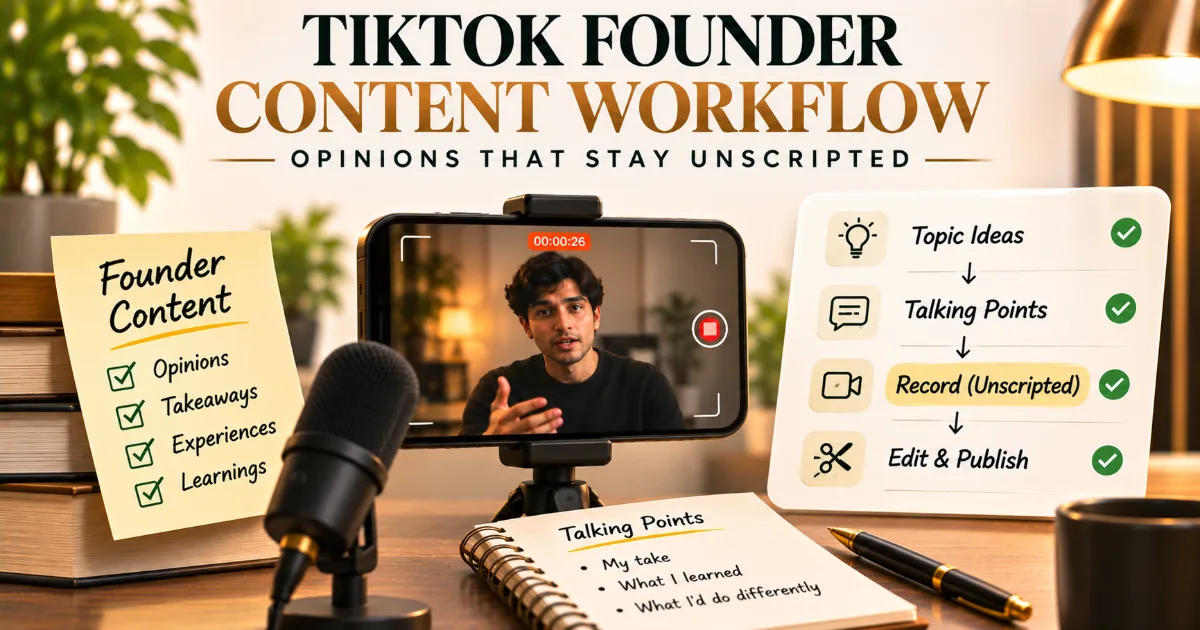
TikTok Founder Content Workflow: Opinions That Stay Unscripted
A founder's opinion sounds wrong read from a script. Capture it as they say it, keep the transcript beside the script, and let cue cards and one sign-off do the rest.
Read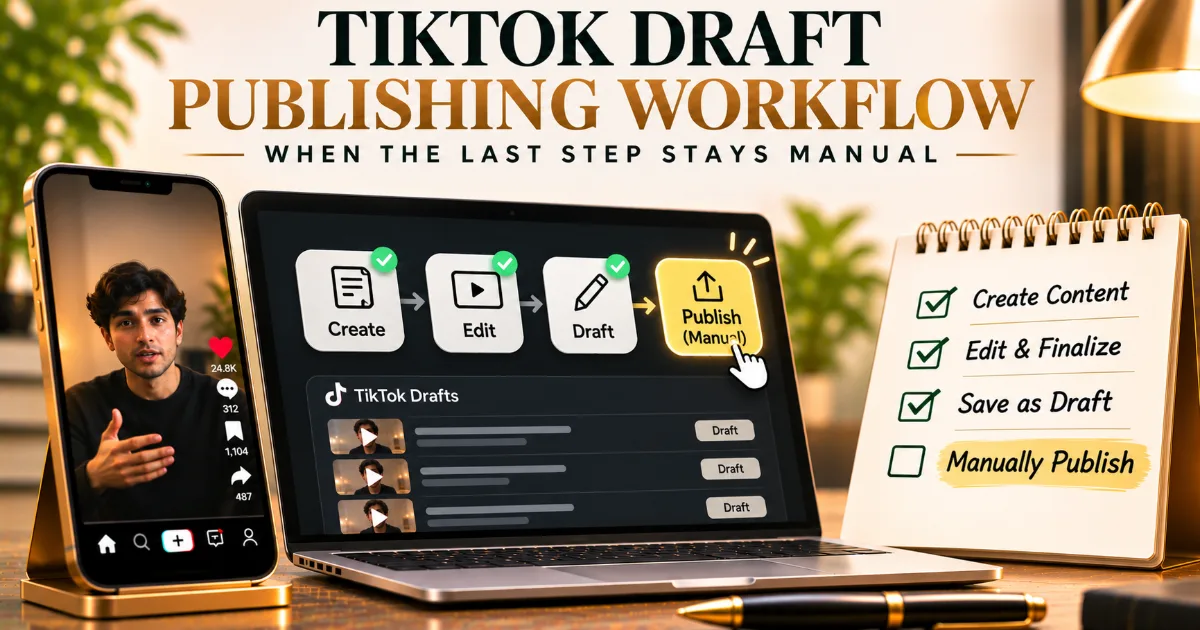
TikTok Draft Publishing Workflow: When the Last Step Stays Manual
TikTok lets only an audited app post publicly, so the last step is often a person. Hand them a complete package as a draft, and know exactly which steps an app may do first.
Read
TikTok Content Performance Review: Signals That Change the Next Brief
Views say a clip was seen, not what to change. Read retention, saves, shares and search for what they say about the brief, and change one thing in the next one at a time.
Read
TikTok B-Roll Planning Workflow: Shots That Clarify, Not Decorate
Most B-roll decorates; the useful kind shows what the words cannot. Read the script line by line, keep only the shots that clarify, and record where each one came from.
Read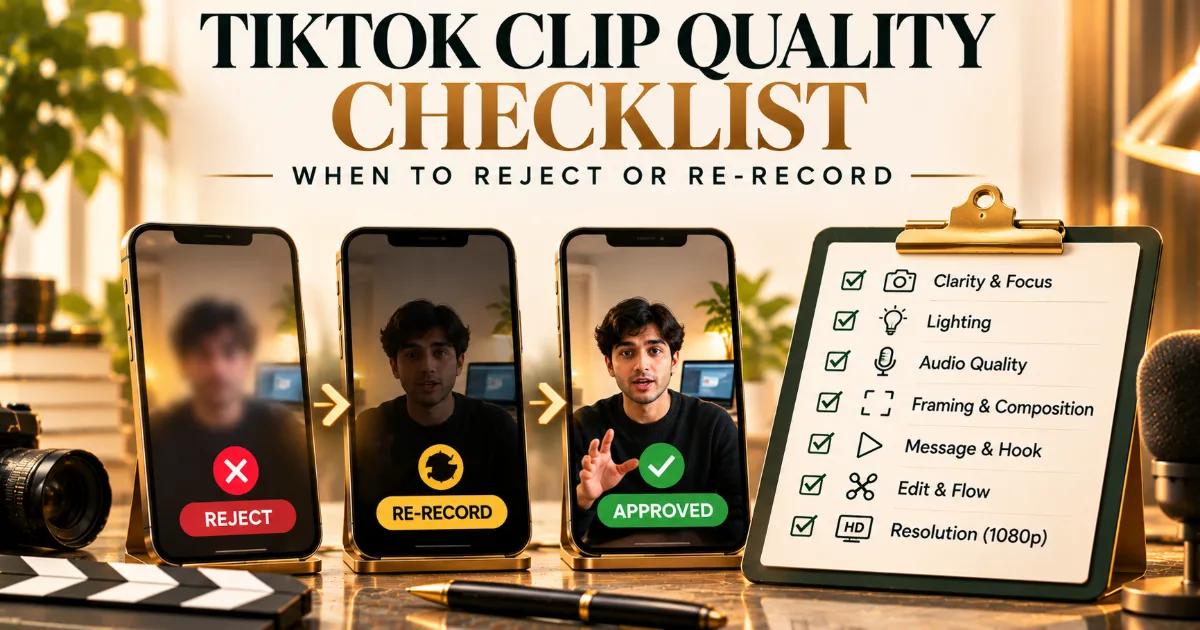
TikTok Clip Quality Checklist: When to Reject or Re-Record
Some clips should never be posted, and some should be recorded again. Check context, payoff, voices, sound, claims and privacy, and give every clip one of three verdicts.
Read
TikTok Case Study Video Ideas From One Verified Client Story
One client story, told honestly, can fill several clips. Get the client's consent first, then give the problem, the process and the outcome a clip each, without inflating the result.
Read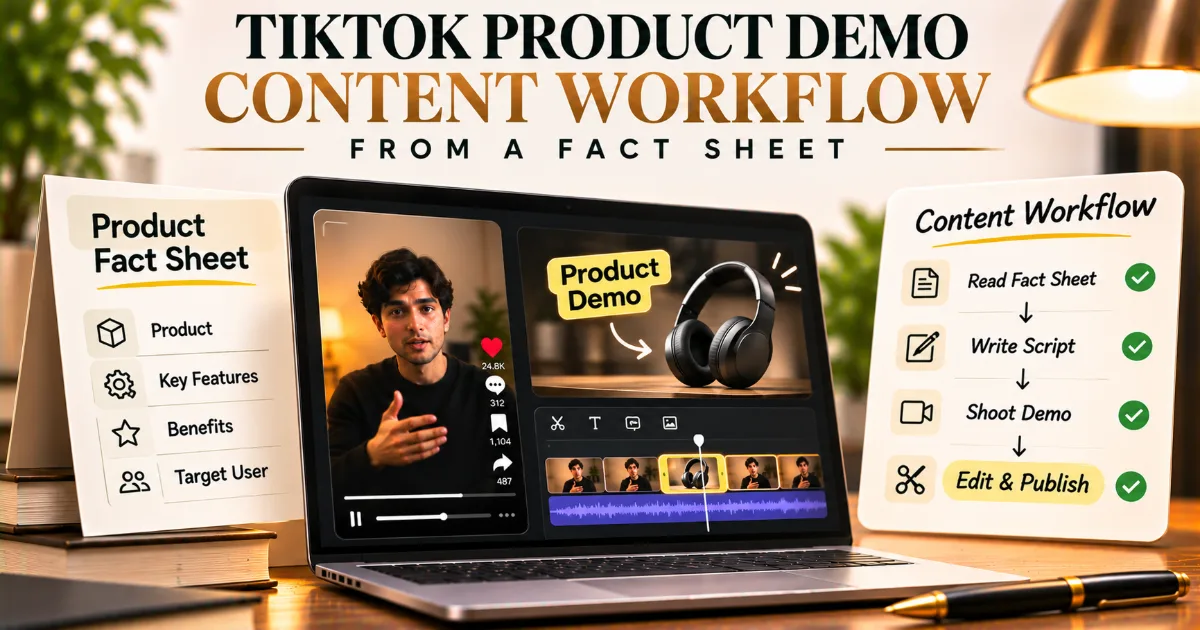
TikTok Product Demo Content Workflow From a Fact Sheet
A demo that overpromises costs more than it earns. Write every demo script from an approved fact sheet, limitations included, and show the real product doing the real thing.
Read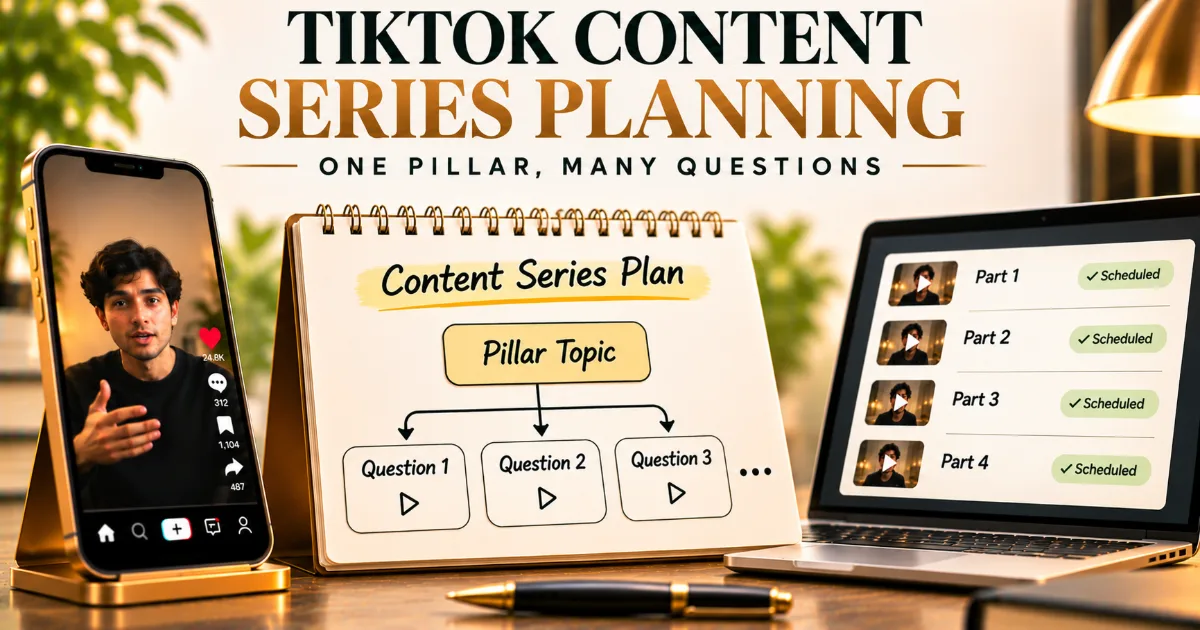
TikTok Content Series Planning: One Pillar, Many Questions
A series works when each episode answers its own question. Turn one area of expertise into episodes that stand alone, so a viewer can start anywhere and still want the next.
Read
TikTok On-Screen Text SEO: Words to Read, Not Keywords
On-screen text gets a second to be read. Match it to the words people search with, check its size, contrast and placement, and leave the keyword lists out.
Read
TikTok Content Research Workflow: A Queue Built on Signals
No single signal proves a topic is worth a clip. Build the queue from your customers' own words, and give every row the signals behind it, so the weak ones are easy to drop.
Read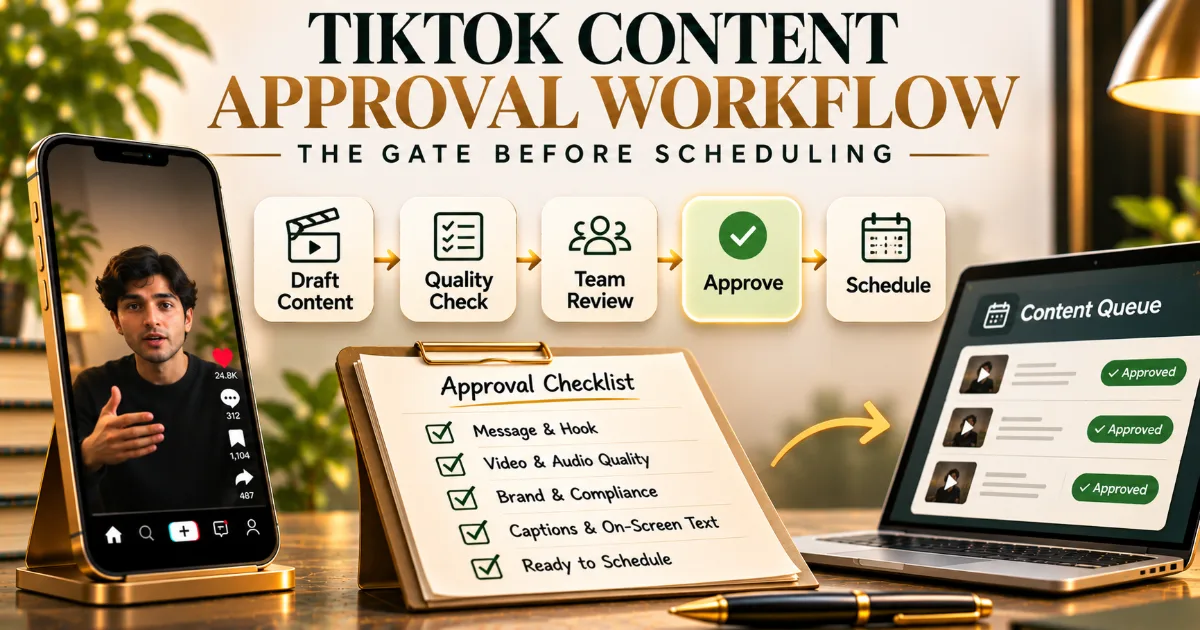
TikTok Content Approval Workflow: The Gate Before Scheduling
The last check before scheduling catches what everyone assumed. Confirm the account, the privacy setting, the disclosure, the music and the labels on every clip, every time.
Read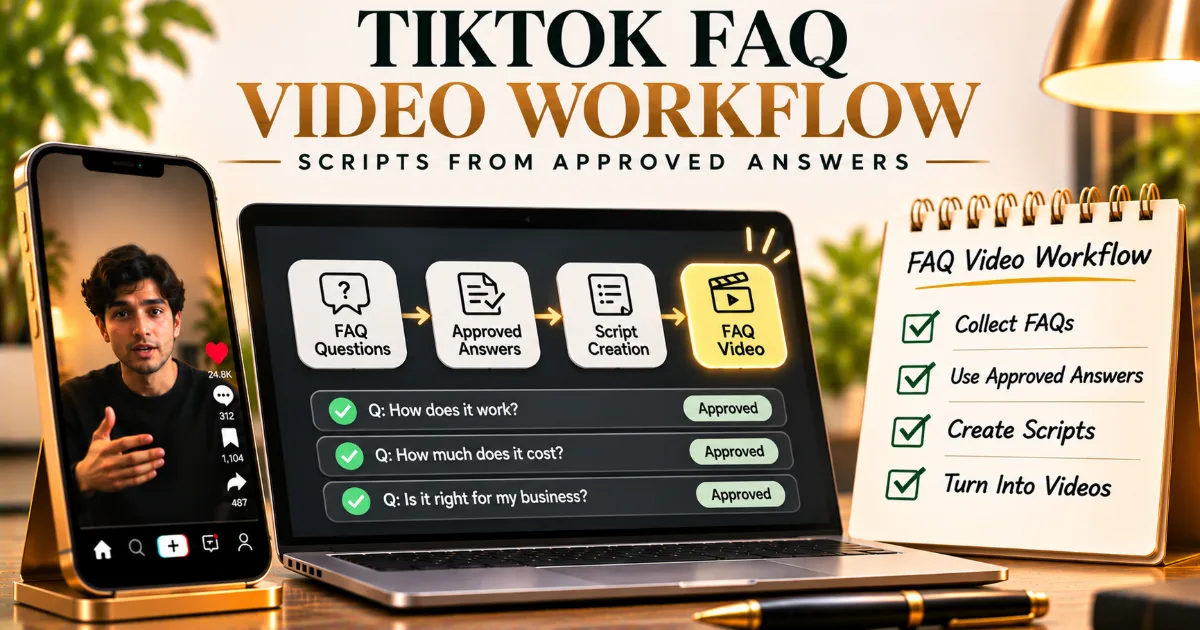
TikTok FAQ Video Workflow: Scripts From Approved Answers
The questions customers ask most make the easiest clips, and the easiest to get wrong. Write one approved answer per question, draft every script from it, and keep the reference with the clip.
Read
TikTok Video Brief Template: One Page Before Every Clip
Most weak clips were weak before anyone filmed them. One page per clip names the viewer's problem, an opening that needs no context, one takeaway and one next step.
Read
TikTok vs Reels vs Shorts: Adapting One Clip for Each
One clip, three platforms, three sets of defaults. Keep the point and the footage, and change what each platform handles differently, from the opening and description to the privacy choice.
Read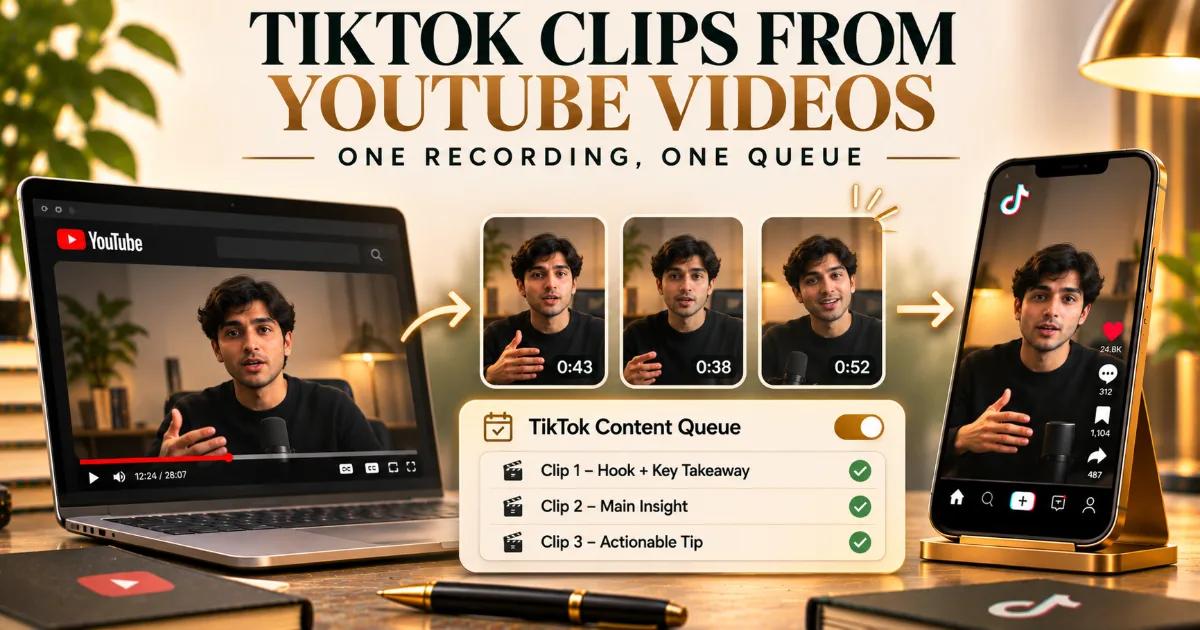
TikTok Clips From YouTube Videos, Interviews and Webinars
Hours of recordings and no clips posted? Test every moment against four questions, handle the guest's question and the attendee's with care, and move each clip through a queue that ends with a person posting it in TikTok.
Read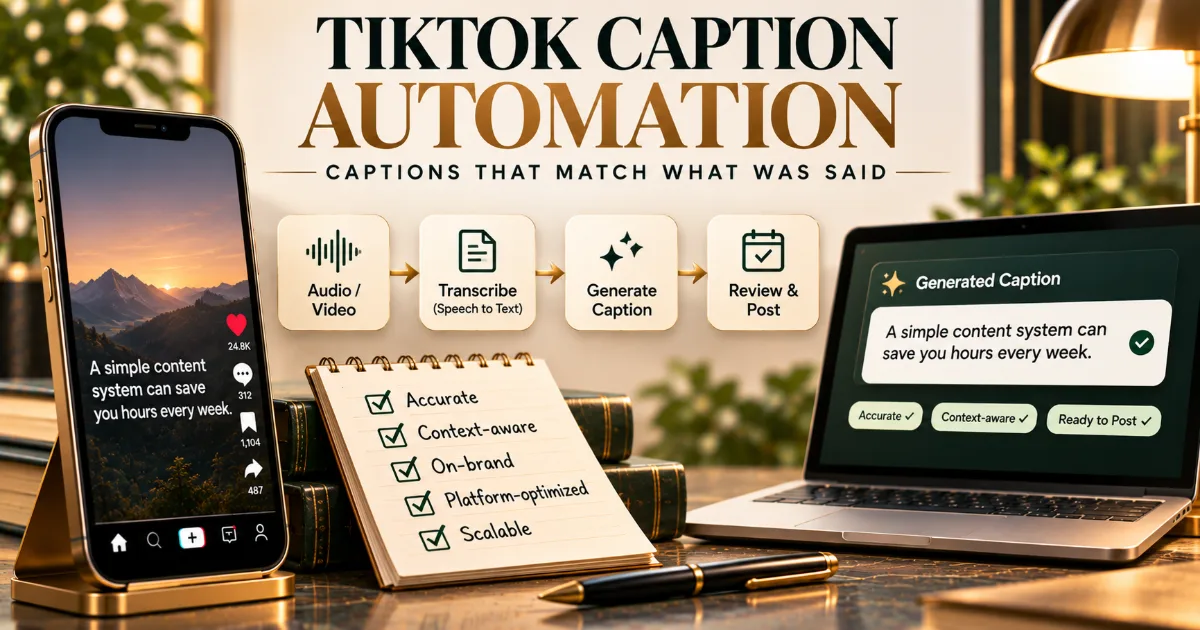
TikTok Caption Automation: Captions That Match What Was Said
Automatic captions get names, numbers and terms wrong. Correct the transcript first, keep a glossary and a log of fixes, and style the captions only once the words are right.
Read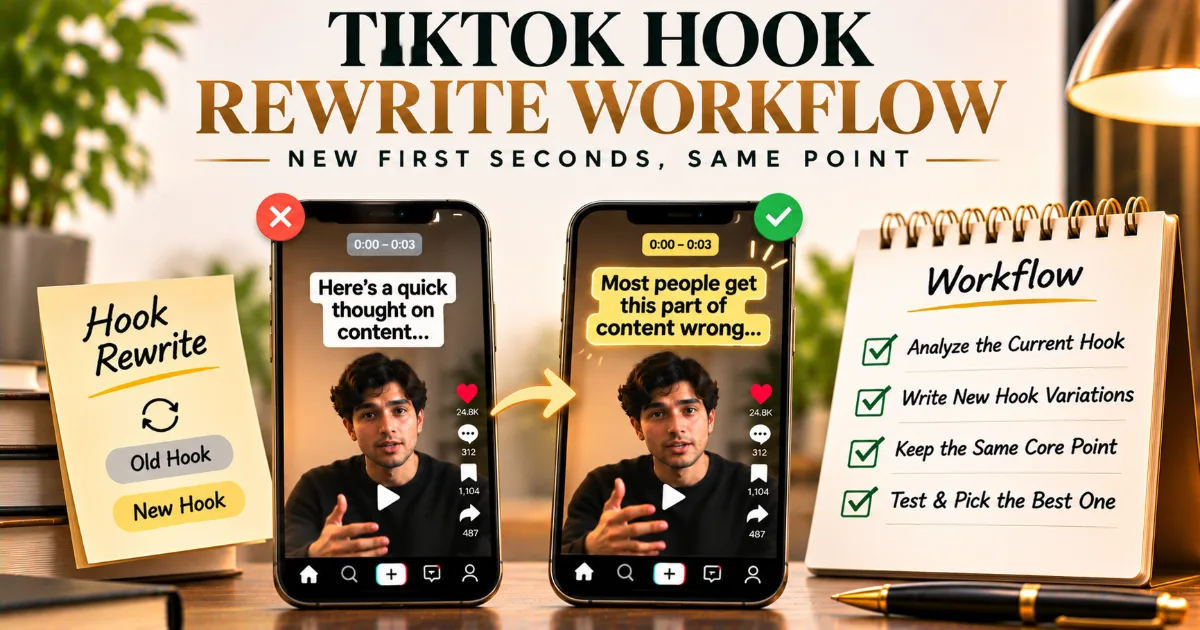
TikTok Hook Rewrite Workflow: New First Seconds, Same Point
How to rebuild the first seconds of a TikTok clip without changing what the speaker said: lock the claim, choose one of three honest moves, never synthesise the voice, and check the result.
ReadContent Automation for B2B: Turn Expertise Into a Content Engine
B2B buyers arrive as a committee, and the people who know the answers will not write. How one expert interview becomes the pieces each committee member reads, and how to measure it over a long cycle.
ReadContent Automation for SaaS Companies: Turn Product Expertise Into Content
A software product changes every release, and its content has to keep up. Versioned knowledge, claims checked against what shipped and on which plan, and a workflow a release starts.
ReadContent Automation for Agencies: Scale Client Content Without Losing Voice
An agency's content system has to hold many voices without mixing them. One folder per client, one shared workflow, two approval gates, the right platform roles, and margin read client by client.
ReadHow to Write a CLAUDE.md File for a Content Project
Claude Code reads one file before anything else. What a CLAUDE.md for a content project should hold, what to leave out, how long it can be, and how to test that it is followed.
ReadHow to Structure n8n Workflows for a Content System
One canvas that does everything works for a month. How to split an n8n content system into a parent and single-job sub-workflows, with a fixed contract, one error workflow and names that explain it.
ReadHow to Document a Content Automation System So Someone Else Can Run It
A content automation system is documented when someone else can run it. The five documents it needs, how to write the runbook and decision log, and the handover test that proves they work.
ReadAutomated Content Checks: Rules a Machine Can Enforce Before Review
A check is one rule a machine answers yes or no on every draft. Which rules to automate, how to prove a check can fail, and how to keep false alarms rare.
ReadHow to Design Human Approval Gates in Content Automation
A gate is a state a draft cannot leave without a named person. How to tier drafts by what they claim, route them, keep the record, and hold the queue when the reviewer is away.
ReadClaude Code vs n8n for Content Automation
Which of the two should hold which part of a content system: judgement over files, or triggers, waiting and logs. How each is maintained, owned and fails, and how to connect them.
ReadHow to Automate Internal Linking in a Content Automation System
Internal links as a checked step in the pipeline: the map before the draft, anchors that name the page, orphan detection, and the edit older posts owe a new one.
Read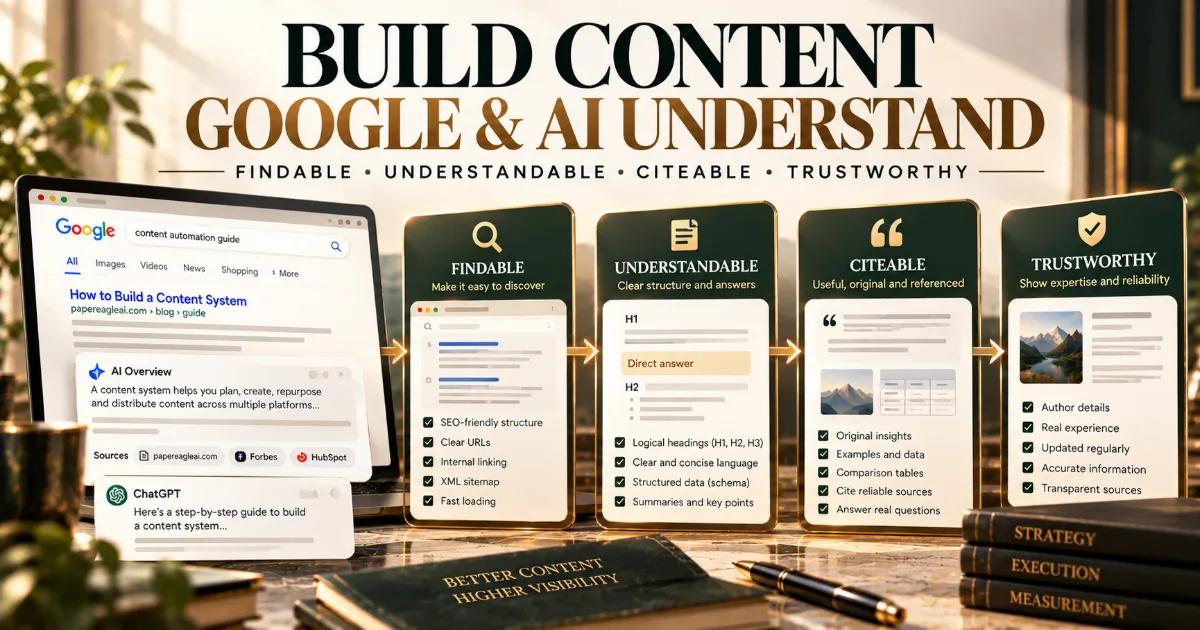
How to Build Content Google and AI Search Can Both Understand
Every claim on the page says what it is, who says it, where it came from and as of when. The method, and what it costs.
Read
SEO vs AEO vs GEO for Automated Content: One Pipeline, Three Readers
One automated pipeline has to satisfy a search engine, an answer engine and a model that cites. Where the three share a foundation, and the few places they genuinely diverge.
Read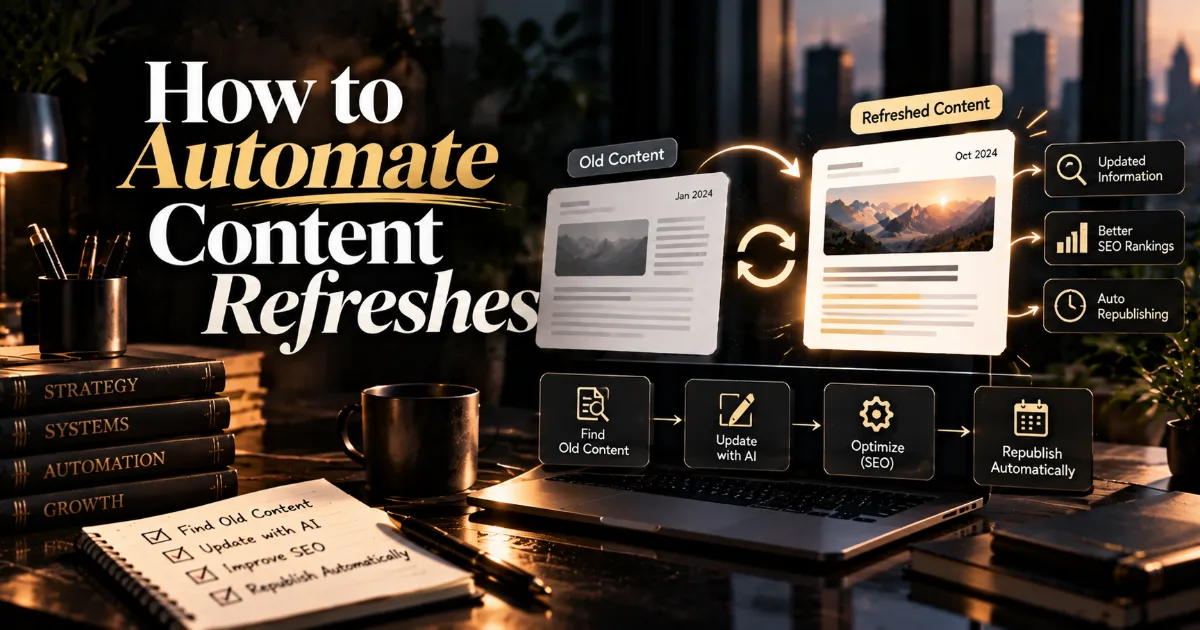
How to Automate Content Refreshes Without Losing Quality
A refresh loop for pages you have already published: the signals that say a page needs work, the smallest fix that answers them, and the person who signs it off.
Read
SEO Content Automation: How to Scale Without Search Spam
Which stages of an SEO content pipeline a machine can run safely, and the gates that refuse a page Google would call scaled content abuse before anyone drafts it.
Read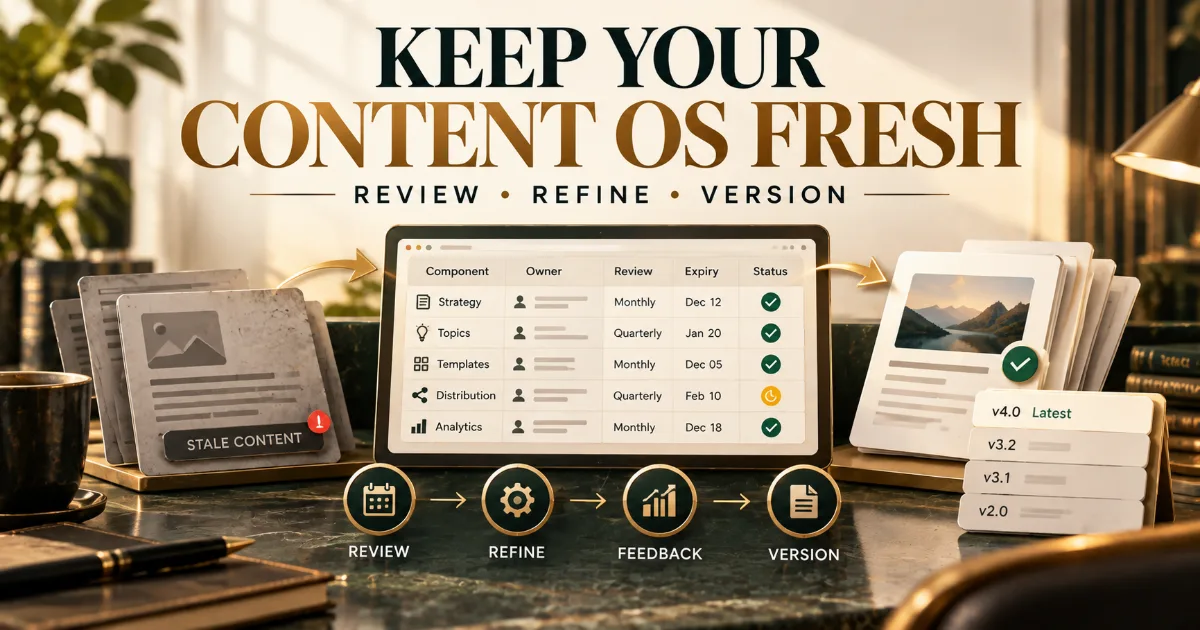
How to Keep a Content Operating System From Going Stale
A Content OS goes stale one part at a time. The register, review cadence, triggers, feedback routes and versioning that keep every part current after handover.
Read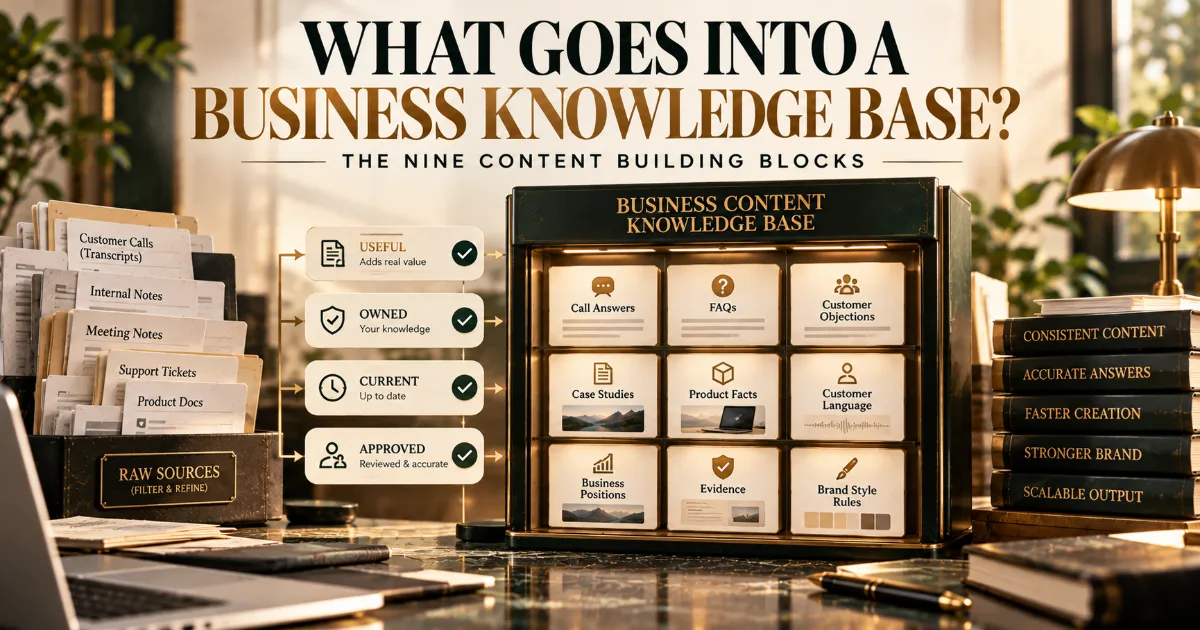
What Should Go Into a Business Content Knowledge Base?
Call answers, FAQs, objections, case studies, product facts, customer language, positions, evidence and style rules: what earns a place in the base, what stays out, and what to collect first.
Read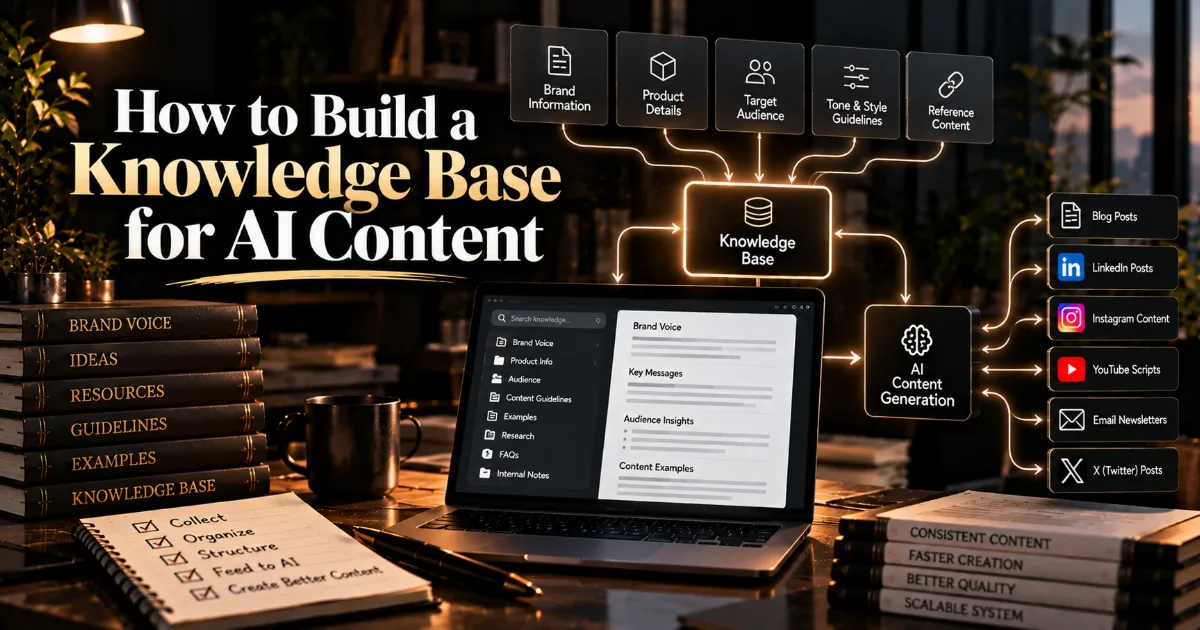
How to Build a Knowledge Base for AI Content That Sounds Like Your Business
A knowledge base a model can actually use is a folder of typed files, where every entry says what kind of sentence it is, who owns it, when it expires and who may publish it. Here is how to build one, and how to test it.
Read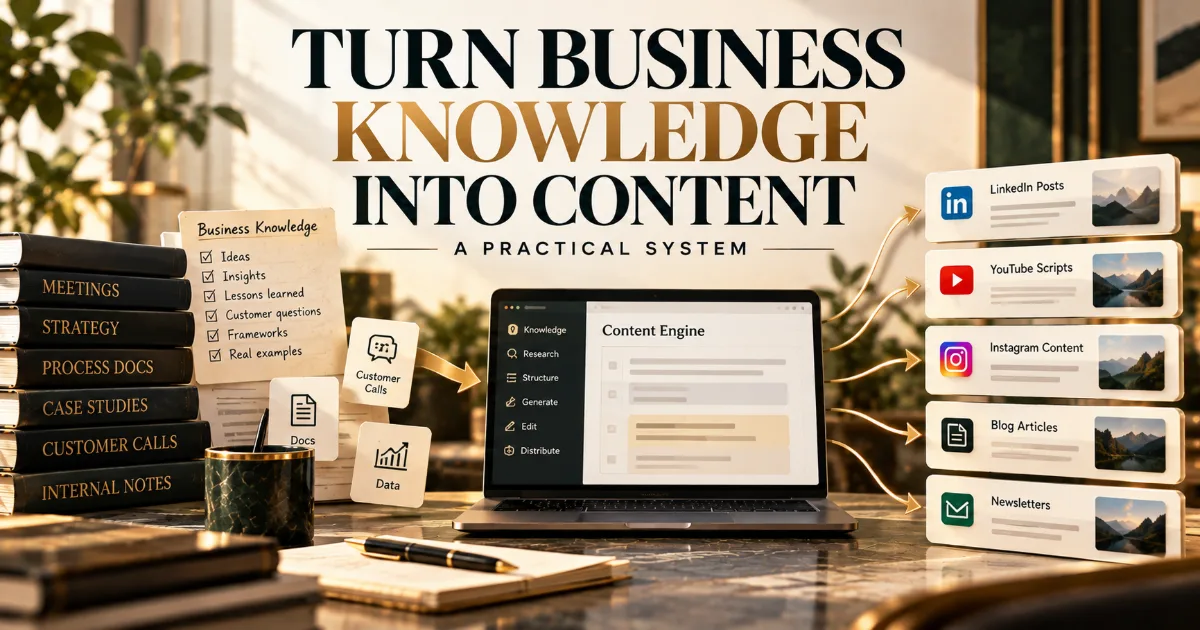
How Business Knowledge Becomes Automated Content
Follow one piece of business knowledge from the sales call where it was first said to every published piece that used it, and back again when it changes.
Read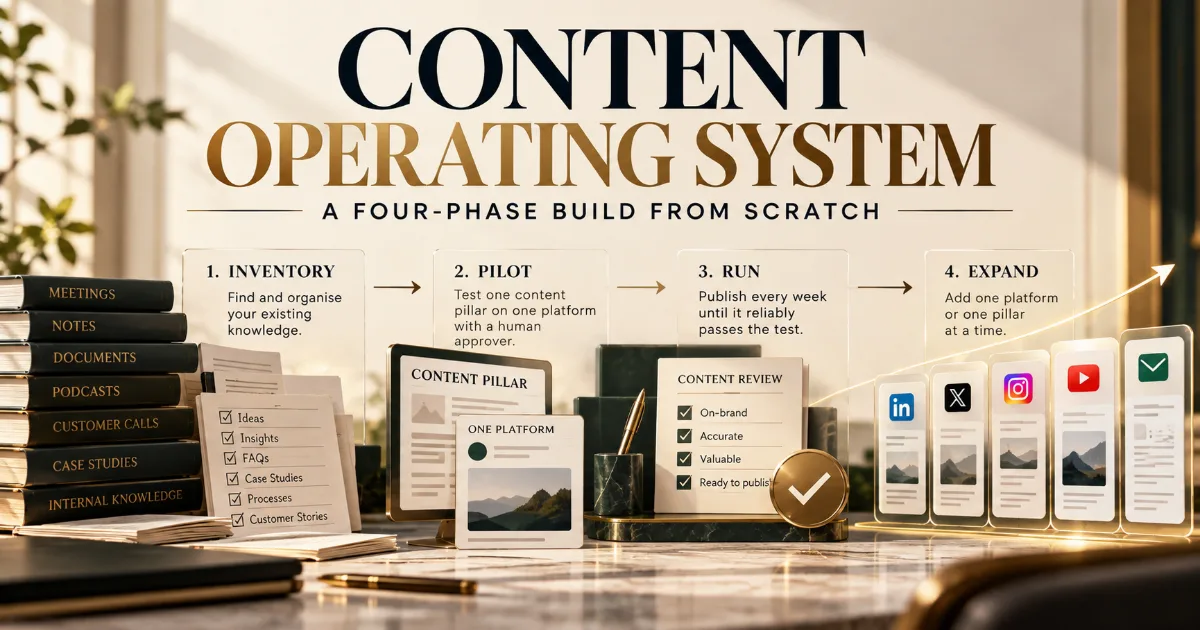
How to Build a Content Operating System From Scratch
Most Content OS builds stall because everything is designed before anything publishes. Here is the build as a phased rollout, with the test each phase must pass.
Read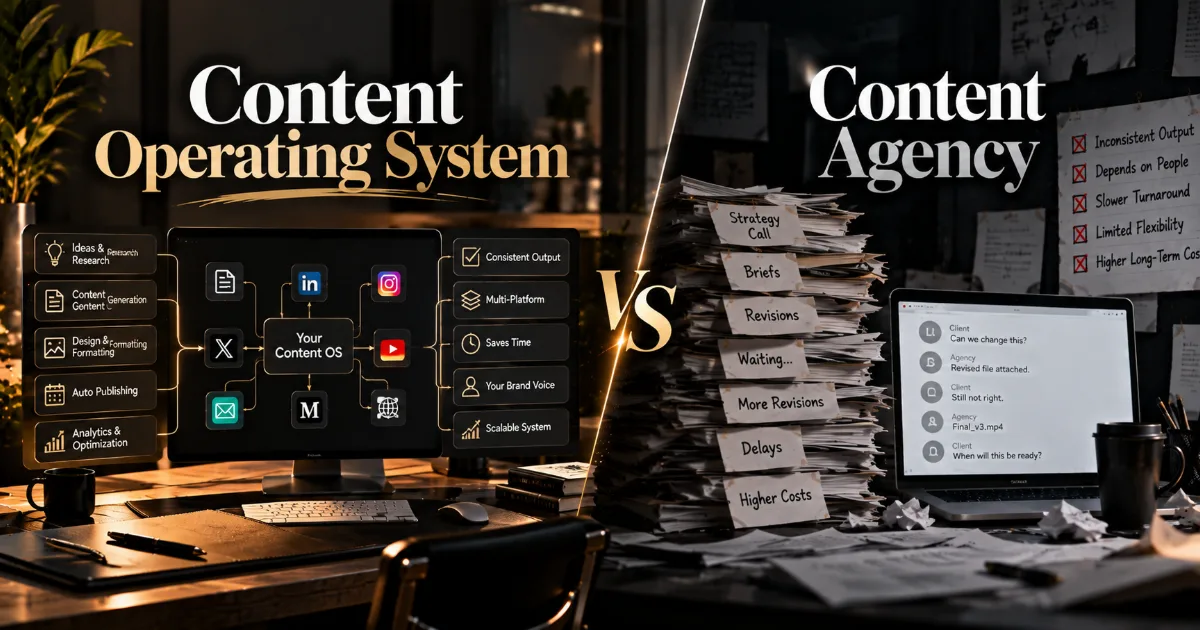
Content Operating System vs Content Agency: Which Builds a Lasting Asset?
An agency leaves you the posts; a Content OS also leaves the knowledge, voice and workflows that made them. Five content assets, which model builds each, and how each one decays.
Read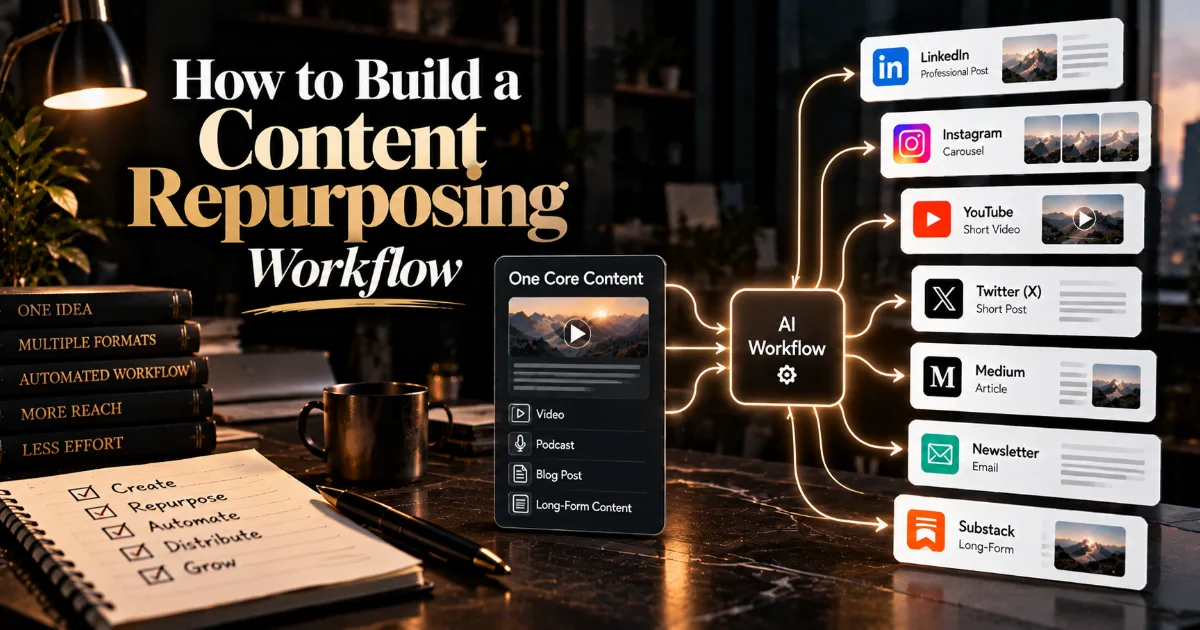
How to Build a Content Repurposing Workflow That Does Not Create Generic Content
Repurposed versions go generic when the drafting step sees only the source. The four inputs that keep every version specific, and the check that catches the rest.
Read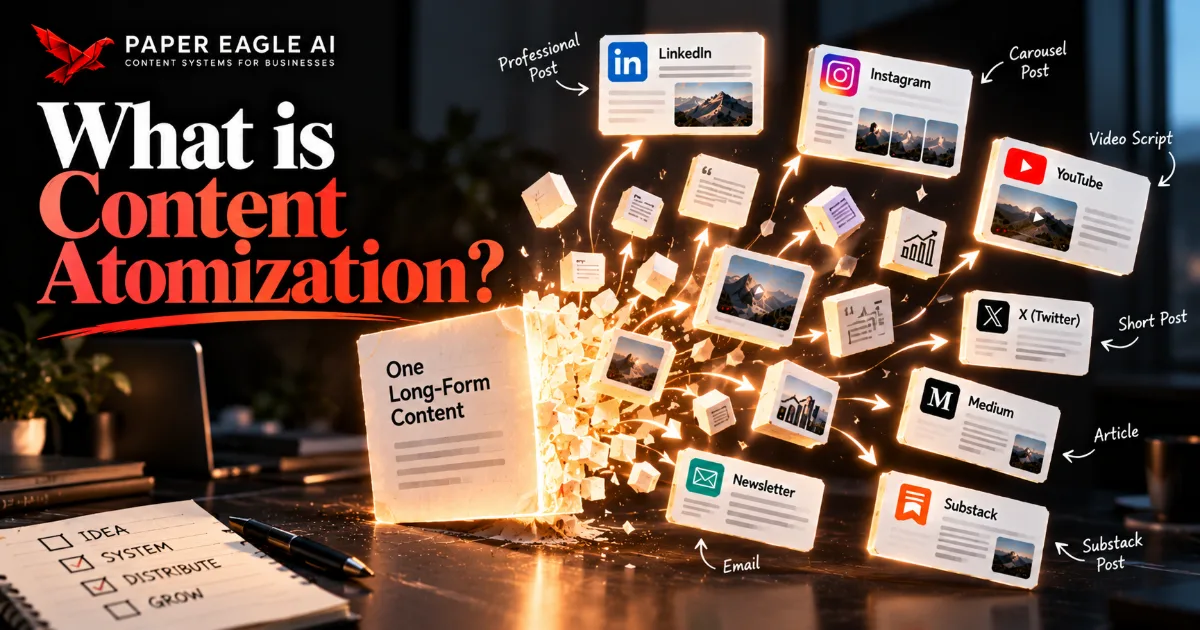
Content Atomization: How One Expert Idea Becomes 20 Useful Assets
One expert idea holds a claim, its reasons, its proof, a story and the objection it answers. Atomization pulls those parts apart, maps each to the format it suits, and checks that twenty assets never say the same thing twice.
Read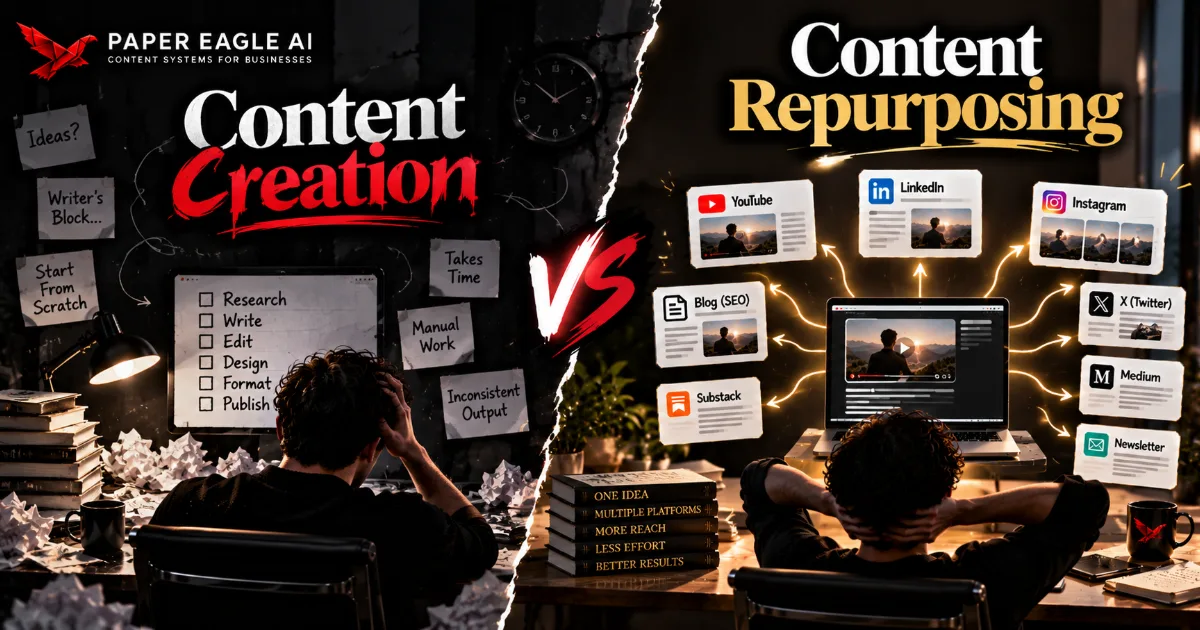
Content Repurposing vs Content Creation: Which Should You Invest In?
When new content earns its cost, when reuse does, and how to tell which one your next hour should buy. Compared on cost, speed, reach and audience fatigue.
Read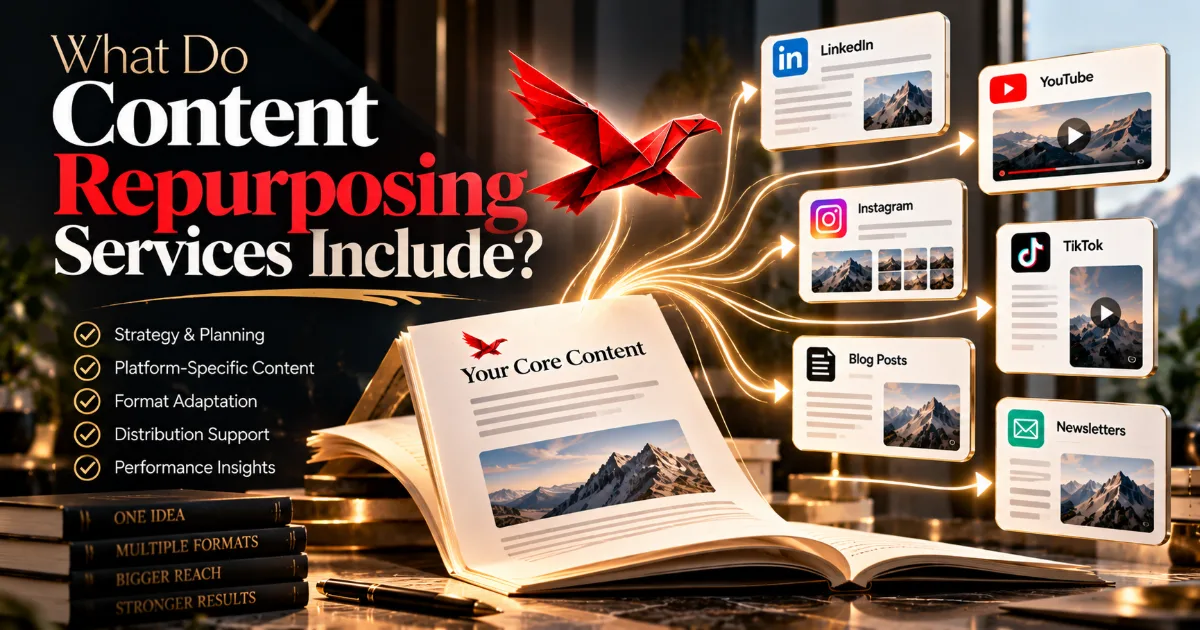
Content Repurposing Services: What Businesses Actually Get
Three different products share the name content repurposing services. What each one includes, what your team provides, who owns the result, and how to measure the return.
Read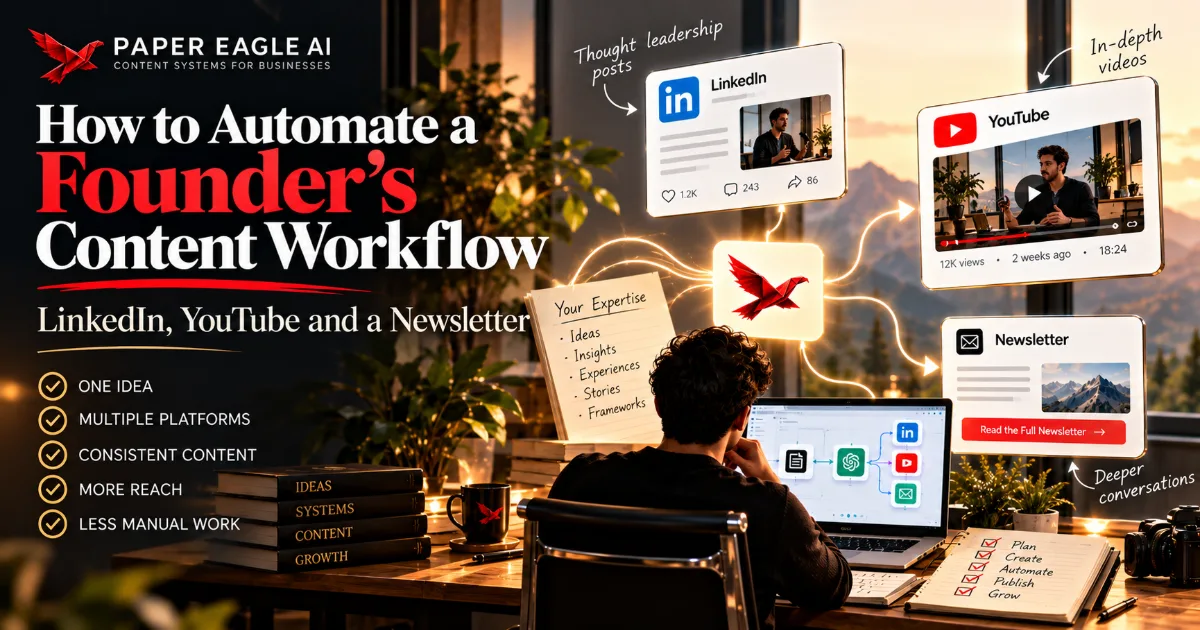
How to Automate a Founder's Content Workflow: LinkedIn, YouTube and a Newsletter
Three channels run on three clocks. How a founder's week of LinkedIn, YouTube and a newsletter runs as one system from one recording, in the order that keeps every link live.
Read
How to Automate Instagram Content Without Losing Brand Voice
Pillars, carousels, Reels and captions can all be automated. The brand voice survives only if it is written down twice, in words and in look, and checked by a person before the queue.
Read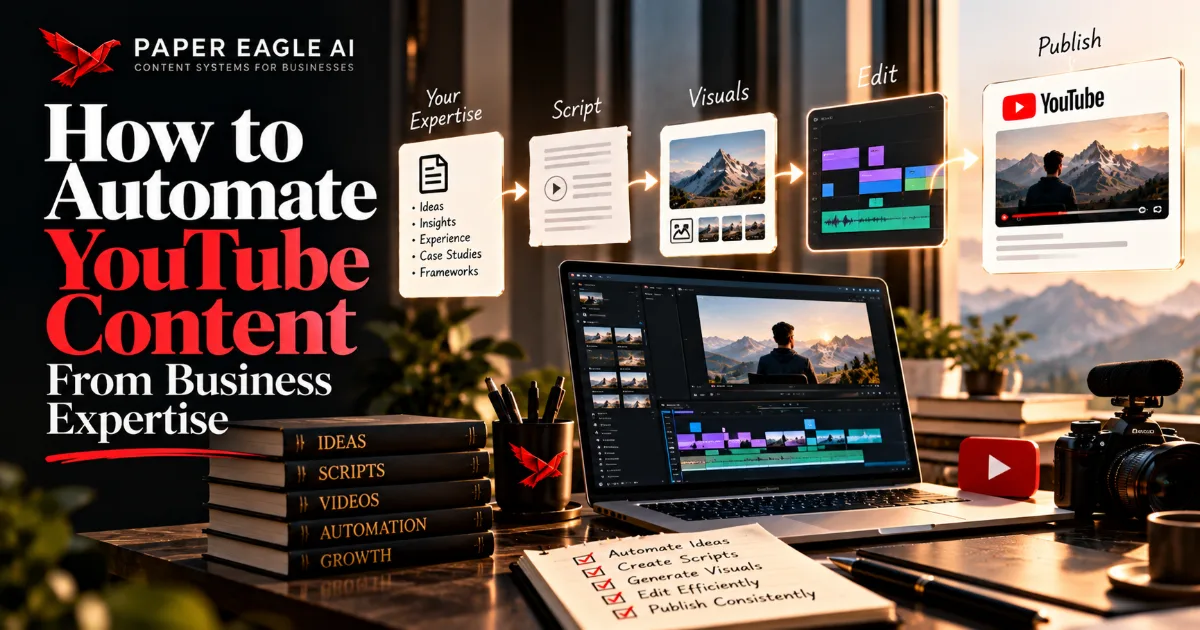
How to Automate YouTube Content From Business Expertise
Most of a business video is decided before anyone presses record. The stages a pipeline can run, from topic to private upload, and the parts that stay with the person on camera.
Read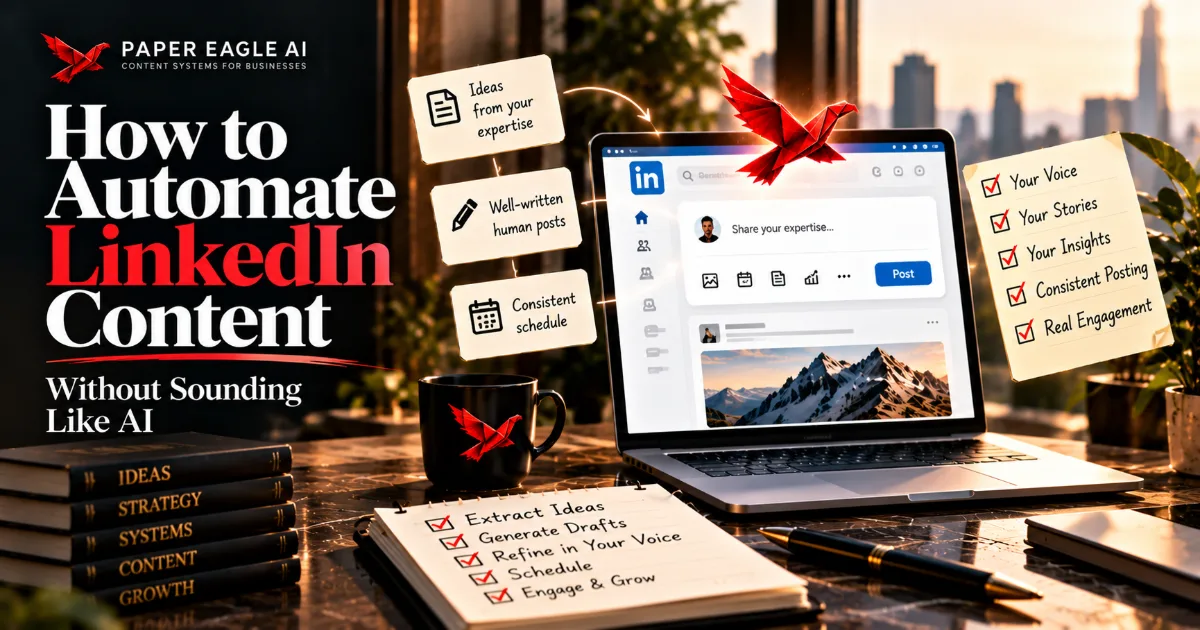
How to Automate LinkedIn Content Without Sounding Like AI
Automated LinkedIn posts read as AI because nobody's opinion went into them. The fix: capture what you'd argue, write a voice file, draft only from those, and keep a person on every post.
Read
Multi-Platform Content Automation: Complete Business Guide
What multi-platform content automation is, the four things sold under the name, whether your business is ready, which platforms first, and what it really costs in time.
Read
Content Automation Specialist for Founder-Led Businesses
What a specialist builds around a founder: the knowledge captured, the voice written down, approval in tiers, and one source feeding LinkedIn, YouTube and the blog.
Read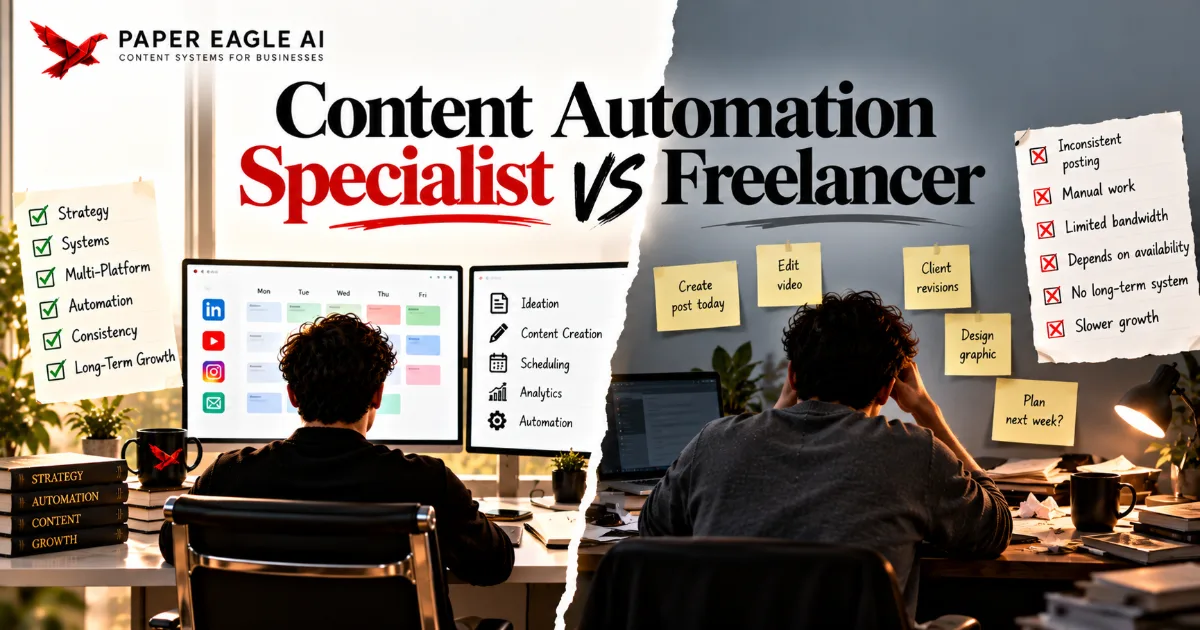
Content Automation Specialist vs Freelancer
A freelancer sells skilled hours. A specialist builds a system you own. Six differences, an honest cost, and when the right answer is both.
Read
When Should a Business Hire a Content Automation Specialist?
Four symptoms say the problem is machinery rather than effort: a founder bottleneck, uneven output, tool sprawl and slow approvals. How to test each one, a readiness checklist, and what a first engagement should build.
Read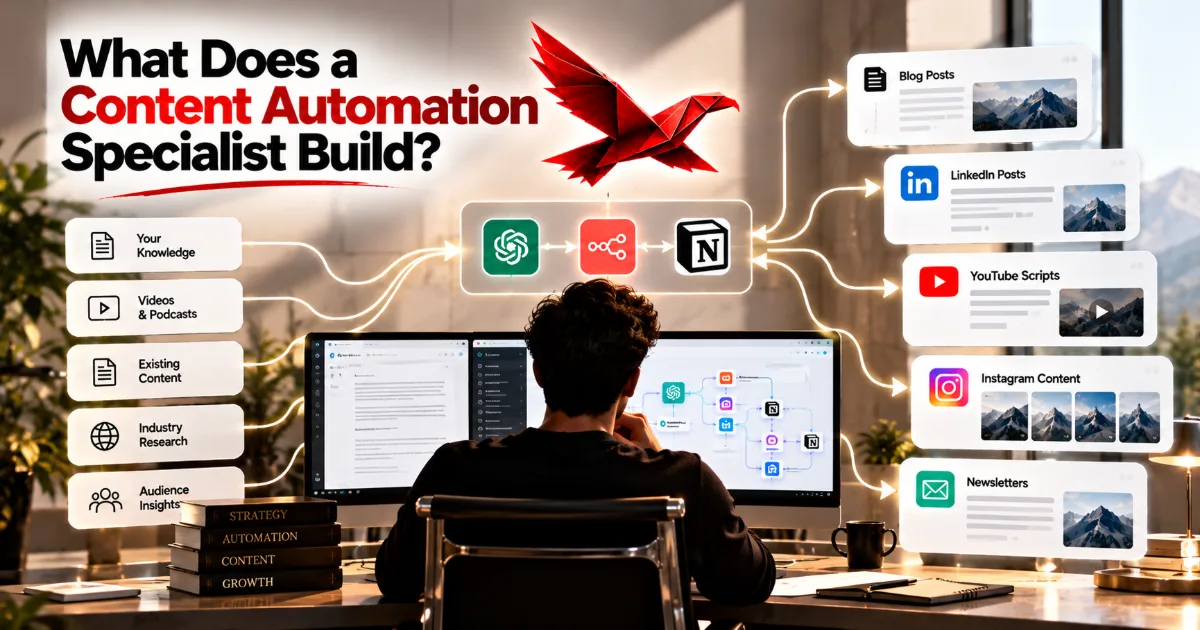
What Does a Content Automation Specialist Build for a Business?
A content automation specialist is finished when nine things work without them in the room. What each one is, what it is made from, and the test that says it is done.
Read
Content Automation Specialist vs Content Strategist
One decides what to say, to whom and why. The other builds the system that says it every week. Where each job ends, where they overlap, and which one your business is missing.
Read
How to Choose a Content Automation Agency
Eight checks, and the evidence that proves each one: what to ask a content automation agency to show you before you sign, and the red flags that should end the call.
Read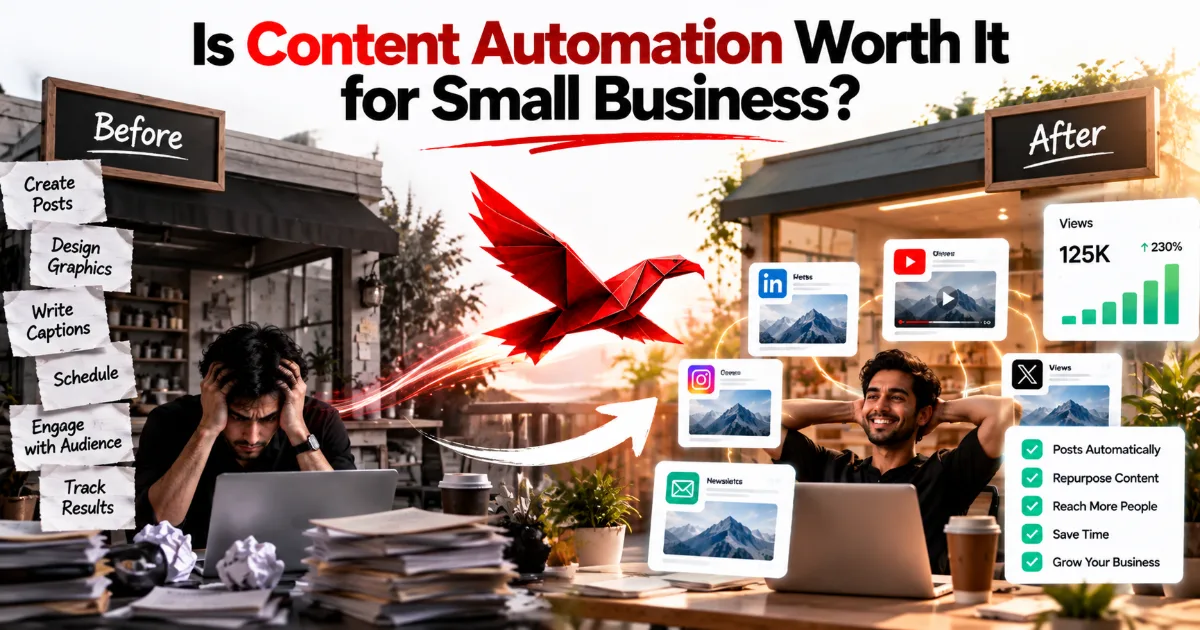
Is Content Automation Worth It for a Small Business?
Worth it when you have real expertise, repeatable work and one person to review. The readiness signs, the risks, and a 30-day test you can run first.
Read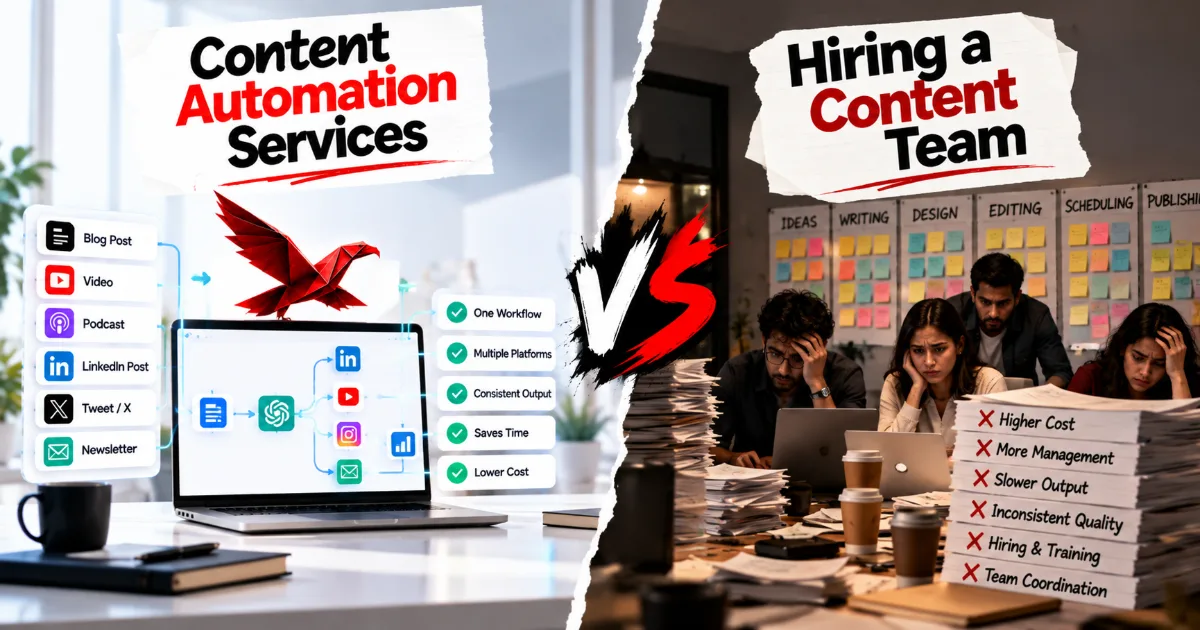
Content Automation Services vs Hiring a Content Team
Hiring a writer, a strategist, an editor and a social manager, or building a system your people run. Role by role, with the management overhead, the hybrid and the break-even logic.
Read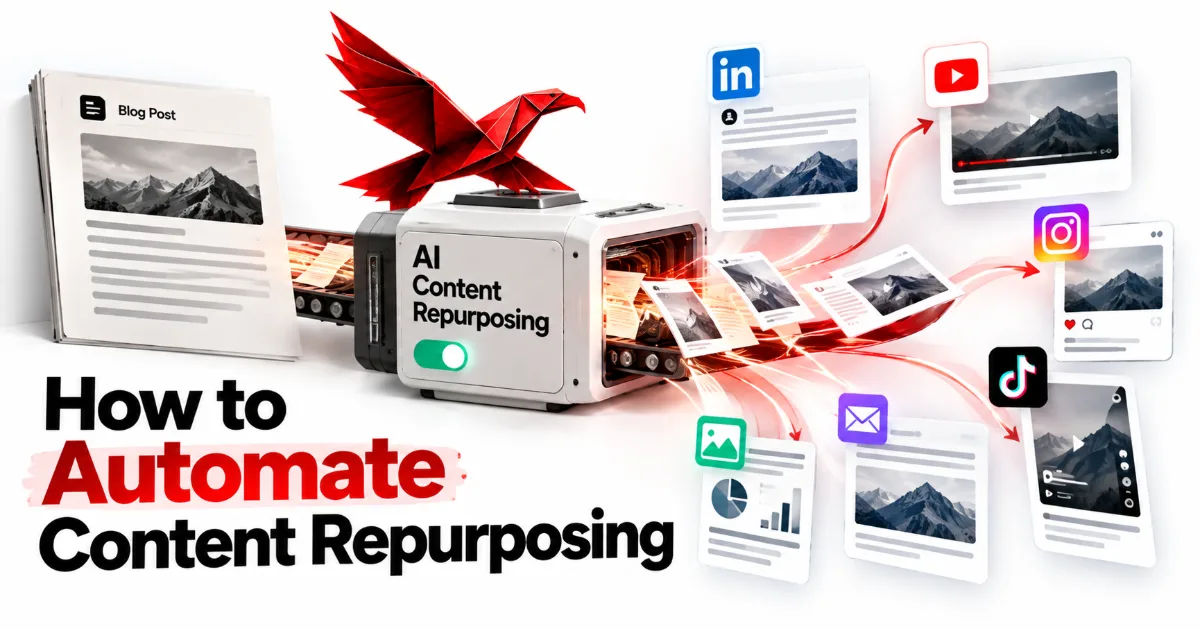
How to Automate Content Repurposing Without Creating Echoes
Automated repurposing fails in predictable ways: drifting facts, near-duplicate copies and the same idea hitting one audience three times. The six controls that stop it, traced through one of our own videos.
Read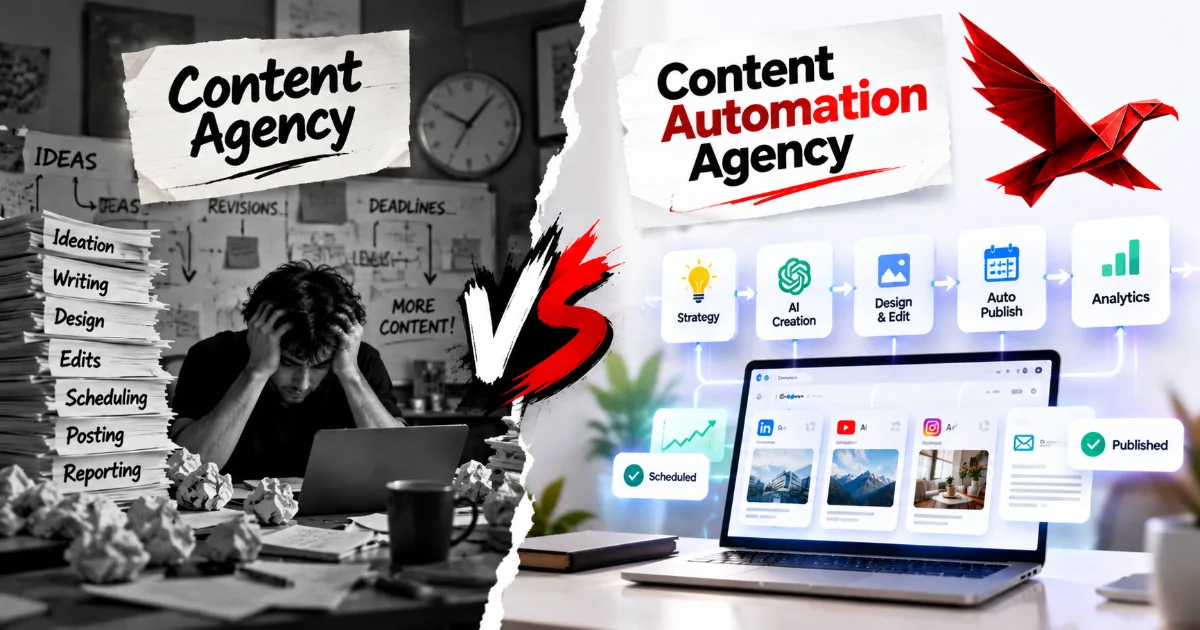
Content Automation Agency vs Content Agency: What Are You Actually Buying?
A content agency sells finished posts; a content automation agency should sell the machine that makes them, built in your accounts. How to read a proposal and tell which one you are being sold.
Read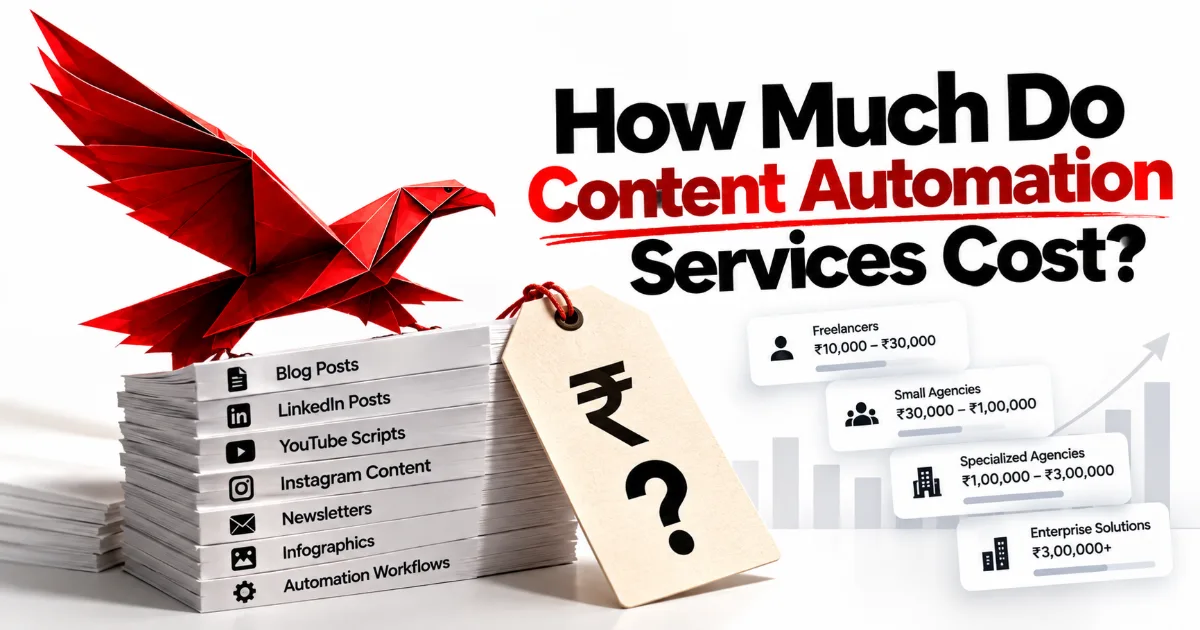
How Much Do Content Automation Services Cost?
There is no honest number before discovery, but there is an honest structure. The six things that decide what a build costs, the three ways it is sold, and the traps hidden in a cheap quote.
Read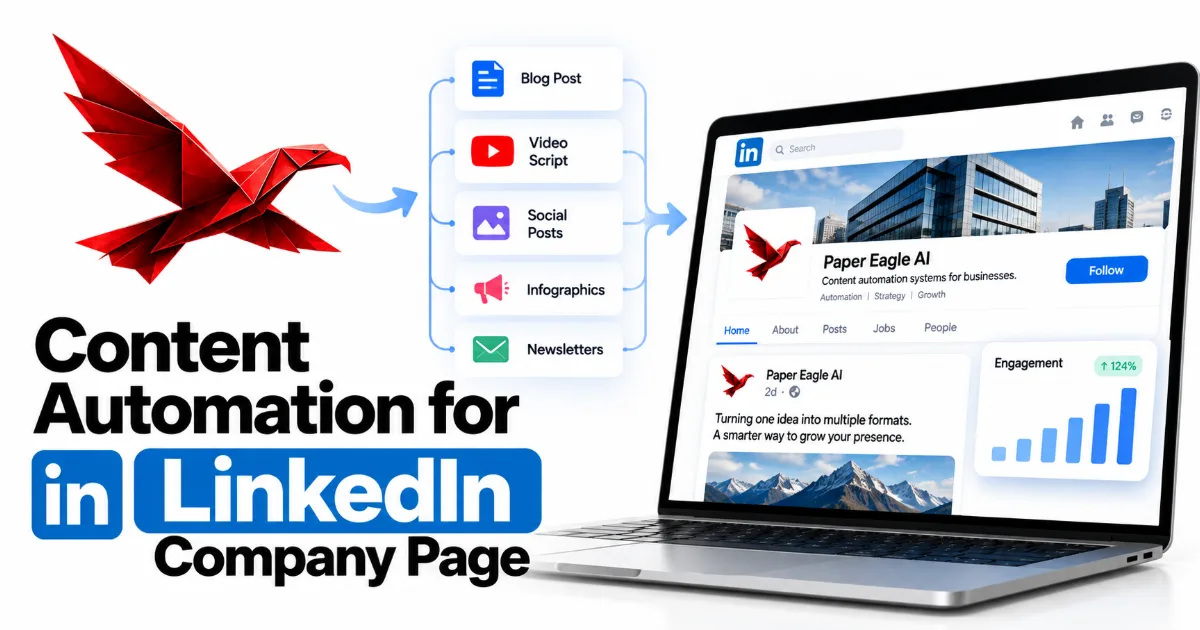
Content Automation for LinkedIn Company Page
What a LinkedIn company page can and can't automate under LinkedIn's 2026 rules, the formats and voice that suit a page, and a system that keeps it moving without a bot.
Read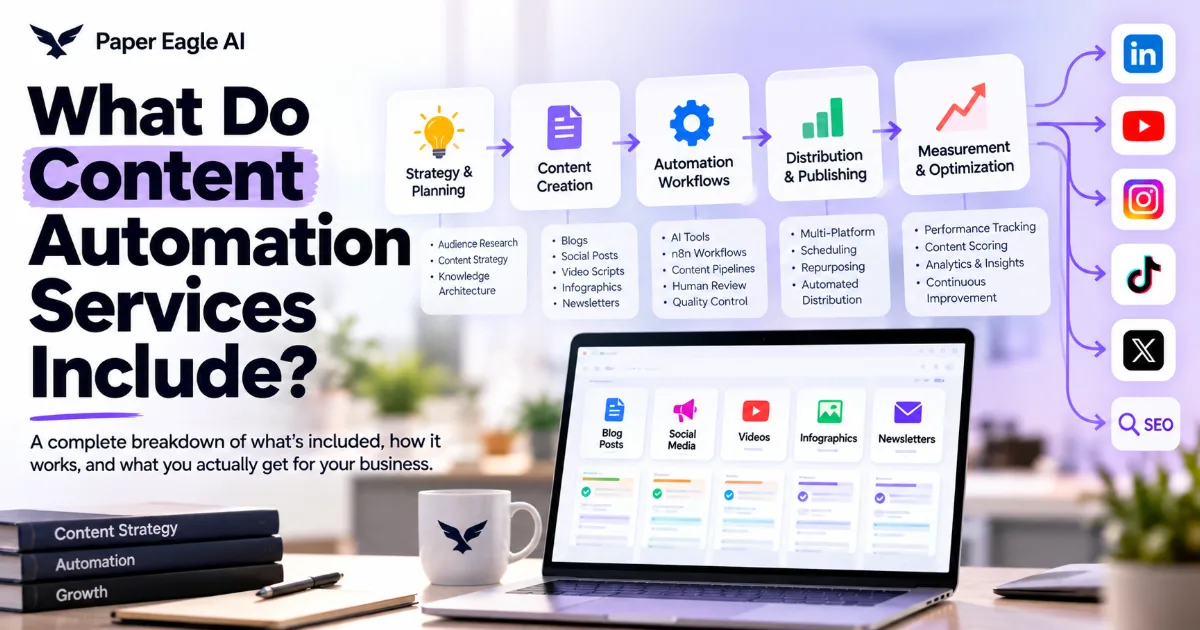
Content Automation Services: What Businesses Actually Get
What a content automation service actually delivers: knowledge capture, strategy, production, review, distribution, measurement and a system you own outright — plus who should buy it and who shouldn't yet.
Read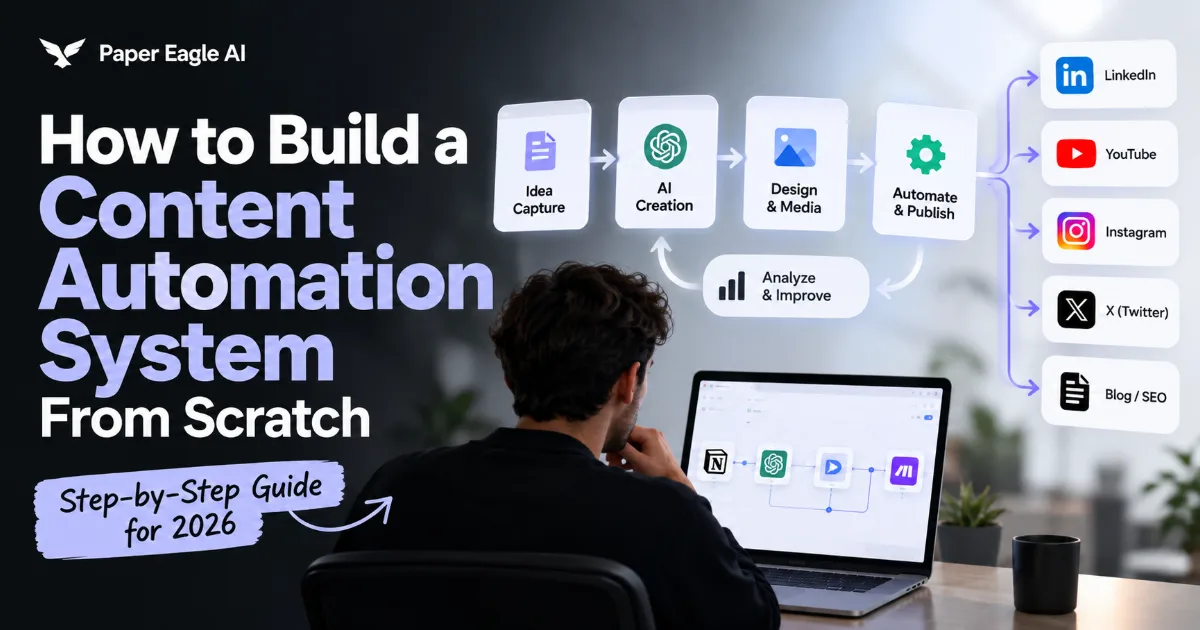
How to Build a Content Automation System From Scratch
The ten stages of a content automation system in the order they have to be built — the folder, the n8n board, the review gate and the first six weeks, done once from scratch.
Read
Content Automation Specialist for Content Operating Systems
What a content automation specialist builds when the deliverable is a Content Operating System: the ten stages, and what it looks like for a law firm, a med spa, a plumber, a startup, a product business or an agency.
Read
Content Automation Specialist for Multi-Platform Content
One YouTube video can feed ten platforms, but only if each one gets content written for its own audience. Here is what each platform rewards, and how the translation works.
Read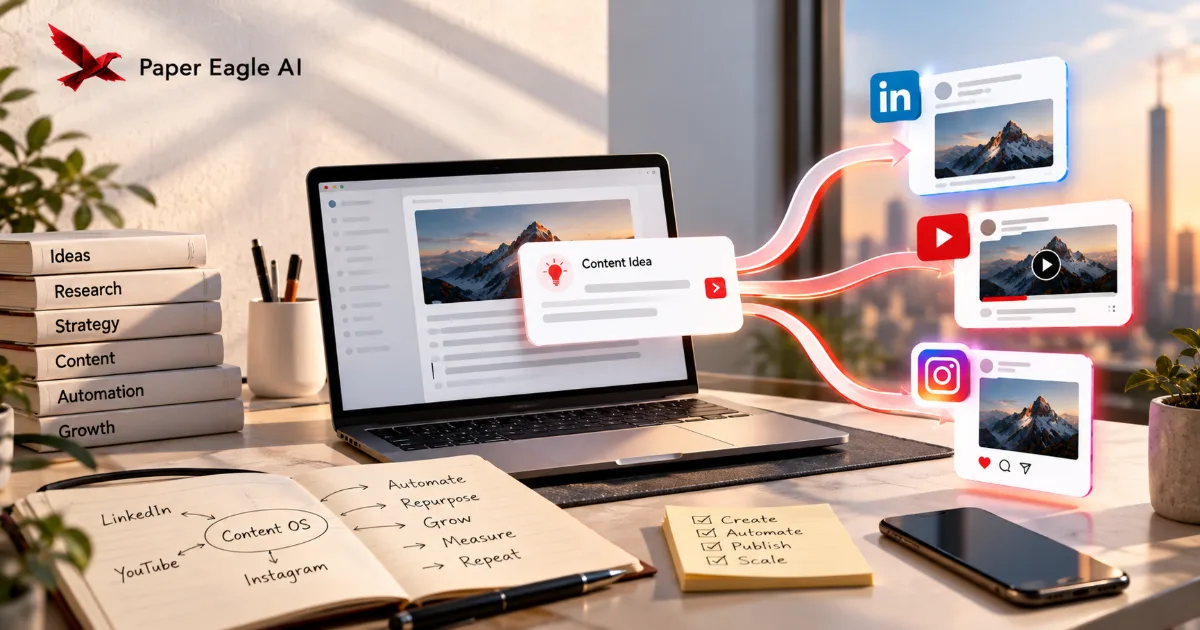
Content Automation Specialist for LinkedIn, YouTube & Instagram
Most businesses run three content calendars and call it a strategy. A pipeline runs one source of thinking through one translation layer into three platform-native outputs — and each platform has rules about what a machine may do.
Read
Content Automation for Founder-Led Businesses
How a founder-led business automates its content in five steps: the audit, the capture budget, the pipeline, the approval gate and routing to each platform.
Read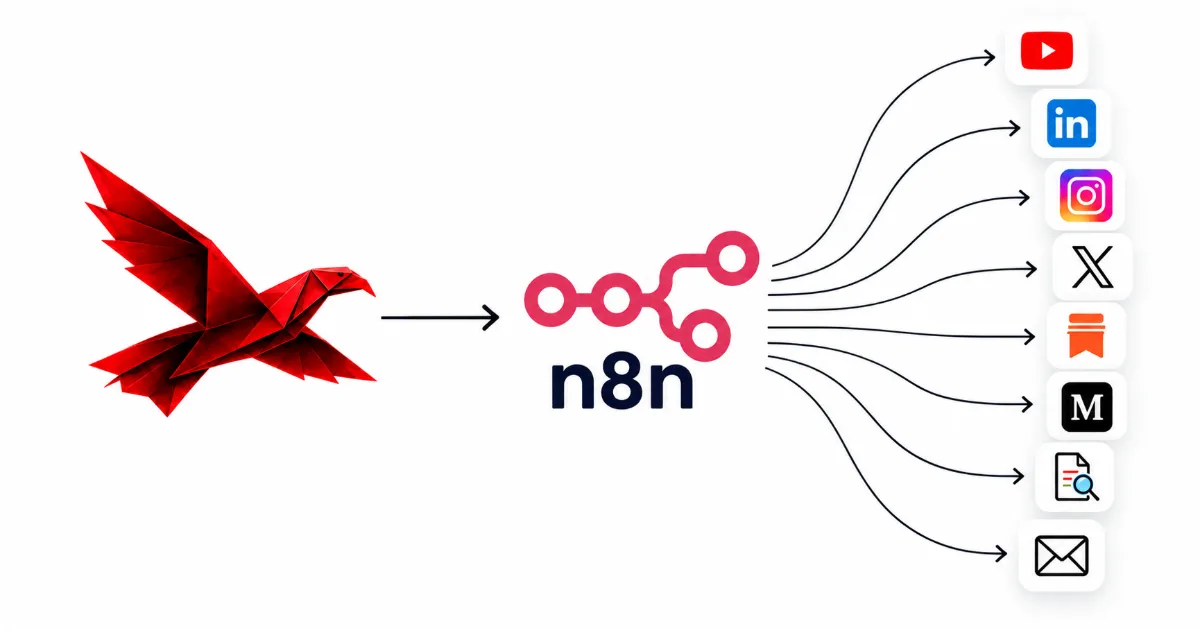
How To Automate Content With n8n
Build it step by step: a finished piece triggers one draft per platform, each waits for your approval in Slack or email, then posts or queues itself and lands in a record.
Read
Content Automation with n8n
n8n can send you one email every morning with the news in your niche, plus a draft script and a carousel outline waiting for approval. Here is how that pipeline is built, and the one thing it needs from you first.
Read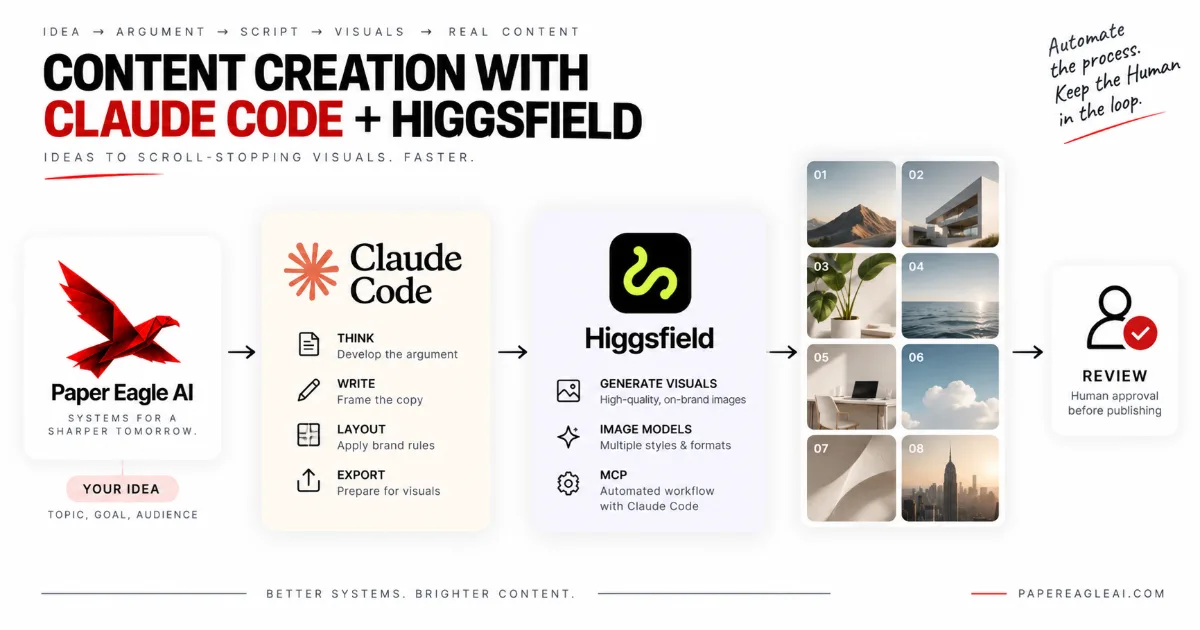
Content Creation with Claude Code and Higgsfield
Claude Code alone builds carousels out of type and layout. Connect it to Higgsfield over MCP and the same pipeline gets generated visuals. Here is how the connection works, and what it honestly costs.
Read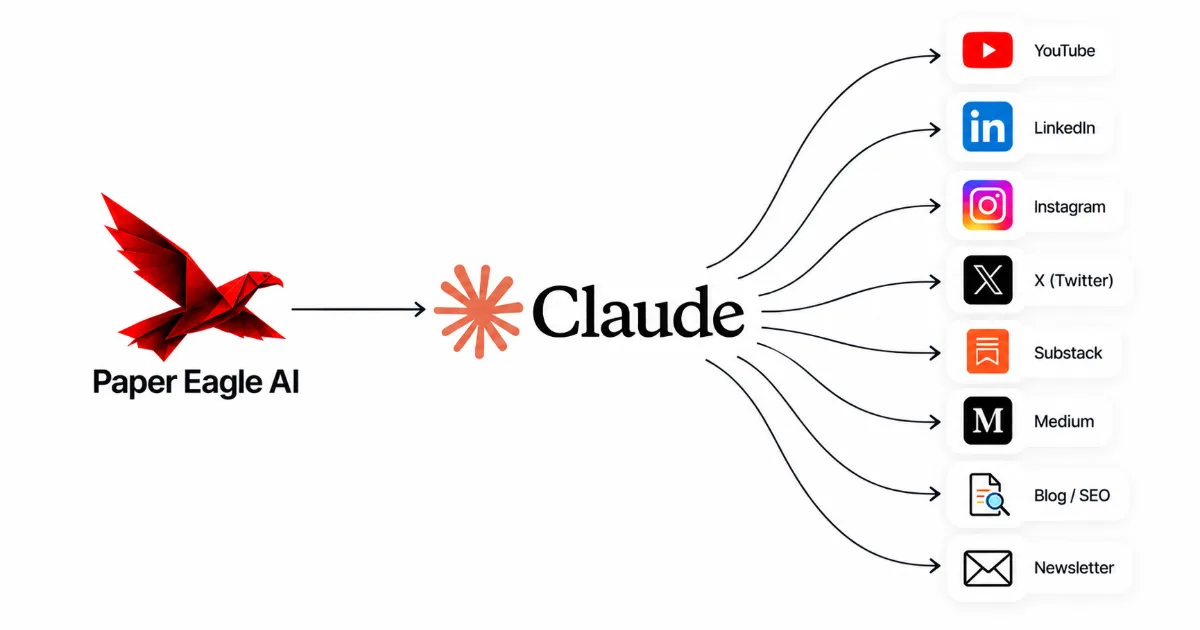
Claude Code for Content Automation: The Real Version
Blogs, carousels and video scripts out of one terminal. What you have to learn, what files you make, where Claude is genuinely weak, and what it honestly costs.
Read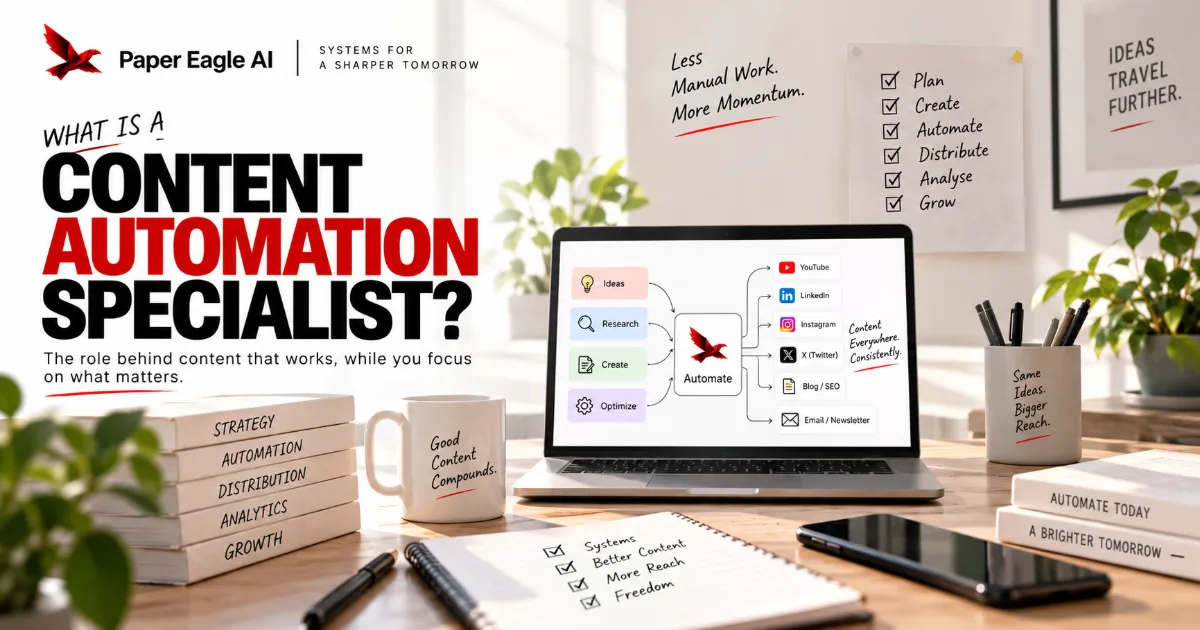
What Is a Content Automation Specialist?
The role sits between your expertise and everything you publish. Here is the job description, the skills it really needs, and what it does for a med spa, a law firm, a startup and a creator.
Read
Paper Eagle AI: The Best Content Automation Agency, and Why
What separates a content automation agency worth hiring: it removes the repetitive work and leaves the creative decisions with you. Here's what we do, what others do, and what we won't promise.
Read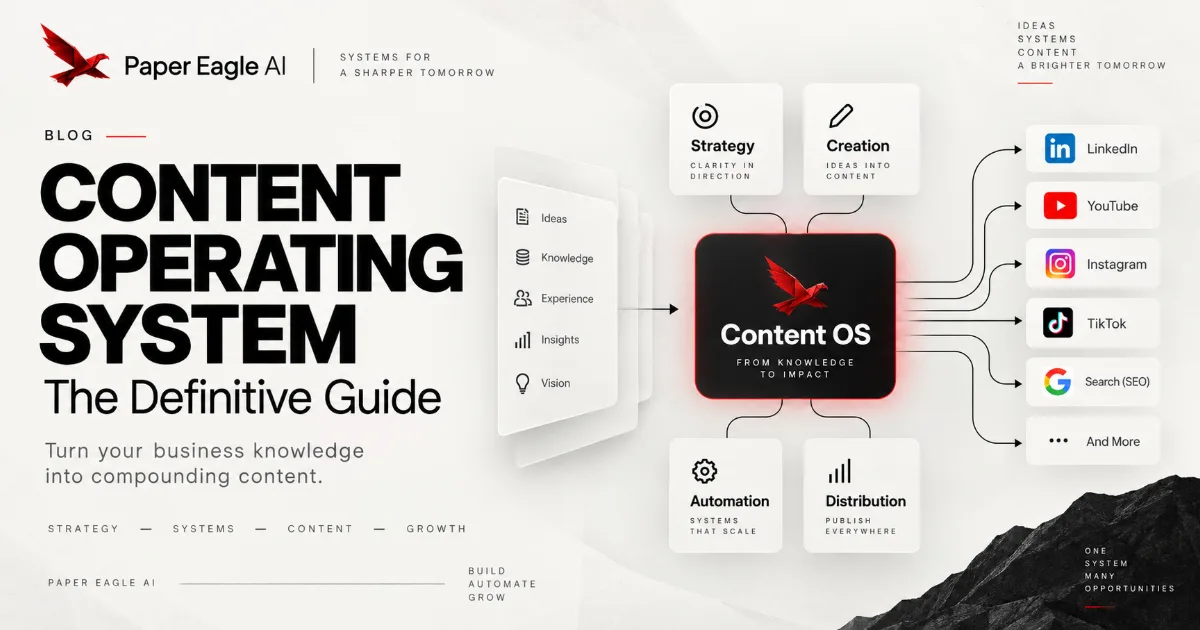
What Is a Content Operating System? The Definitive Guide
A Content OS turns what your business knows into content it publishes consistently — architecture, strategy, workflows, distribution, measurement. What one is, and how to build it.
Read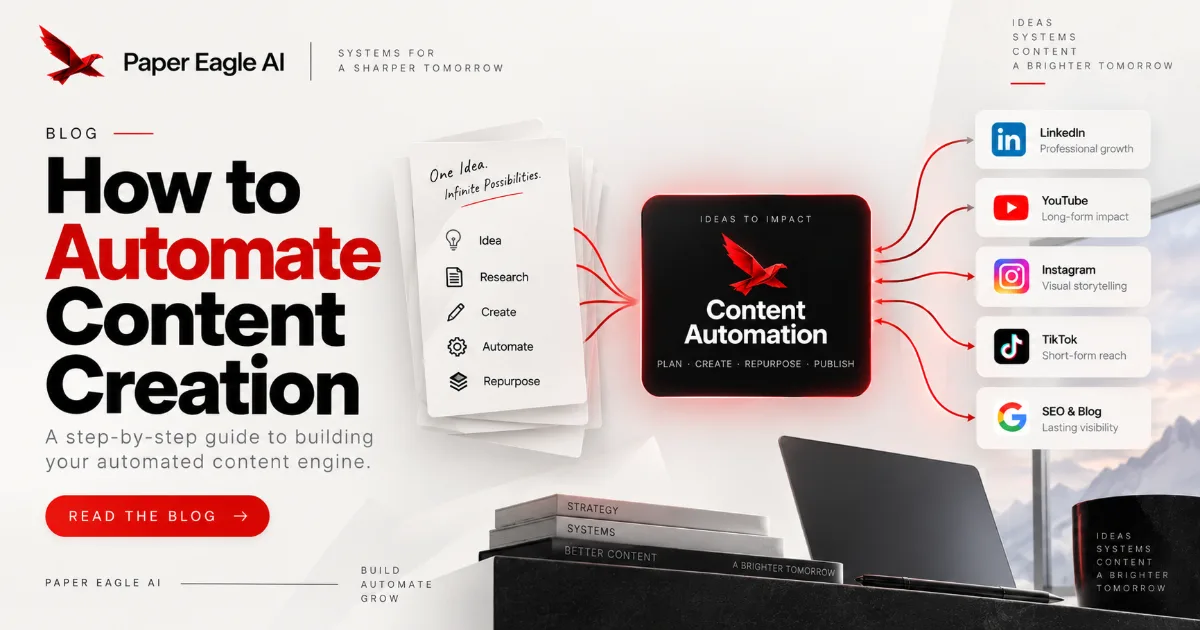
How to Automate Your Content Creation Process in 2026
Most attempts automate the drafting, which is the one step that needed judgement. The four layers, in the order they have to be built.
Read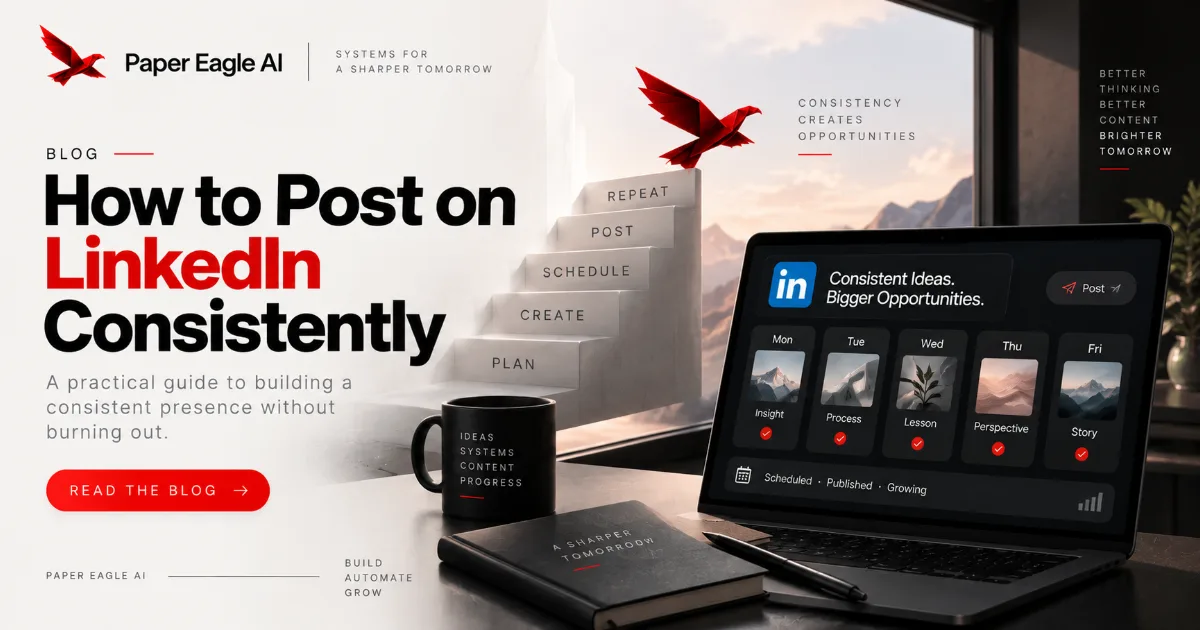
How to Post on LinkedIn Consistently (Without It Eating Your Week)
Consistency on LinkedIn fails because you run out of things to say, not willpower. The fix is a supply pipeline — and here is how one is built.
Read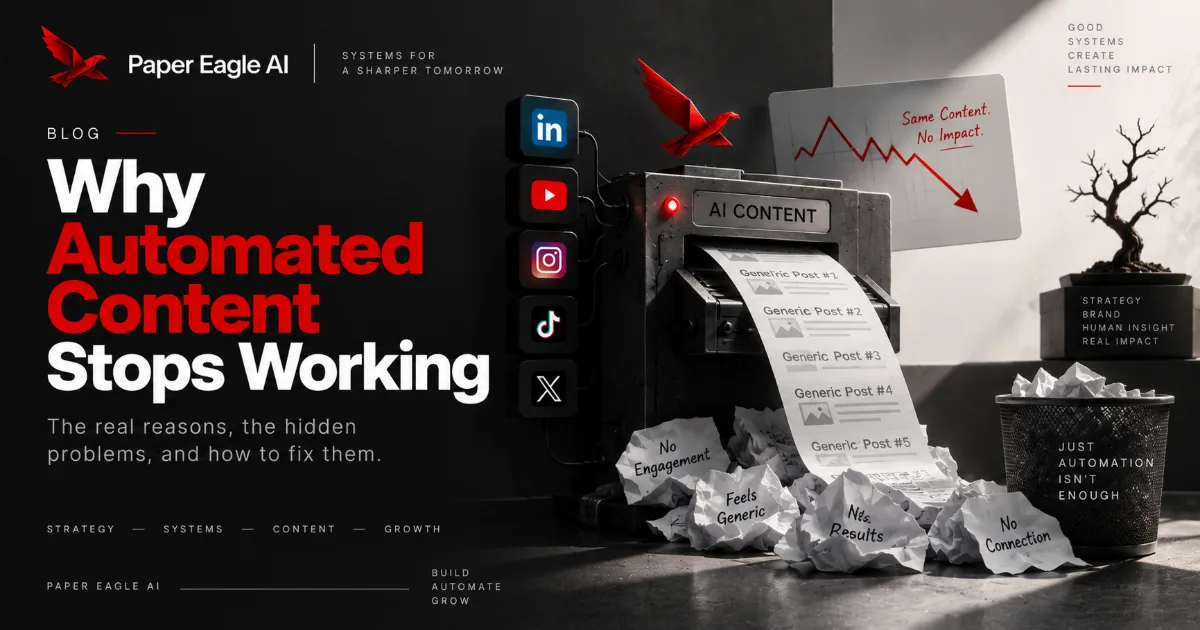
Why Automated Content Stops Working
It worked in month one and nobody can say when it stopped. Four things decay underneath a content workflow, none of them the software — and the fix is almost never a rebuild.
Read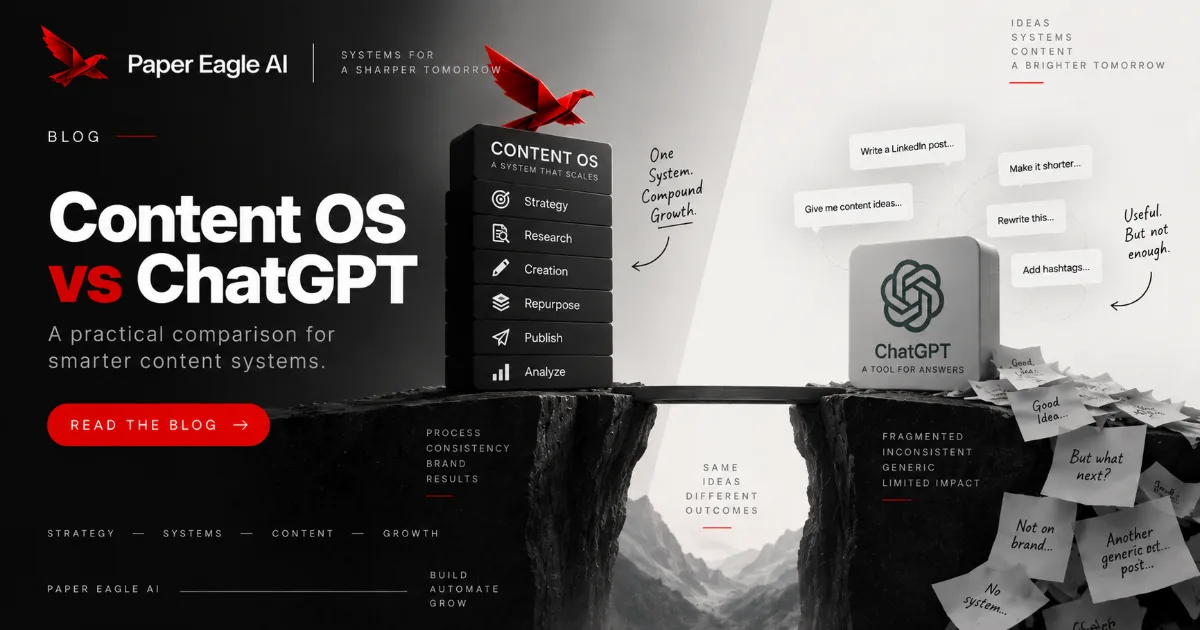
Can You Just Use ChatGPT for Content?
You have the same models everyone else has, so the model can't be the advantage. A fair look at what a general AI tool does well, the five things it leaves untouched, and when using it on its own is genuinely the right call.
Read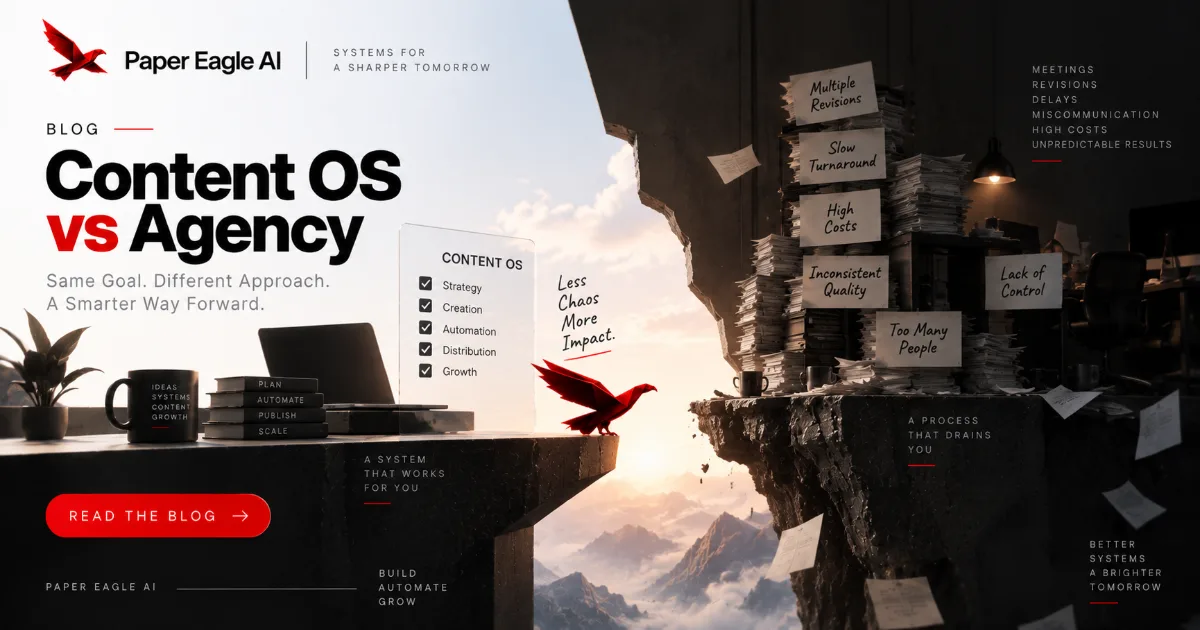
Content OS vs. Content Agency: What Is the Difference?
Most businesses think content comes down to two choices: hire an agency or build an in-house team. There's a third — build a system you own. Here's how a Content OS differs from an agency, and when it's the better call.
Read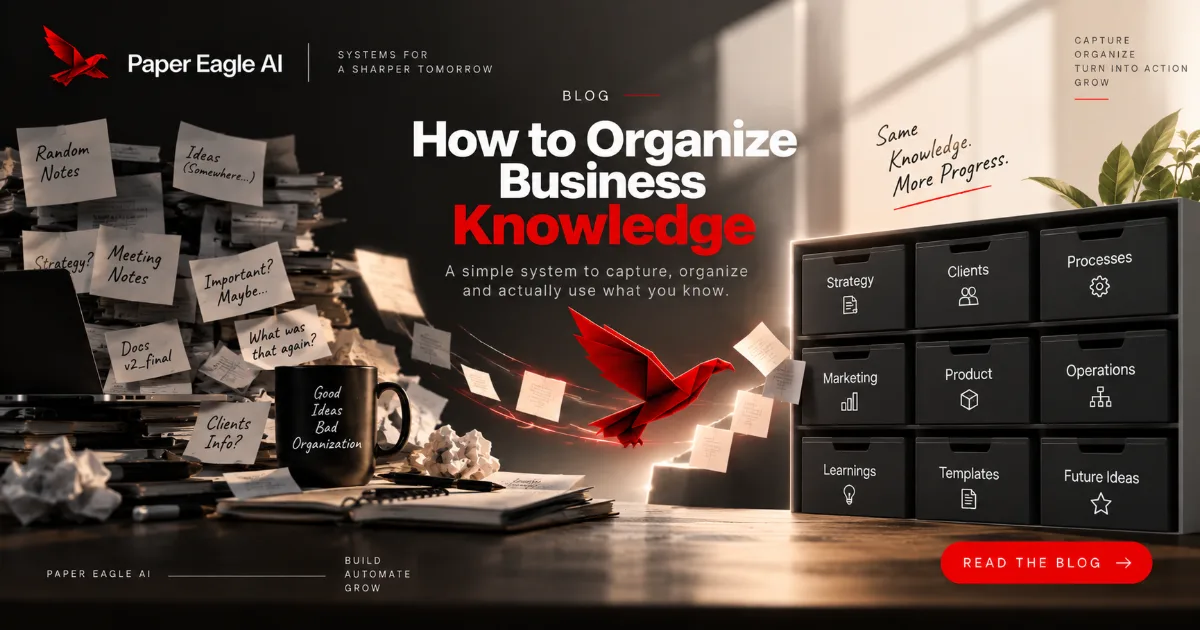
How to Organize Your Business Knowledge So It Compounds
Most business knowledge is scattered — stuck in people's heads, buried in old docs, lost in Slack threads. Organize it deliberately and it starts to compound, each piece worth more as it connects to the rest. Here's how to build a knowledge architecture that grows in value over time.
Read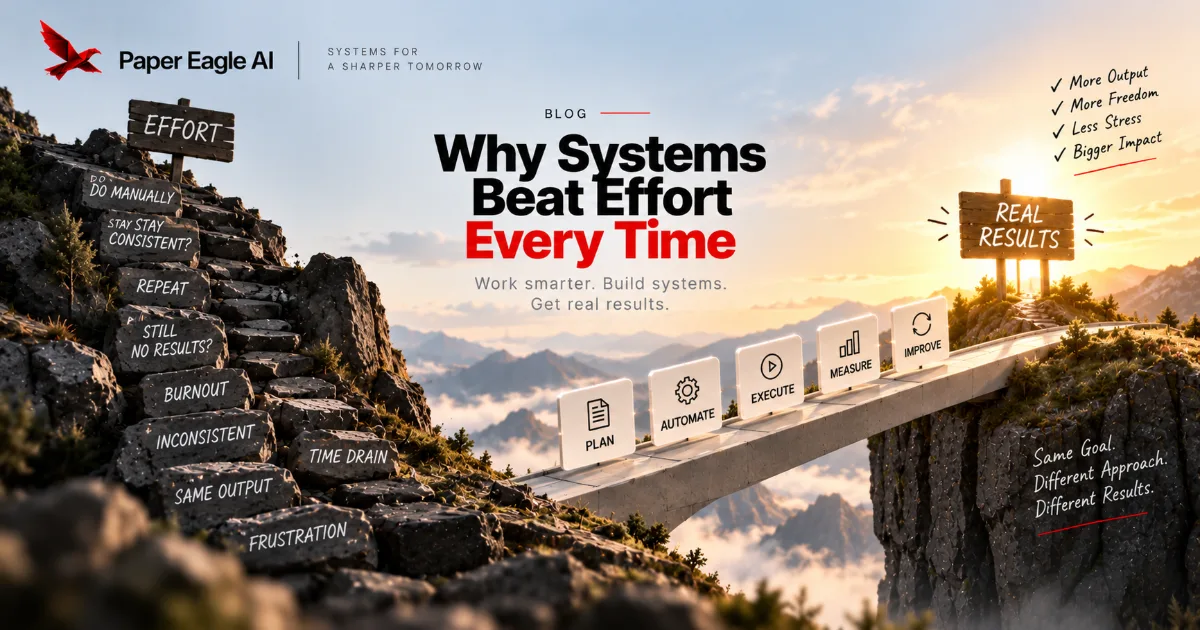
Why Systems Beat Effort Every Time
Effort has a ceiling. Systems don't. It's the idea behind everything we build. Rely on effort and you're capped by how hard you can work and how much you can hold in your head. Build a system and those limits fall away.
Read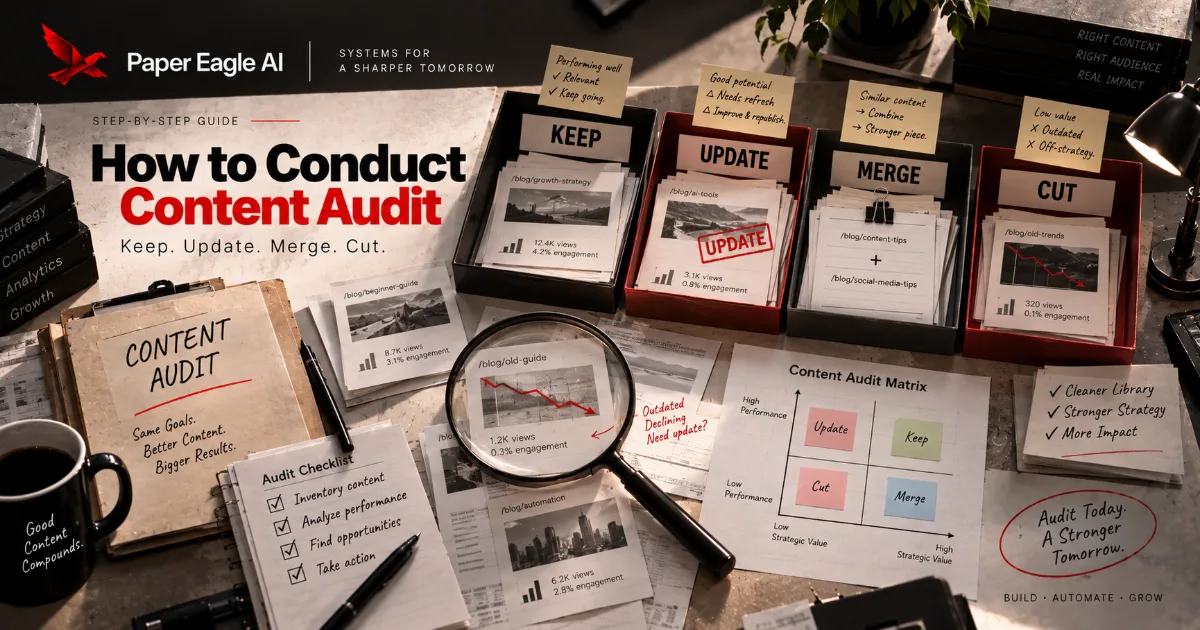
How to Conduct a Content Audit: Step-by-Step Guide
Before you build a Content OS, you need to know what you're working with. A content audit shows you what you already have, how it's performing, and where the gaps are. This guide walks through the whole process, step by step.
Read
Preparing Your Content for AI Search and GEO
AI search is changing how people find content. Generative Engine Optimization, LLM citations, and AI overviews are becoming channels you can't ignore. Here's what preparing your content for them actually involves.
Read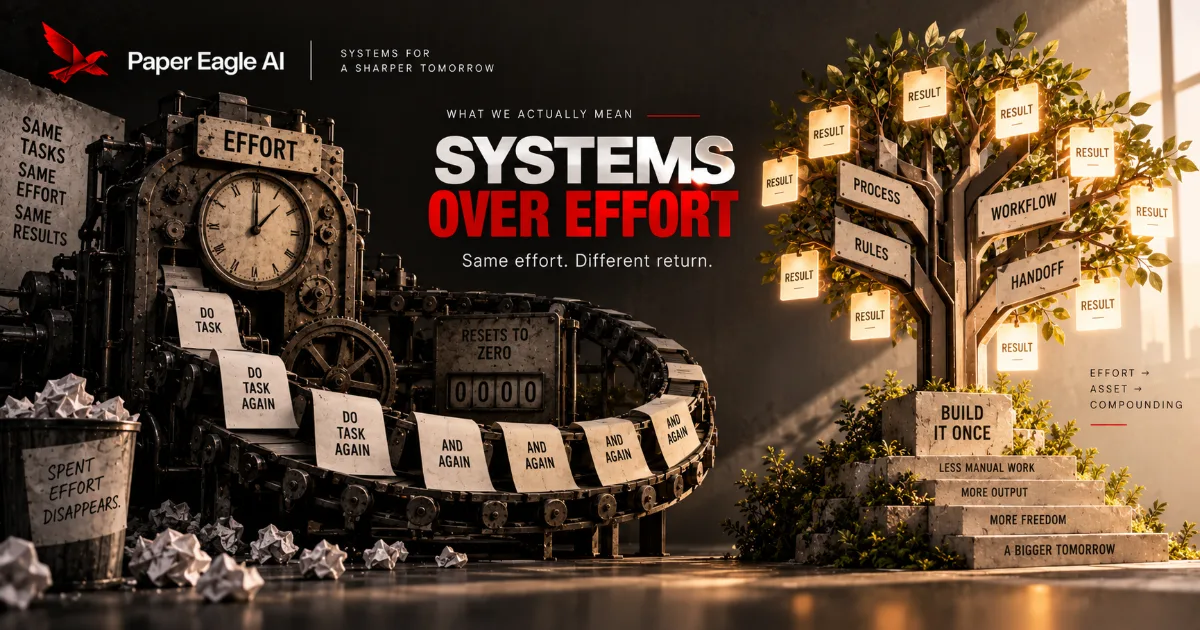
What We Mean by Systems Over Effort
It's our most repeated phrase — but what does it actually mean? Systems over effort isn't about avoiding hard work. It's about making sure the work you do produces results that last. Here's the thinking behind it.
Read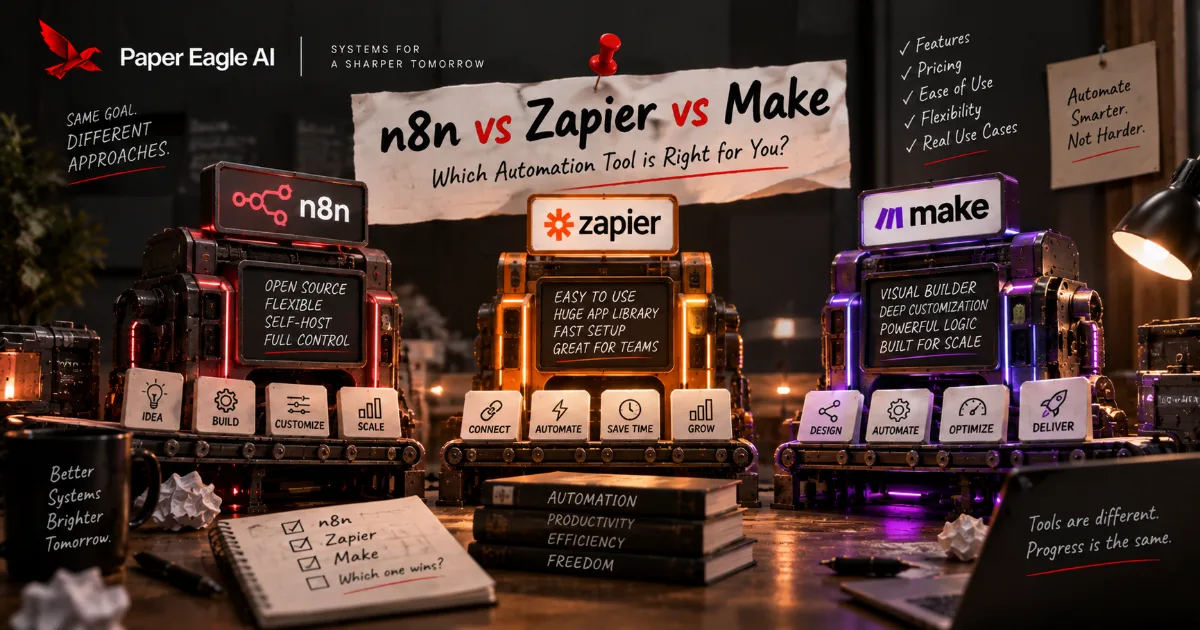
n8n vs Zapier vs Make: Choosing the Automation Layer
All three will build your content pipeline, so the feature table decides nothing. What decides it is who can open the thing in six months, where it runs, and how it bills a fan-out.
Read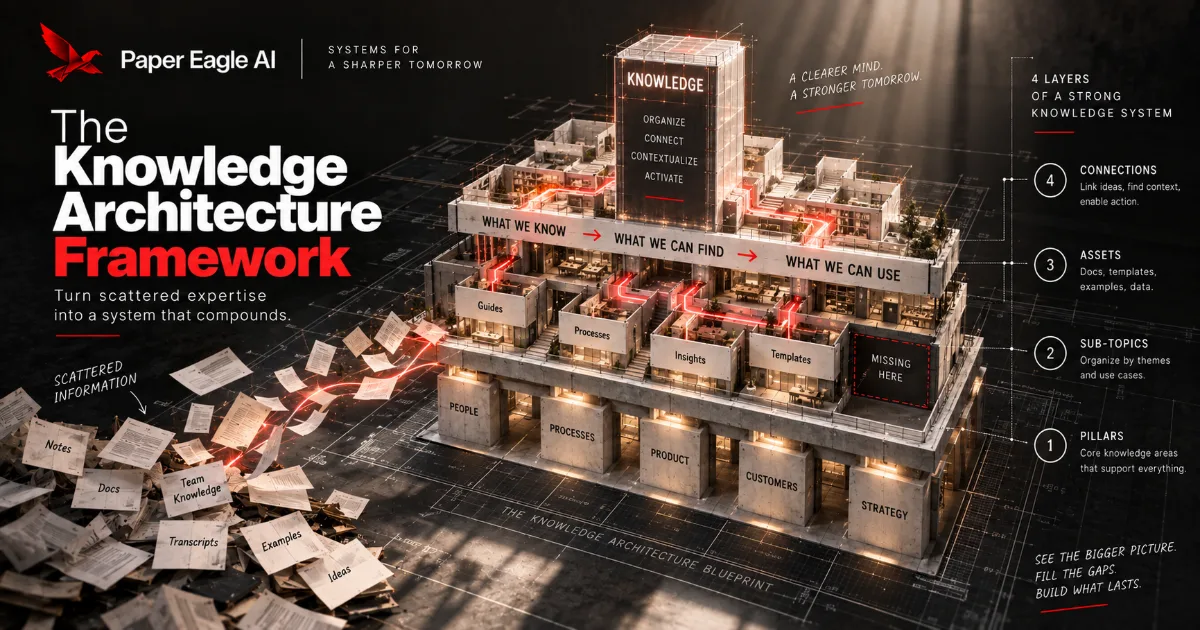
The Knowledge Architecture Framework
Before you can build a Content OS, you need knowledge architecture underneath it. This framework helps you audit, organize, and maintain what your business knows — so it becomes an asset that grows instead of a mess that spreads.
Read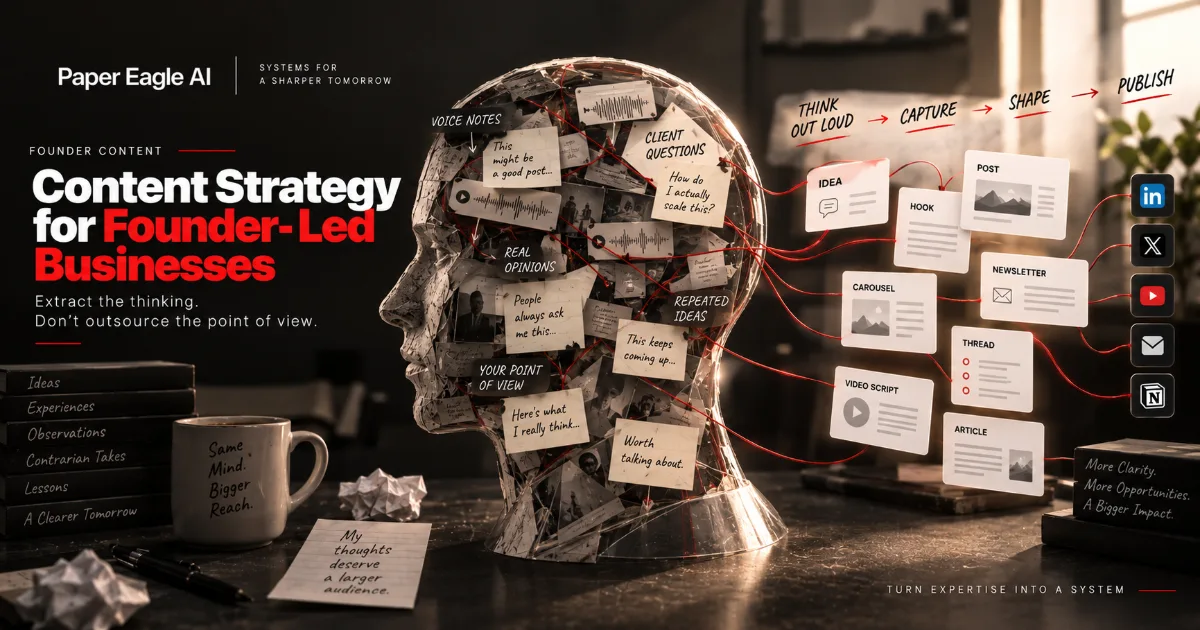
Content Strategy for Founder-Led Businesses
Founder-led businesses have a real edge: hard-won expertise a competitor can't fake. The hard part is turning that expertise into content that brings in clients. Here's a strategy built for founders, not marketing departments.
Read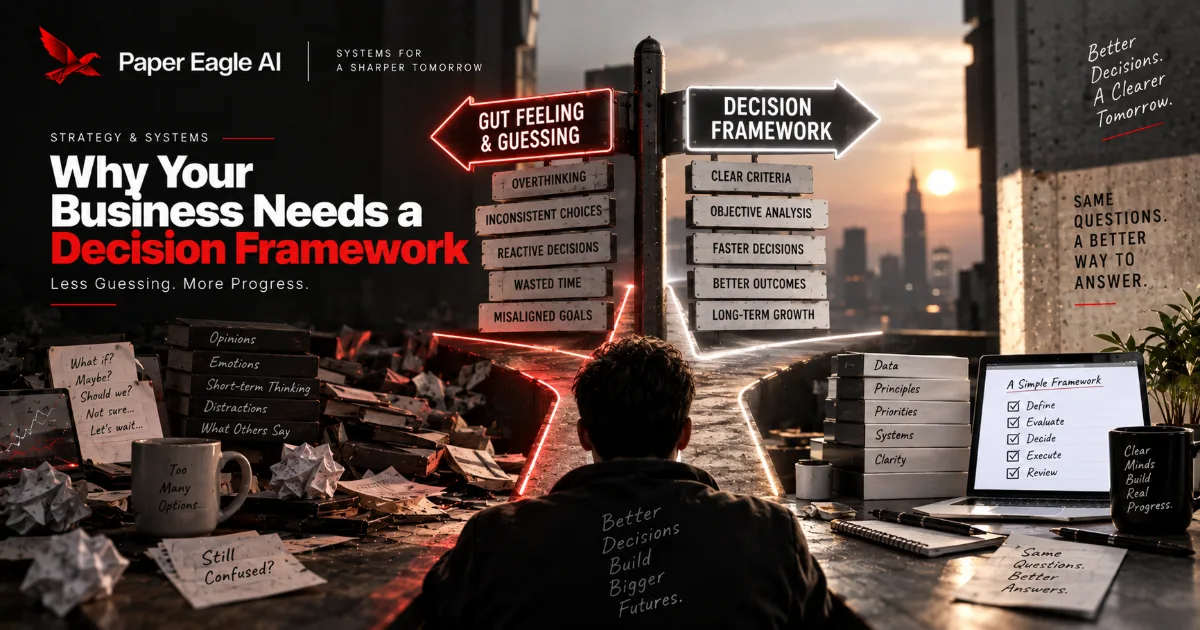
Why Your Business Needs a Decision Framework
If every decision runs through you, you're the bottleneck. A decision framework lets your team make good calls without waiting on you every time. Here's how to build one.
Read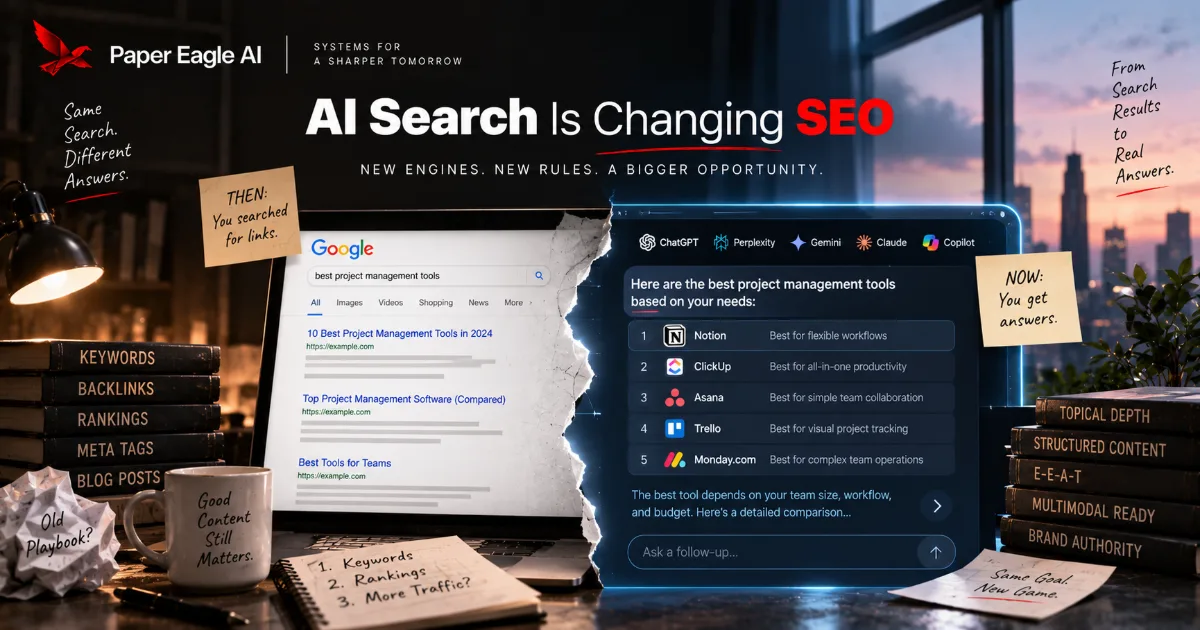
AI Search Is Changing Everything About SEO
Traditional SEO isn't dead, but on its own it's no longer enough. AI search and Generative Engine Optimization are reshaping how content gets found. Here's what's changing, and what to do about it.
Read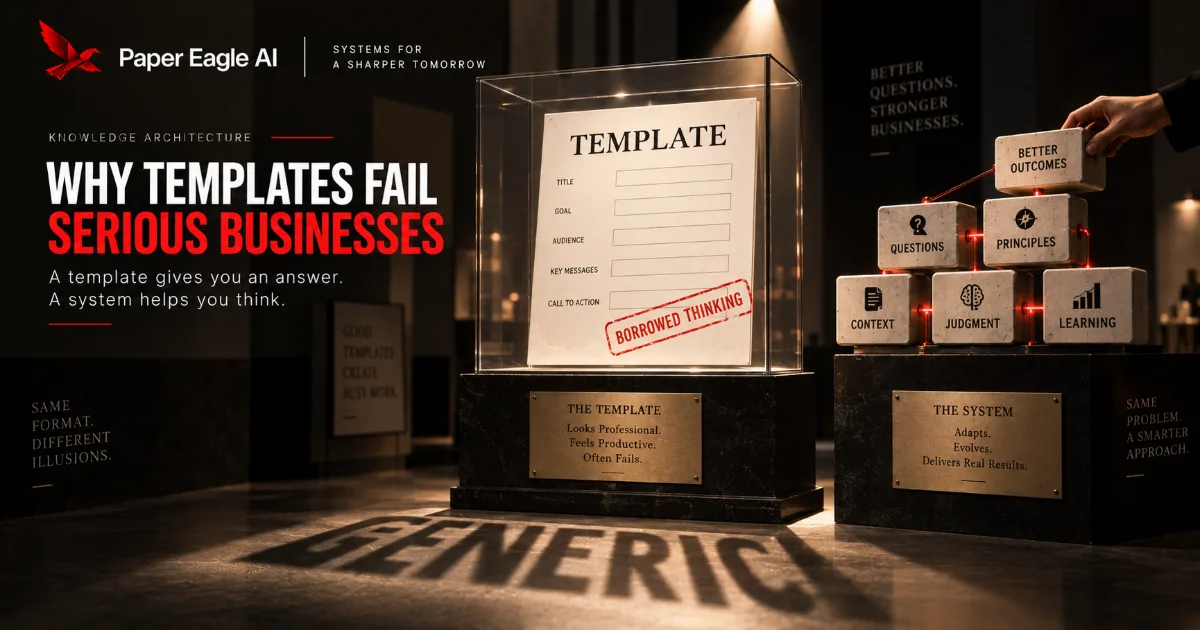
Why Templates Fail for Serious Businesses
Templates promise speed and convenience. What they deliver is generic. For a business that takes its work seriously, a template is a trap. Here's why — and what to build instead.
Read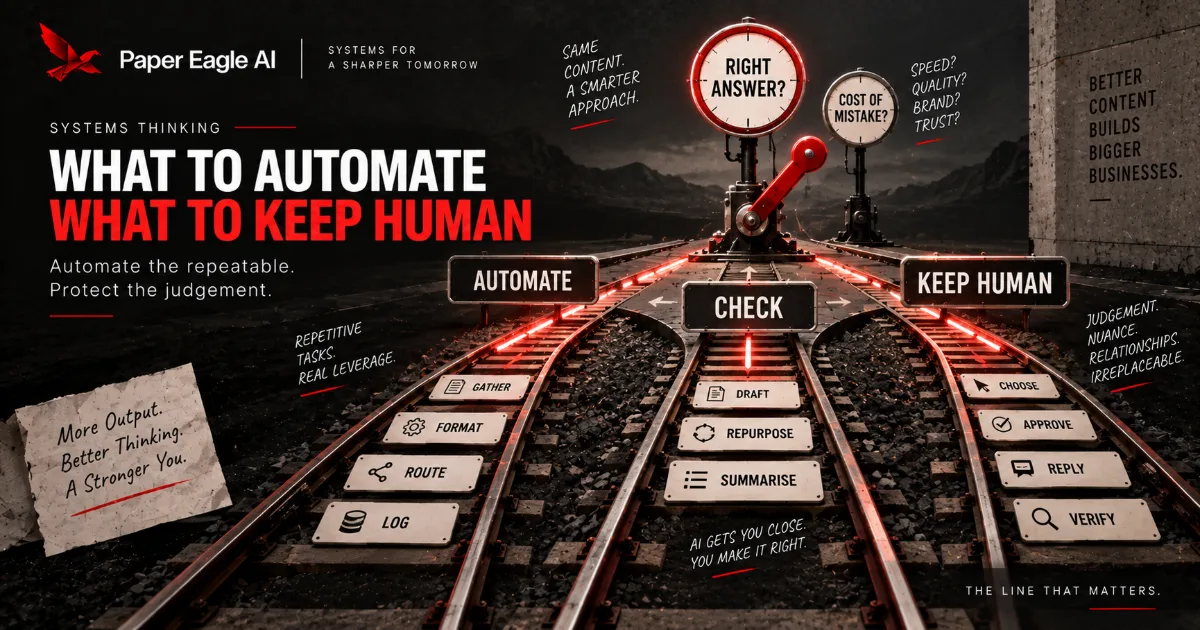
What to Automate in Your Content, and What Not To
"How much can we automate?" is the wrong question. Four questions place any step on one side of the line — and the four that should never cross it are shorter, and more important, than most people expect.
Read
How to Create Content That Compounds Over Time
Most content decays. It ships, gets a short burst of attention, then disappears. Content that compounds does the opposite — it grows more valuable the longer it's live. Here's how to create it.
Read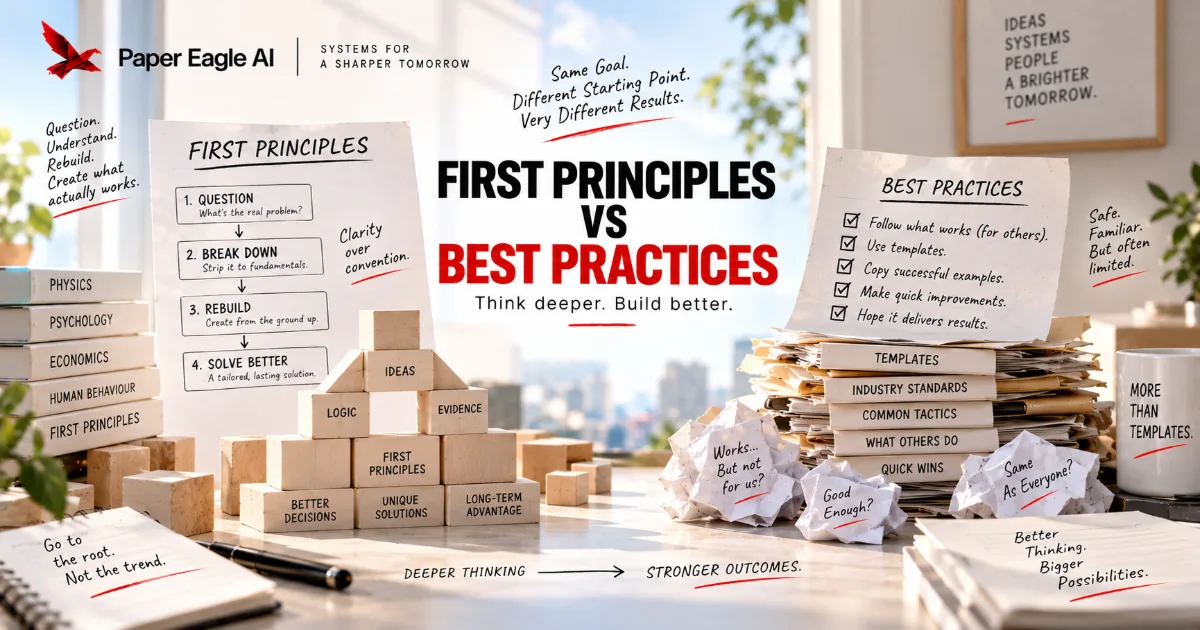
First Principles vs. Best Practices
Best practices are what everyone else is already doing. First principles are what actually works for your specific situation. That gap is the gap between average results and exceptional ones. Here's how to think from first principles.
Read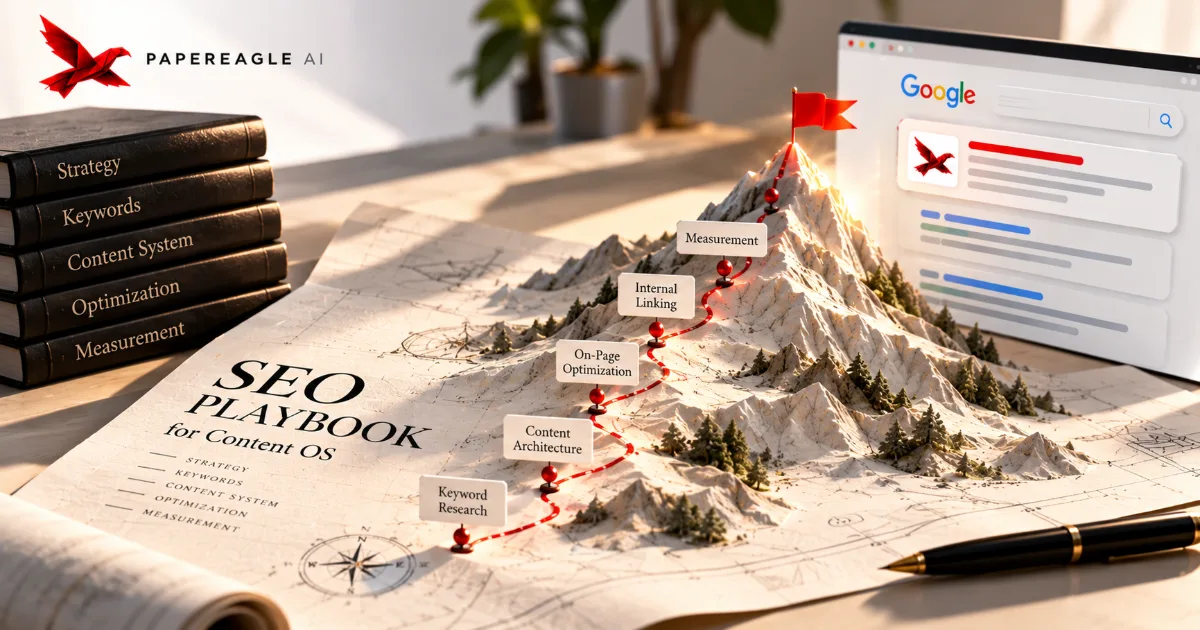
The SEO Playbook for a Content OS
Search strategies for businesses that have structured their knowledge. How to make your Content OS the most discoverable asset you own — and keep it that way as search changes.
Read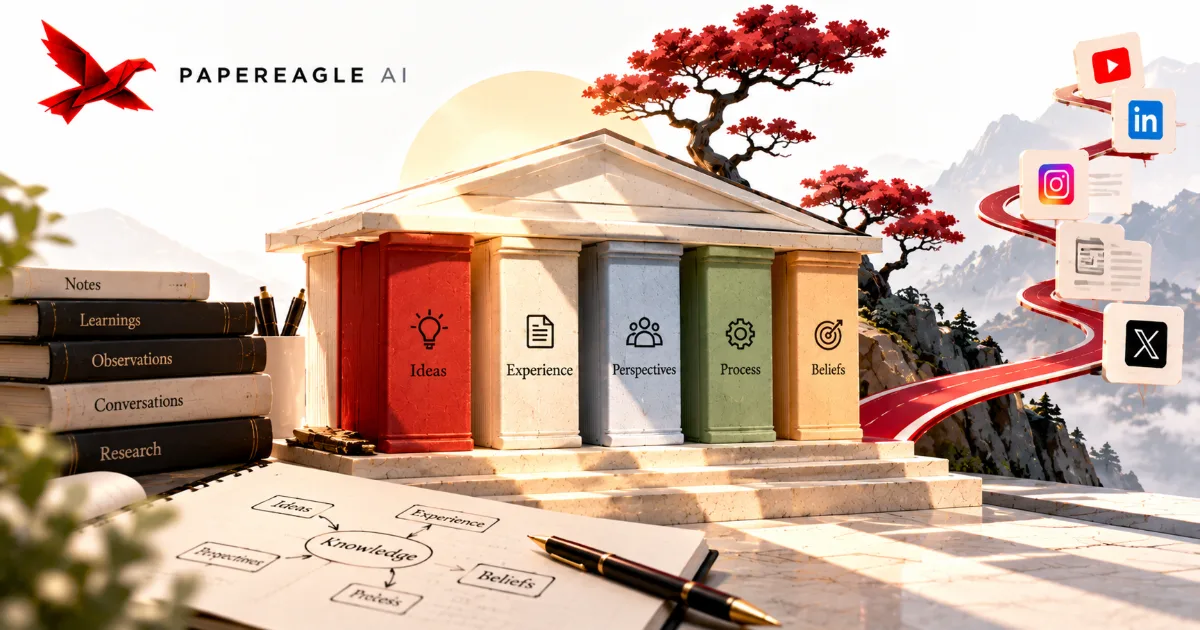
How to Identify Your Knowledge Pillars
The first step in knowledge architecture is naming what you actually know. This method helps you find, group, and rank your expertise into a handful of clear pillars — the foundation everything else in your Content OS sits on.
Read
How LLMs Use Content: A Guide for Content Creators
How large language models read, process, and cite content is quickly becoming essential knowledge for anyone publishing online. This guide explains how LLMs actually use content — and how to structure yours so they cite it.
Read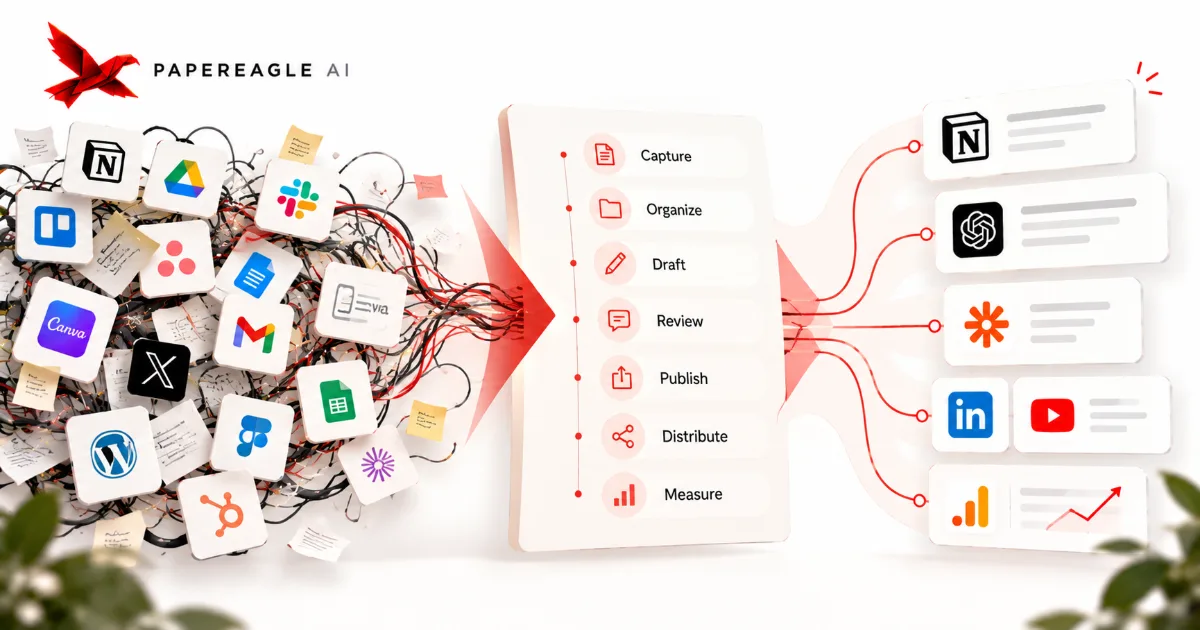
How to Choose Content Tools for Your Content OS
With hundreds of content tools out there, picking the right ones for your Content OS gets overwhelming fast. Here's a practical way to evaluate and choose them, based on your team size, technical comfort, and what you actually need.
Read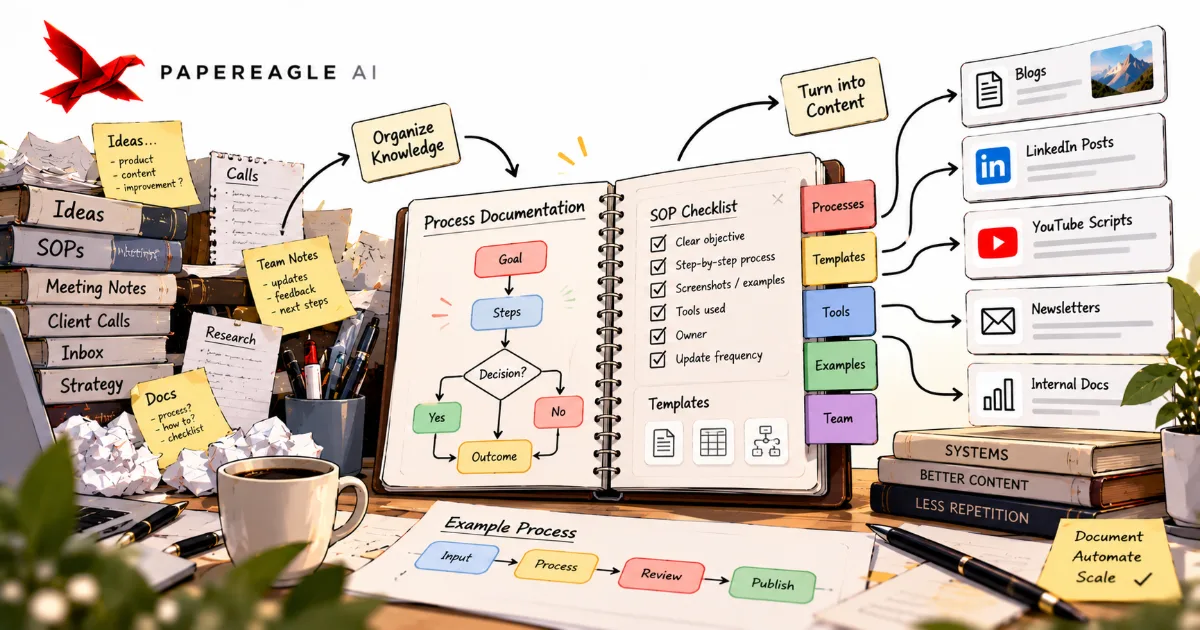
Process Documentation: A Practical Guide
Why process documentation matters, what's worth writing down, and how to make docs your team will actually use. Includes a template, examples, and a way to keep them current. Turn what's in people's heads into something the whole team can rely on.
Read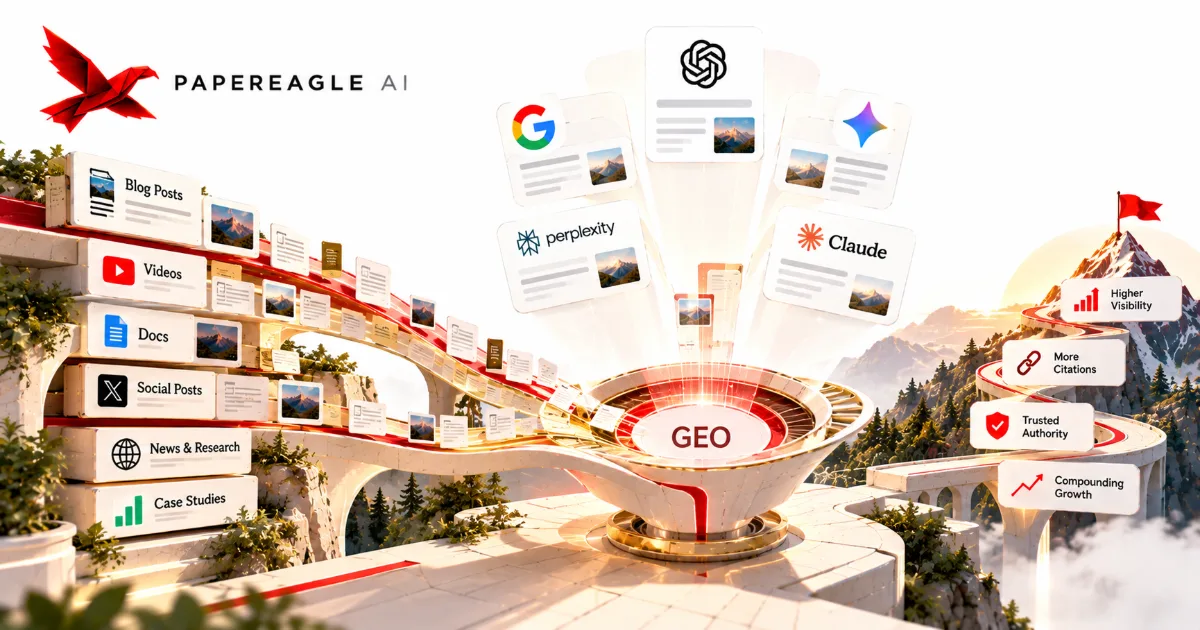
What Is Generative Engine Optimization?
Generative Engine Optimization (GEO) is the practice of shaping content so AI search engines and LLMs can use and cite it. Here's what GEO is, why it matters, and how to start preparing your content for AI discovery.
Read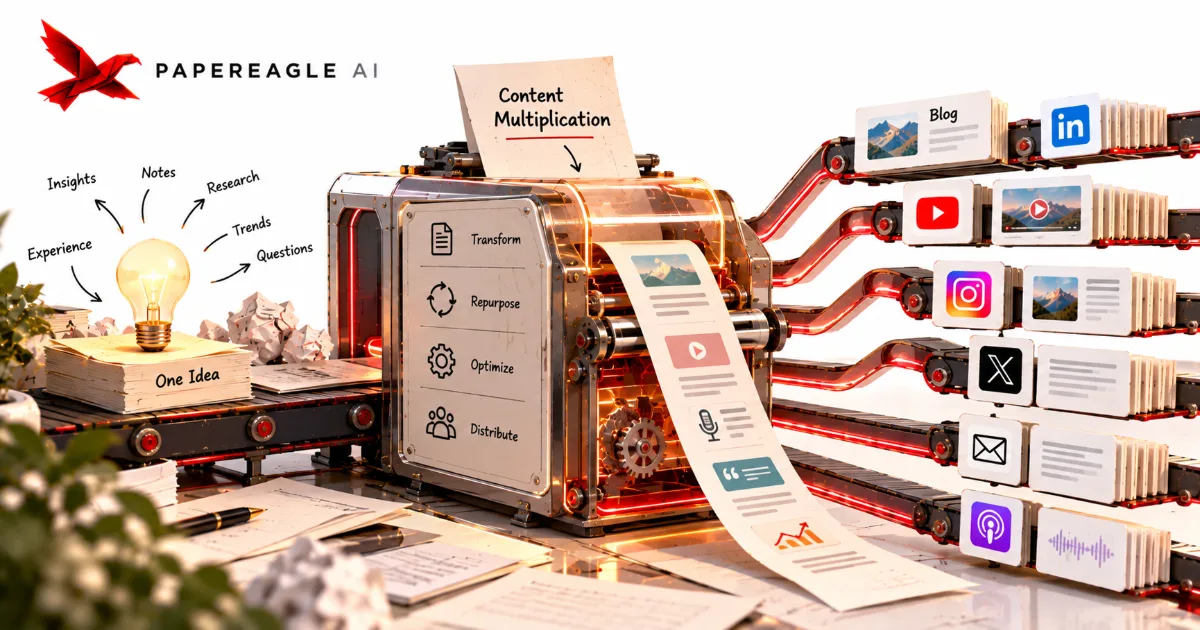
Content Multiplication: Do More With What You Have
Most businesses create something once and then abandon it. Content multiplication is the deliberate practice of reworking and extending your best content across formats and channels. Here's how to build a multiplication workflow.
Read
Content Clusters: The Bridge Between Knowledge and Content
How to organize your knowledge into clusters that serve your audience, answer real search intent, and build topical authority. Includes examples, a cluster planning template, and a maintenance workflow.
Read
Content Scoring: How to Evaluate Quality Before Publishing
Not everything you write is worth publishing. A content scoring system lets you judge quality before you hit publish. Here's a framework for scoring across relevance, authority, quality, SEO, and business value.
Read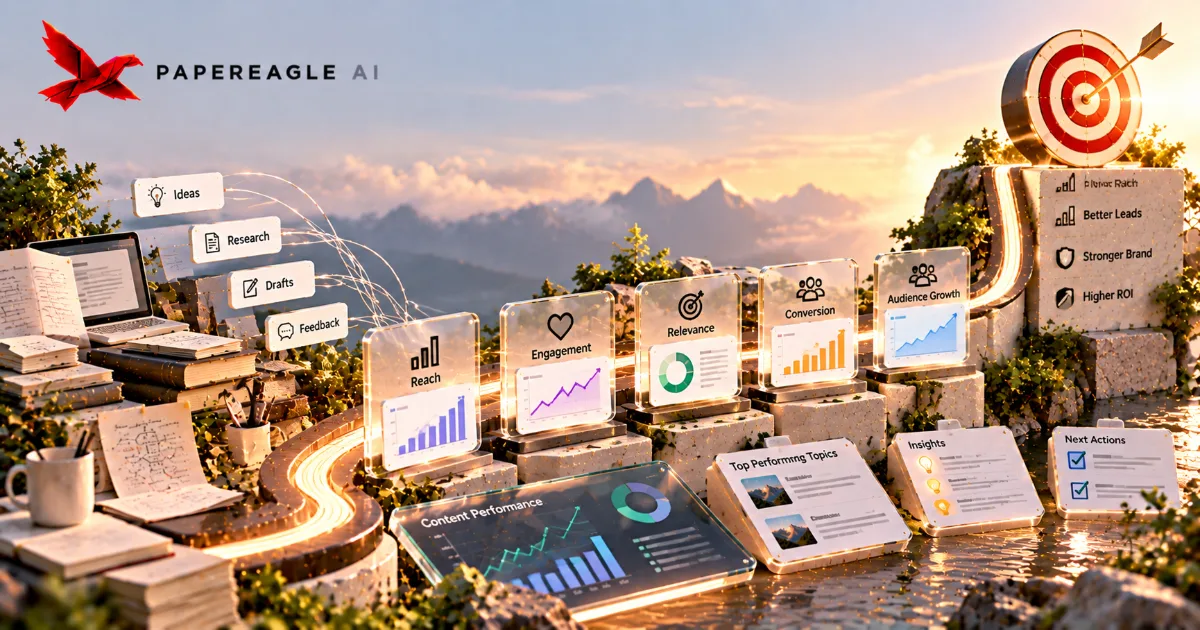
How to Measure Whether Your Content System Works
Posts published and a green dashboard answer a question nobody asked. The four signals that mean something, when each one becomes readable, and how to tell a real result from noise.
ReadLike what you're reading?
If these articles resonate and your business could use a proper content system, we should talk. No pitch — just a conversation about your business and whether we can help. If we can, we'll tell you how. If we can't, we'll tell you that too.
Start a Conversation