SEO and AI search guides.
Search now has two readers: the engine that ranks a page and the AI model that answers the question directly. These guides treat SEO, AEO and GEO as one job — structuring what a business knows so both can find it, understand it and quote it accurately.
One knowledge base, two kinds of search.
How AI search is changing SEO sets out what shifts when a model answers the query, and how LLMs use content explains what a model does with a page once it has one. Generative engine optimization names the practice, and preparing content for AI search turns it into steps.
The search half sits beside it. The SEO playbook for a Content OS covers ranking for a systems-driven business, content scoring is the check before anything is published, and content that compounds is what makes a page worth more next year than the week it went up. None of it is a trick: it is a better knowledge system that happens to be easy to cite.
Search engines and models also read how the pages connect. How to automate internal linking covers the map, the anchors and the orphan check that keep a growing library connected. The articles inside that library are written to six rules, answer first and one question per heading among them, set out in our SEO content writing. The technical side, schema generated from each page and a sitemap rebuilt from the pages themselves, is website SEO automation.
Pages that answer well start with organised knowledge, which our business knowledge guides cover, from knowledge architecture to decision frameworks. Two platforms are search questions as well: Medium, where a canonical link keeps a republished copy from competing with your site, in the Medium content guides; and Reddit, whose threads AI answers often quote, in the Reddit content guides.
Substack Research-to-Content Workflow: One Source Sheet, an Issue and a Website Article
One piece of research, two readers: how a dated source sheet feeds a Substack issue for subscribers and a website article for search readers, each with its own structure.
ReadSubstack Newsletter Archive Structure: Built for the Reader Who Arrives Late
A newsletter archive in date order shows a new reader last week's issue. The homepage, a pinned post and a few tags decide where they start.
ReadSubstack Evergreen Content Update: Edit It, Send a New Issue, or Leave It
An edit to an old Substack issue never reaches the inbox, and the date field moves to any day. Each old issue needs a rule: edit, new issue or leave it.
ReadAnswer Pages vs. Existing Content: What Should Businesses Do?
Most businesses do not need to rewrite their library as answer pages for AI search. Map each buyer question to the page that should answer it, and change only what the map says.
ReadBuild a Semantic Keyword Clustering System with Python in Claude Code
Who does what in a semantic keyword clustering system: Python runs it, an embedding model reads meaning, an algorithm groups, Claude Code helps build it, and a person corrects the clusters.
ReadBuild an SEO Keyword Clustering Engine in Claude Code
How to package keyword clustering as a Claude Code skill: the folder, the scripts, the table of pages you already own, and the tests that catch a bad merge before it becomes a page.
Read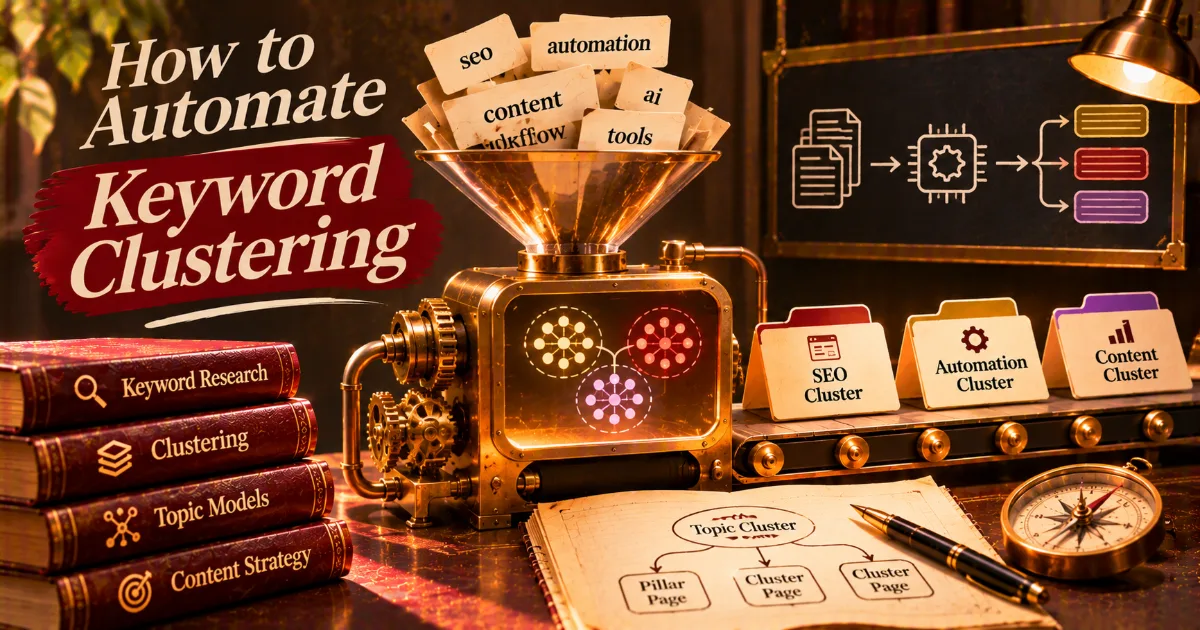
How to Automate Keyword Clustering: From a Keyword List to an SEO Content Cluster
A keyword export is not a content plan until it is grouped by intent and checked against the pages you already have. Here is how to automate that grouping, and what a person still decides.
Read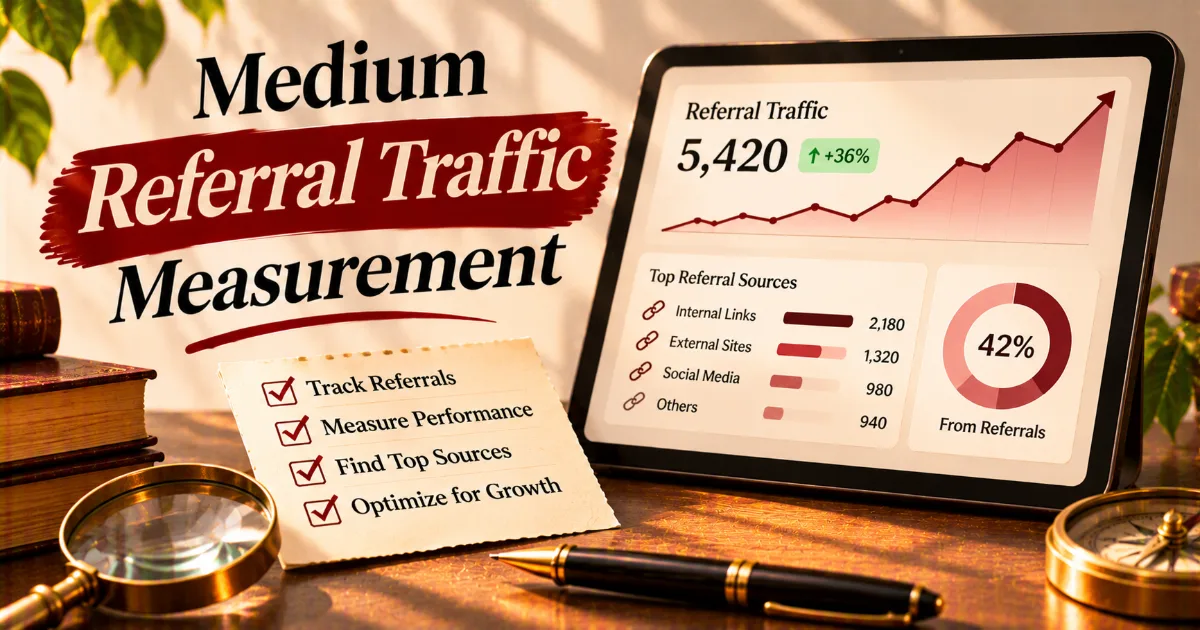
Medium Referral Traffic Measurement: Visits and Actions, Not Claps
Claps and reads say a story was liked, not that it sent anyone useful to your site. Tag the link back, mark the actions that matter as key events, and read visits and actions per story.
Read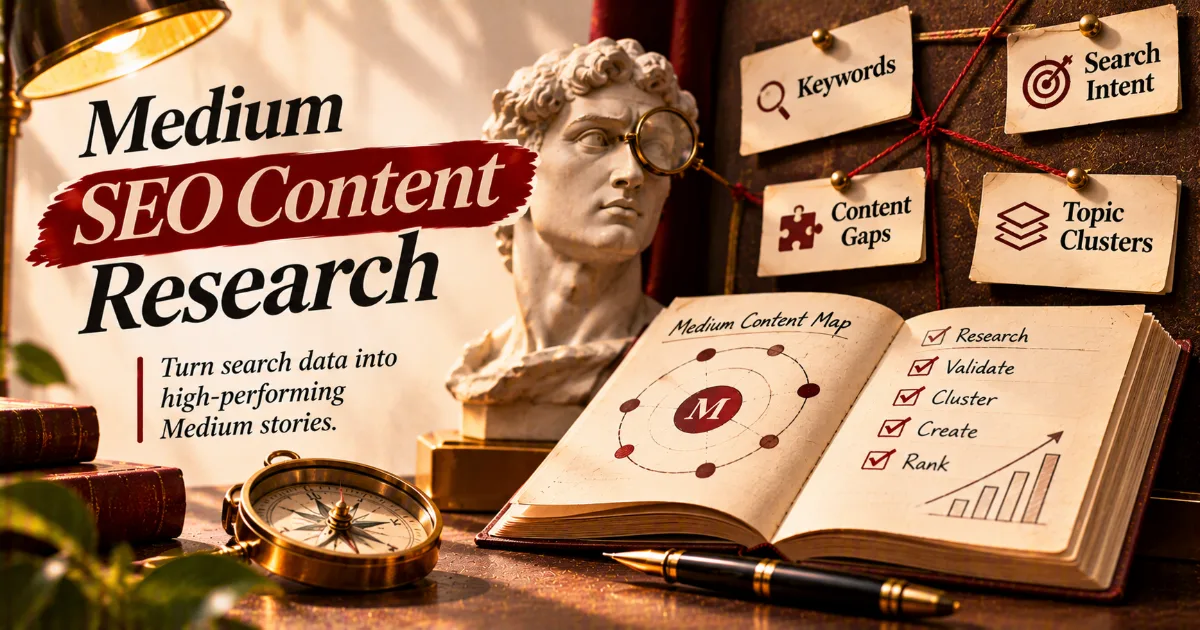
Medium SEO Content Research: From a Search Console Query to a Brief
Search Console shows the questions people already ask when your site appears. Group them into themes, turn one into a reader question, and brief a Medium explainer without treating impressions as volume.
Read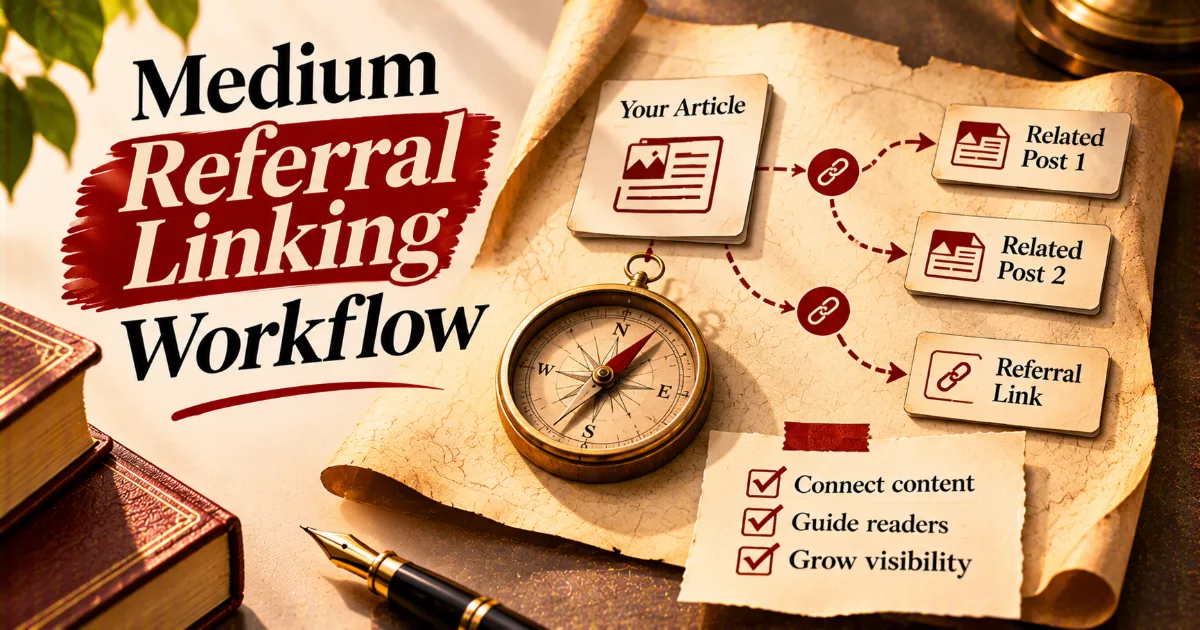
Medium Referral Linking Workflow: One Useful Link Back per Story
A Medium story does not need a sales link in every section. Give it one link to the website resource that answers the reader's next question, placed where that question comes up.
Read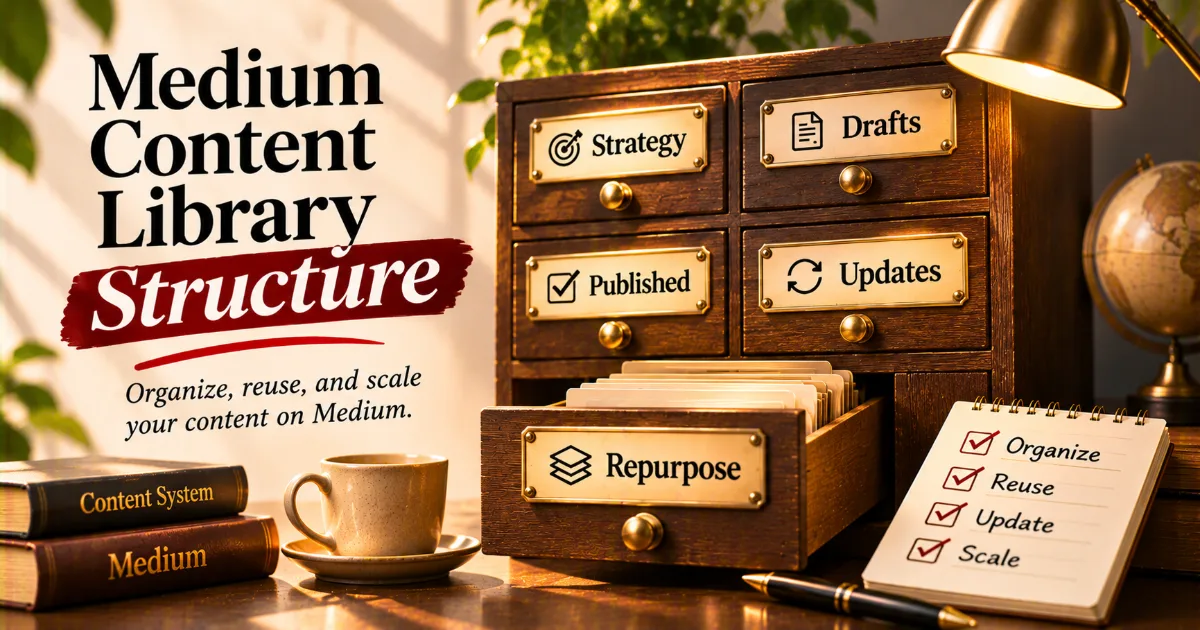
Medium Content Library Structure: Organise Stories by Reader Problem and Stage
Group a Medium archive by the problem each reader has and the stage they are at, write the map down once, and build the publication's sections, lists and website hubs from it.
Read
Medium Article Update Workflow: Keep Stories True as Products Change
Stories about software go stale quietly. Check features, limits and links on a schedule, fix the website then Medium, and keep a dated log.
Read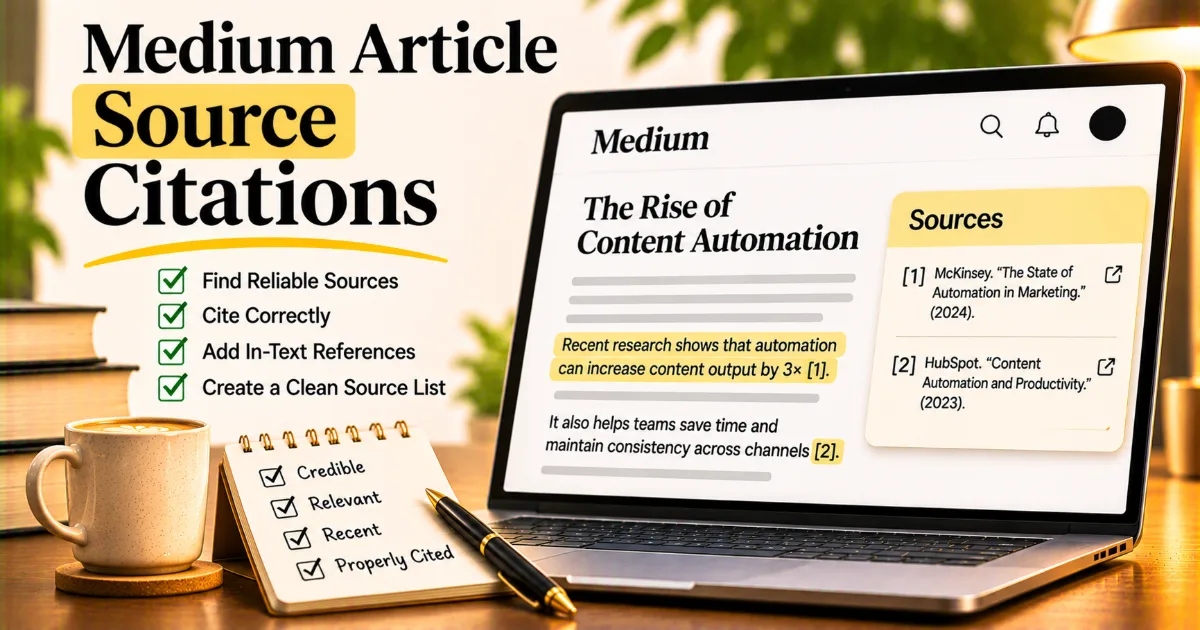
Medium Article Source Citations: Links in the Sentence, Not a List
Cite sources on Medium inside the sentence that makes each claim, to the primary source, with link text that names it, not in a list at the end.
Read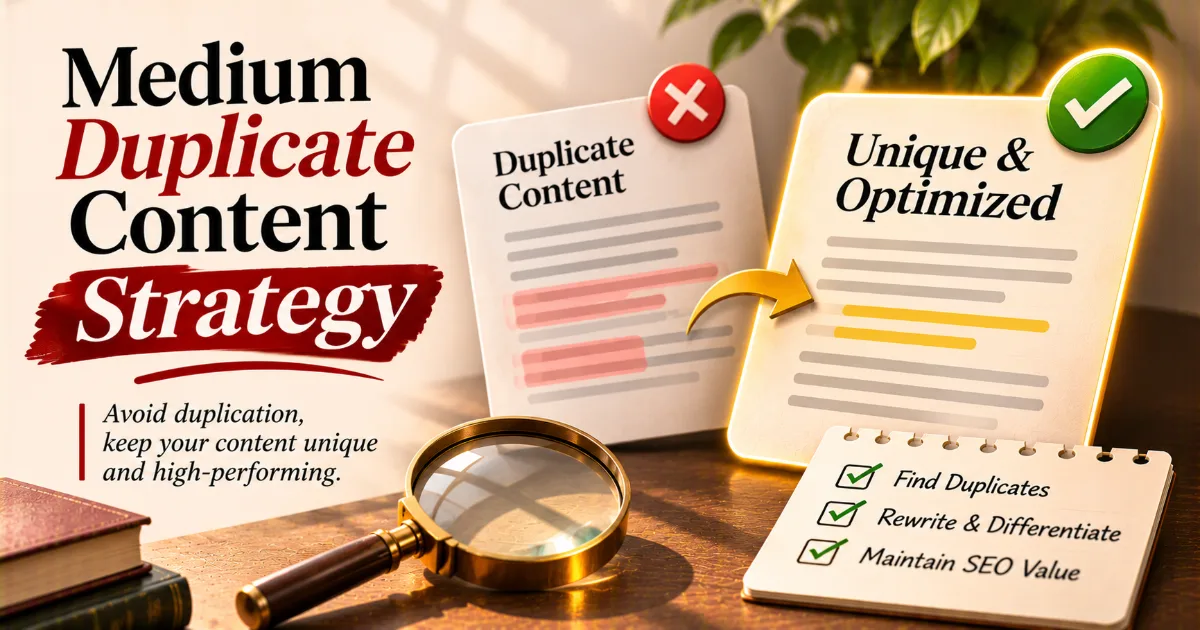
Medium Duplicate Content Strategy: Adapt, Republish or Leave It
Not every article belongs on Medium. Sort each one: adapt it, republish it with a canonical, or leave it on the website, with a reason.
Read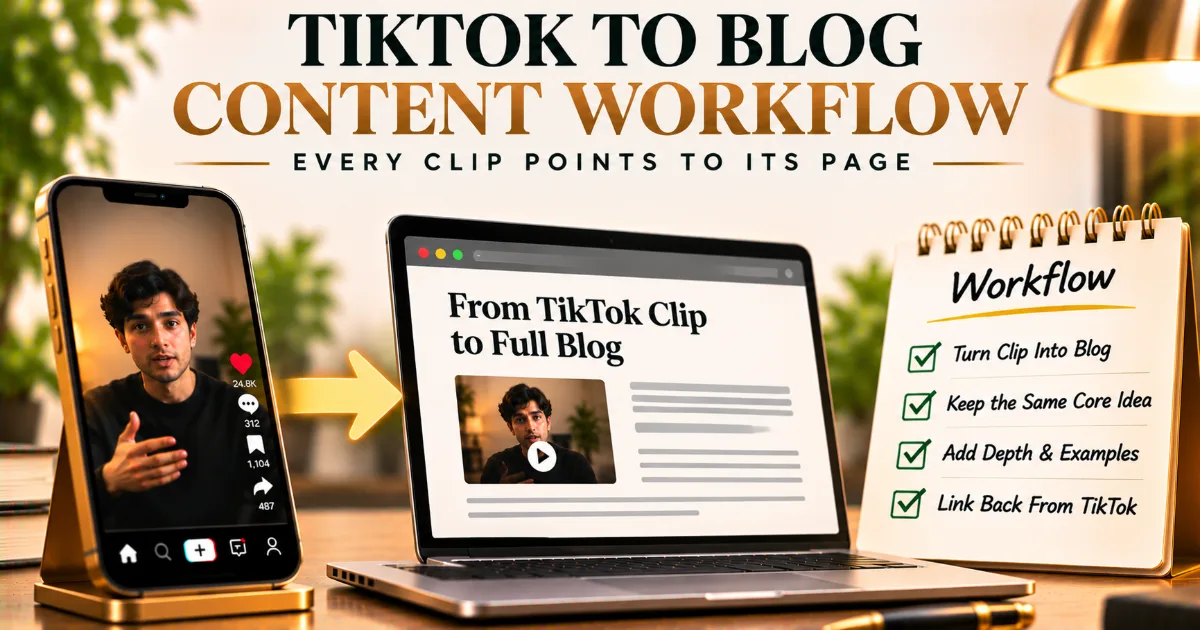
TikTok to Blog Content Workflow: Every Clip Points to Its Page
Clips that mention an article rarely send anyone to it. Pair each clip with the page it came from, tag the link the same way every time, and check the links before they break.
Read
TikTok On-Screen Text SEO: Words to Read, Not Keywords
On-screen text gets a second to be read. Match it to the words people search with, check its size, contrast and placement, and leave the keyword lists out.
ReadHow to Automate Internal Linking in a Content Automation System
Internal links as a checked step in the pipeline: the map before the draft, anchors that name the page, orphan detection, and the edit older posts owe a new one.
Read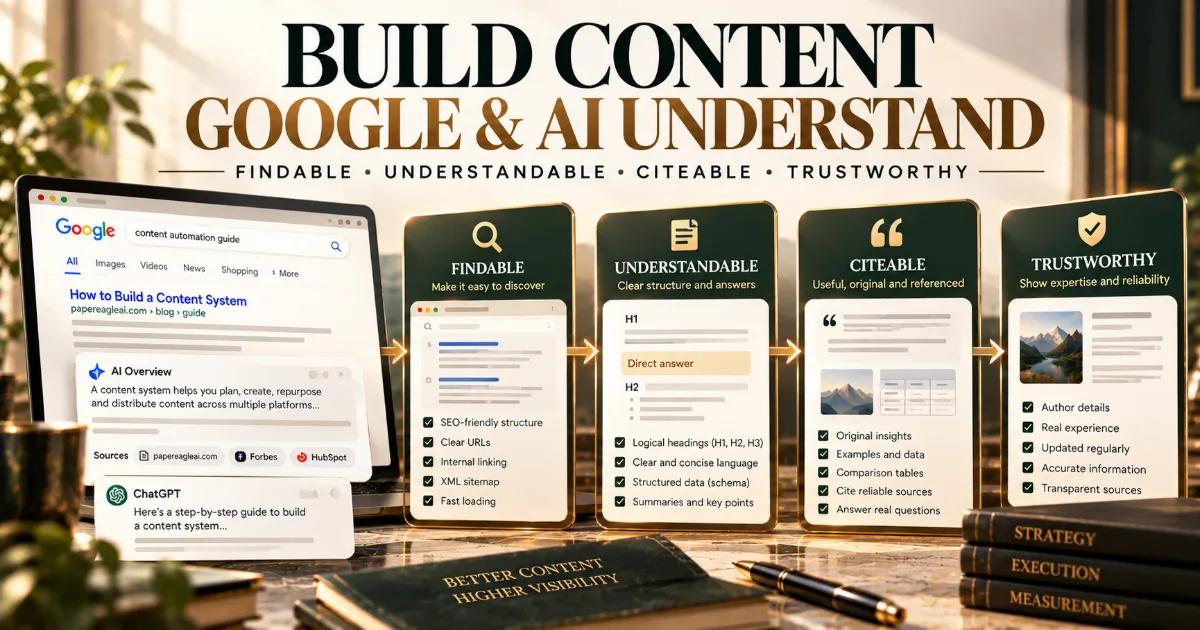
How to Build Content Google and AI Search Can Both Understand
Every claim on the page says what it is, who says it, where it came from and as of when. The method, and what it costs.
Read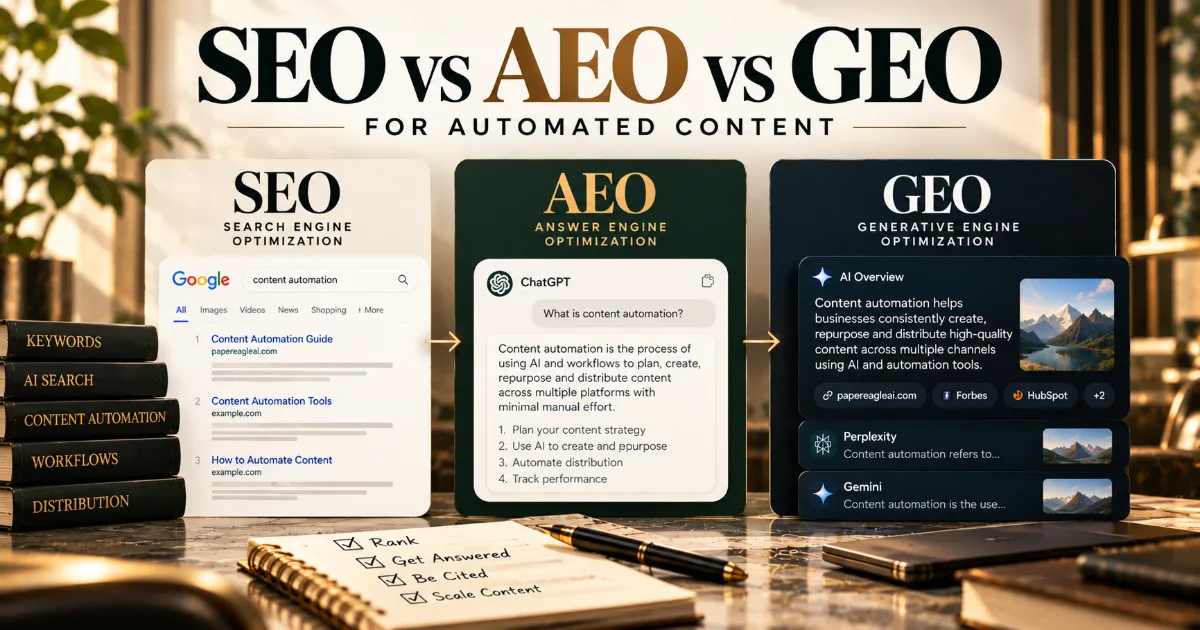
SEO vs AEO vs GEO for Automated Content: One Pipeline, Three Readers
One automated pipeline has to satisfy a search engine, an answer engine and a model that cites. Where the three share a foundation, and the few places they genuinely diverge.
Read
How to Automate Content Refreshes Without Losing Quality
A refresh loop for pages you have already published: the signals that say a page needs work, the smallest fix that answers them, and the person who signs it off.
Read
SEO Content Automation: How to Scale Without Search Spam
Which stages of an SEO content pipeline a machine can run safely, and the gates that refuse a page Google would call scaled content abuse before anyone drafts it.
Read
Preparing Your Content for AI Search and GEO
AI search is changing how people find content. Generative Engine Optimization, LLM citations, and AI overviews are becoming channels you can't ignore. Here's what preparing your content for them actually involves.
Read
AI Search Is Changing Everything About SEO
Traditional SEO isn't dead, but on its own it's no longer enough. AI search and Generative Engine Optimization are reshaping how content gets found. Here's what's changing, and what to do about it.
Read
How to Create Content That Compounds Over Time
Most content decays. It ships, gets a short burst of attention, then disappears. Content that compounds does the opposite — it grows more valuable the longer it's live. Here's how to create it.
Read
The SEO Playbook for a Content OS
Search strategies for businesses that have structured their knowledge. How to make your Content OS the most discoverable asset you own — and keep it that way as search changes.
Read
How LLMs Use Content: A Guide for Content Creators
How large language models read, process, and cite content is quickly becoming essential knowledge for anyone publishing online. This guide explains how LLMs actually use content — and how to structure yours so they cite it.
Read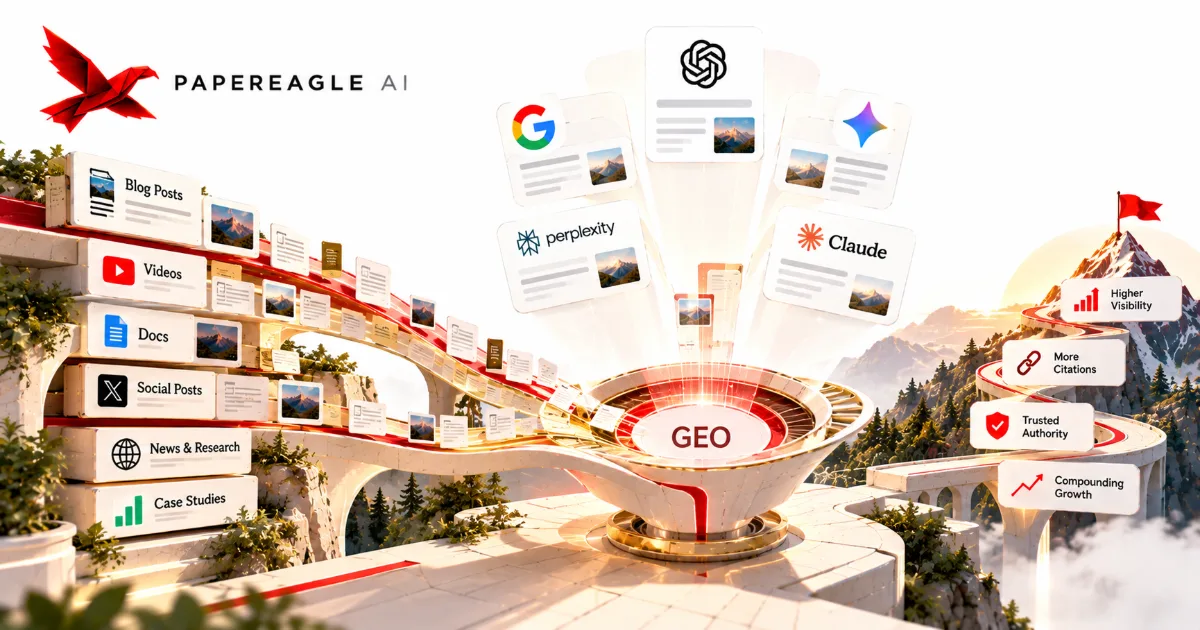
What Is Generative Engine Optimization?
Generative Engine Optimization (GEO) is the practice of shaping content so AI search engines and LLMs can use and cite it. Here's what GEO is, why it matters, and how to start preparing your content for AI discovery.
Read
Content Scoring: How to Evaluate Quality Before Publishing
Not everything you write is worth publishing. A content scoring system lets you judge quality before you hit publish. Here's a framework for scoring across relevance, authority, quality, SEO, and business value.
ReadSearch, built into the system.
We build search into the content system rather than bolting it on afterwards. These pages describe that layer, and website SEO automation pricing explains how that work is quoted.
Talk it through with us.
If something here describes a problem you have, a short conversation is the quickest way to find out whether a system would fix it, and what it would take to build. No pitch: if we can't help, we'll say so.
Start a Conversation