Content automation guides.
Content automation is a system that does the repeatable work of publishing — research, drafting, formatting and scheduling — while people keep the decisions that make the content worth reading. These guides explain what that looks like in practice, and how to build it.
Where automation helps, and where it stops.
Most of what gets called content automation is a drafting tool with a schedule attached. It works for a month, and then the posts start sounding like everyone else's. The guides here start one step earlier: with what a business knows, the decisions only a person can make, and the order the layers have to be built in. Read how to automate content creation for that order, and what to automate in your content for the line between the machine's work and yours.
If you are deciding who should build it, what a content automation specialist does describes the role, and the specialist guides collect every article on it. How to build a content automation system walks through the build from an empty folder, and why automated content stops working covers the part most guides skip: what quietly decays after the first month, and how to notice before your audience does.
Three topic pages go deeper than this one. The content automation specialist guides cover the role itself and when to hire one, the content operating system guides cover the system a specialist builds and how to measure it, and the systems thinking guides are the essays on why structure beats effort.
Substack Newsletter Workflow Audit: Score the System Before You Send More Often
Sending more often is a decision about the workflow, not the calendar. A scored audit of six areas, with the evidence each score needs, before a newsletter increases its cadence.
ReadSubstack Newsletter Process Documentation: A Handover Guide So the Newsletter Is Not One Person
A newsletter run by one person stops when they do. What a Substack handover guide records: ownership, recovery, roles, sources, the send routine and how to recover a failed issue.
ReadSubstack Newsletter Correction Policy: What to Do When a Sent Issue Is Wrong
A sent issue cannot be unsent. How to fix a wrong link or an outdated fact on Substack, tell the readers who saw it, and keep a version log that shows what changed.
ReadSubstack Newsletter Performance Measurement: Audience Numbers and Workflow Quality
Substack measures what readers did with an issue, not whether it went out on time or needed a correction. A newsletter needs both ledgers.
ReadSubstack Newsletter QA Checklist: Check How the Issue Arrives Before You Send It
Gmail clips an email over about 102KB, and links and images count toward it. Check how the issue will arrive before it is sent.
ReadSubstack Publishing Approval Workflow: Who Drafts, Who Approves, Who Presses Publish
On Substack a Contributor can publish a draft, so approval has to be a written rule: who drafts, who approves and who presses publish.
ReadSubstack Newsletter Fact-Checking: Check Every Claim When You Schedule, and Again Before It Sends
A scheduled issue can wait weeks before it sends. Check every claim when you schedule it, and re-check dated facts the day before.
ReadSubstack Newsletter Brief Template: Decide Every Setting Before You Draft
One page per issue: the angle, the reader question and the material, then every setting Substack’s publish screen will ask for, filled before the draft.
ReadHow Should a Growing Agency Choose a Publishing Automation Provider?
A growing agency competes with bigger ones on a smaller payroll. Here is how to choose who automates its publishing, and why owning the system beats renting one.
Read
How to Audit a Medium Publishing Workflow With One Tested Article
Send one real article from your website to Medium, then score the canonical, headings, images, links and status on one audit sheet, with evidence.
Read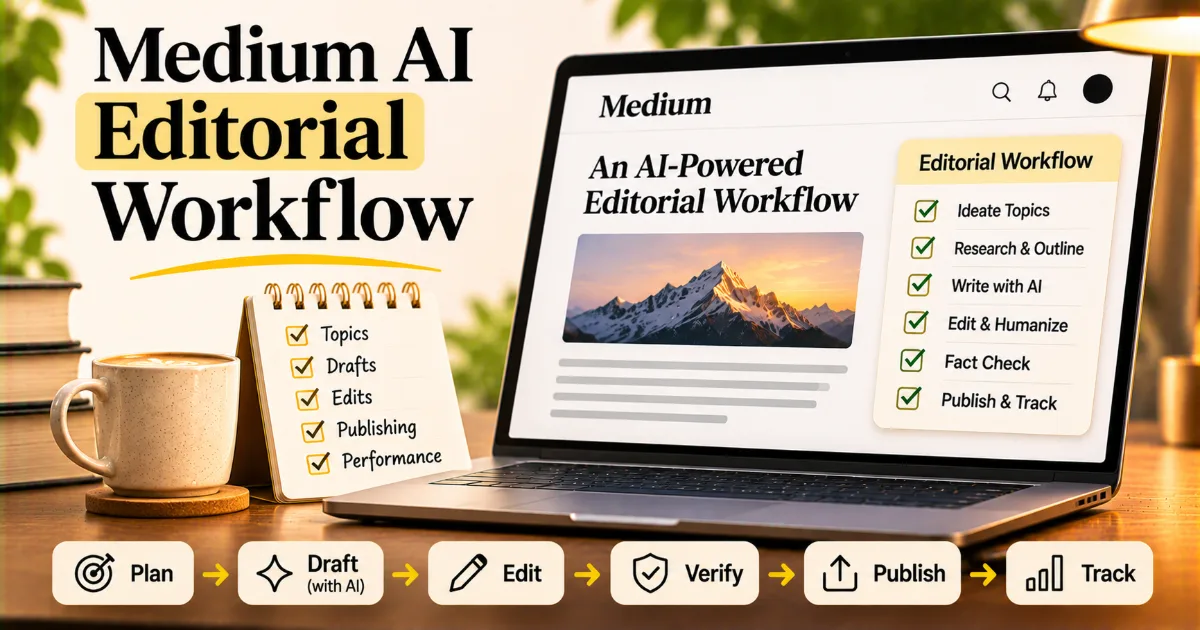
Medium AI Editorial Workflow: A Five-Check Review Gate Before Import
Run five checks on every AI-assisted draft before it reaches Medium: voice, claims, originality, structure and sources. Record each result, then decide the disclosure on the evidence.
Read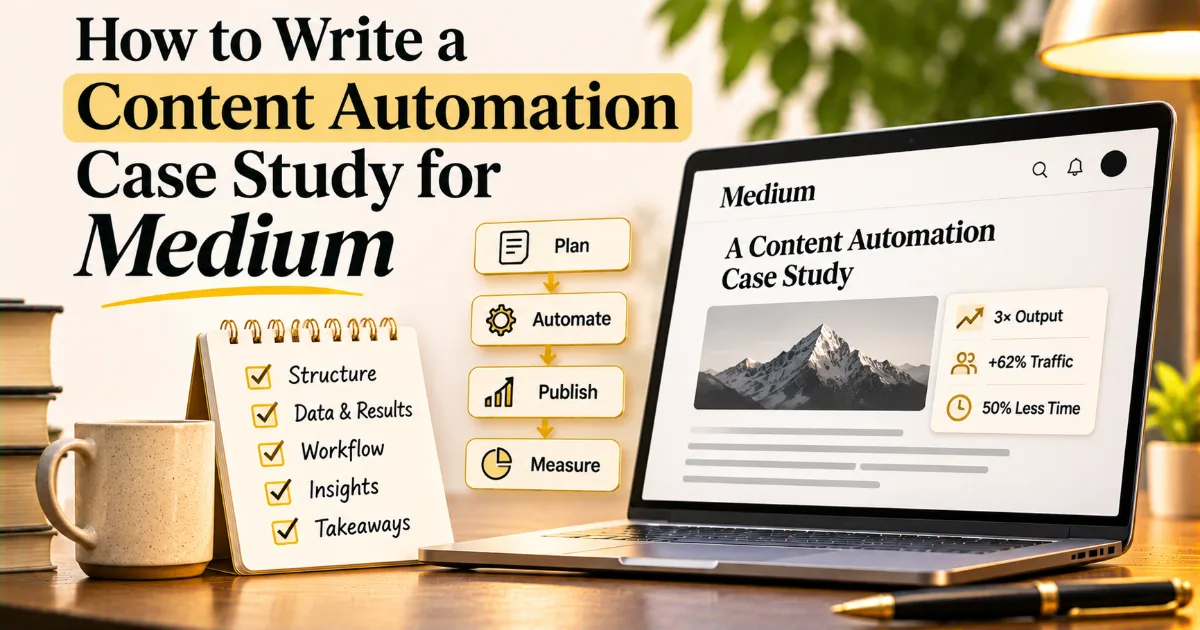
How to Write a Content Automation Case Study for Medium
Keep measured outcomes, observations and limits apart, disclose scope and costs, and publish only after the client agrees.
Read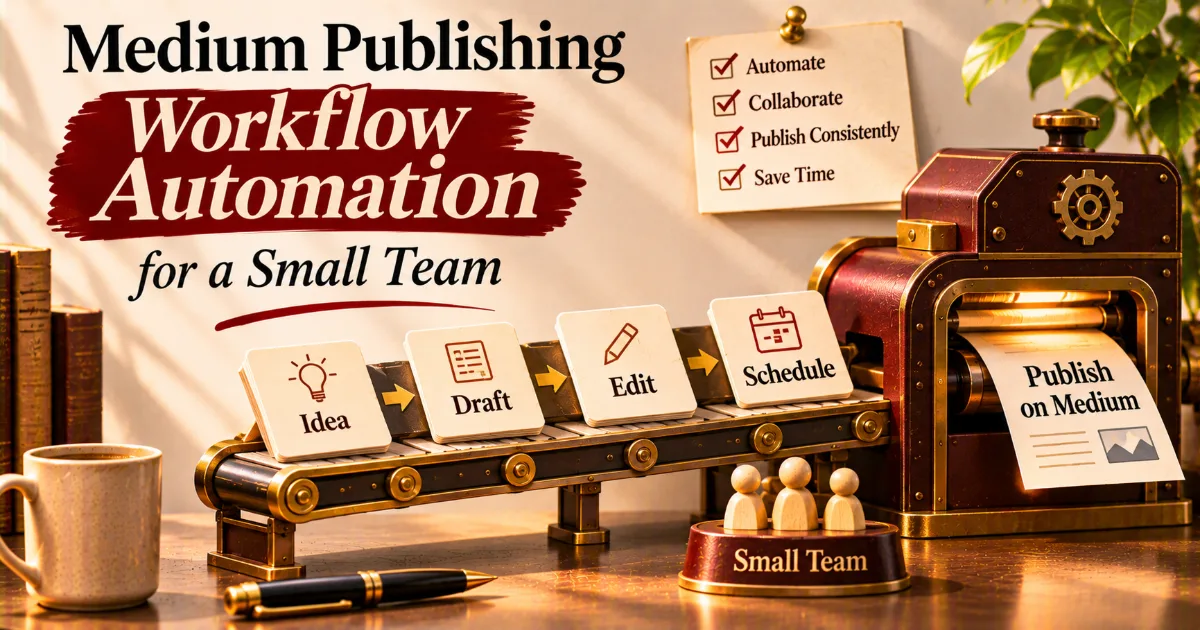
Medium Publishing Workflow Automation for a Small Team: Draft to Import
Six stages from brief to a verified Medium story, one owner and one status each, so a small team always knows whose turn it is. Medium's closed API decides where the automation stops.
Read
Medium AI Article Fact Checking: The Source Checklist Before You Publish
Before an AI-assisted article goes to Medium, every claim gets one verdict: a published source, the owner's confirmation, or removal. The table that holds it, and what a workflow can catch.
Read
How to Audit a TikTok Content Workflow Before It Grows
Before adding Reels or Shorts, find out where the TikTok pipeline already leaks. Score every stage on evidence, from the brief and the rights record to who holds the account, and fix the worst gap first.
Read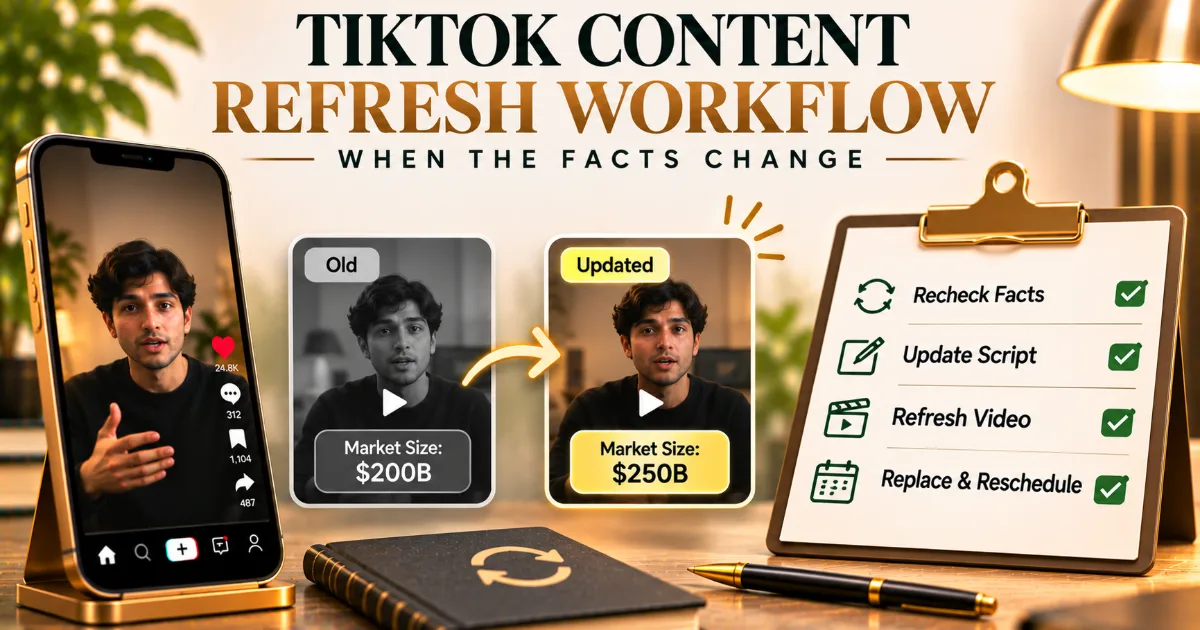
TikTok Content Refresh Workflow: When the Facts Change
A price, a warranty or a rule changes, and old clips keep saying the old thing. Keep a register of the facts each clip states, so one change finds every clip, page and reply that repeats it.
Read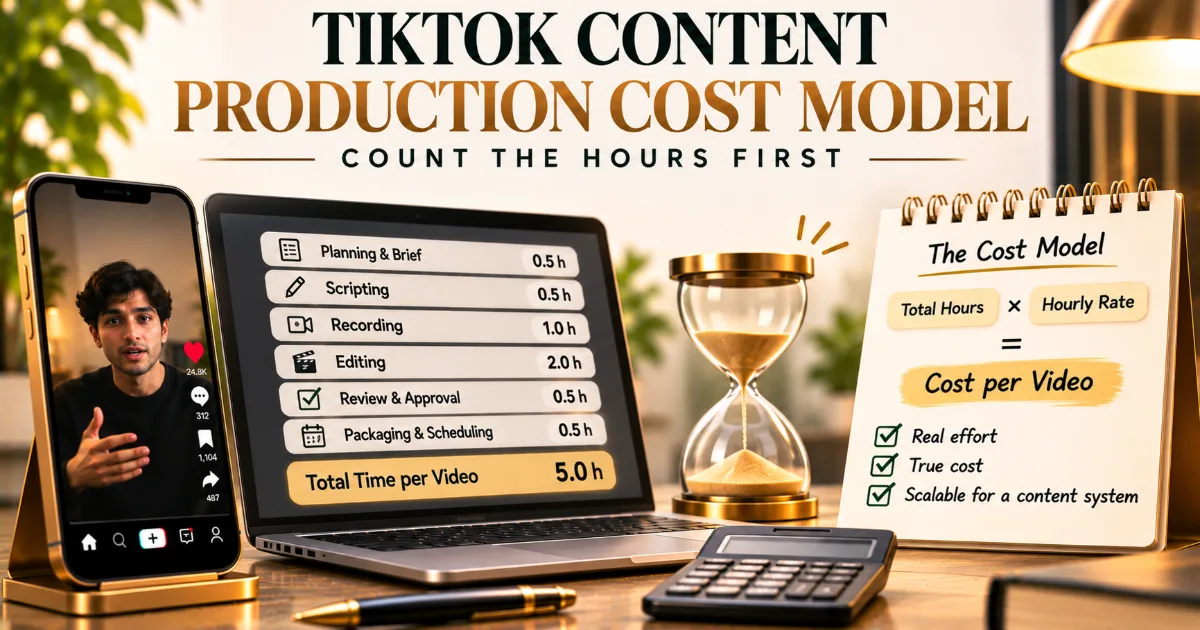
TikTok Content Production Cost Model: Count the Hours First
Before pricing tools or freelancers, count the hours. Write down the assumptions, time each stage per clip, and see which hours automation can take and which stay with a person.
Read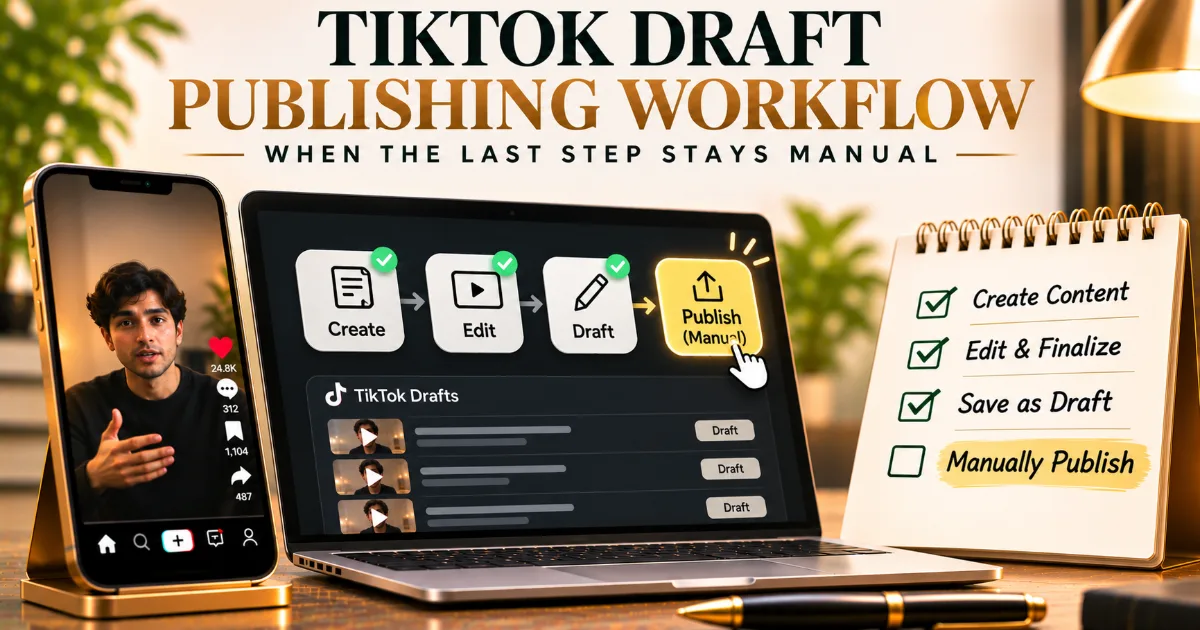
TikTok Draft Publishing Workflow: When the Last Step Stays Manual
TikTok lets only an audited app post publicly, so the last step is often a person. Hand them a complete package as a draft, and know exactly which steps an app may do first.
Read
TikTok Content Performance Review: Signals That Change the Next Brief
Views say a clip was seen, not what to change. Read retention, saves, shares and search for what they say about the brief, and change one thing in the next one at a time.
Read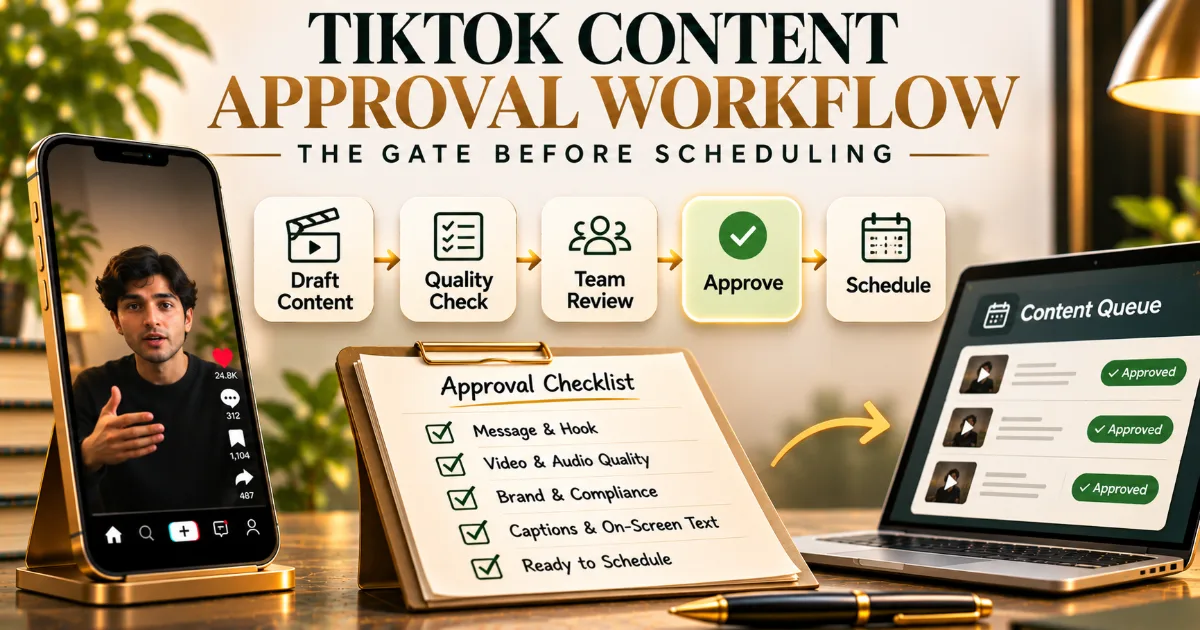
TikTok Content Approval Workflow: The Gate Before Scheduling
The last check before scheduling catches what everyone assumed. Confirm the account, the privacy setting, the disclosure, the music and the labels on every clip, every time.
ReadContent Automation for B2B: Turn Expertise Into a Content Engine
B2B buyers arrive as a committee, and the people who know the answers will not write. How one expert interview becomes the pieces each committee member reads, and how to measure it over a long cycle.
ReadContent Automation for SaaS Companies: Turn Product Expertise Into Content
A software product changes every release, and its content has to keep up. Versioned knowledge, claims checked against what shipped and on which plan, and a workflow a release starts.
ReadContent Automation for Agencies: Scale Client Content Without Losing Voice
An agency's content system has to hold many voices without mixing them. One folder per client, one shared workflow, two approval gates, the right platform roles, and margin read client by client.
ReadAutomated Content Checks: Rules a Machine Can Enforce Before Review
A check is one rule a machine answers yes or no on every draft. Which rules to automate, how to prove a check can fail, and how to keep false alarms rare.
ReadHow to Design Human Approval Gates in Content Automation
A gate is a state a draft cannot leave without a named person. How to tier drafts by what they claim, route them, keep the record, and hold the queue when the reviewer is away.
Read
Content Automation Specialist for Founder-Led Businesses
What a specialist builds around a founder: the knowledge captured, the voice written down, approval in tiers, and one source feeding LinkedIn, YouTube and the blog.
Read
Content Automation Specialist vs Freelancer
A freelancer sells skilled hours. A specialist builds a system you own. Six differences, an honest cost, and when the right answer is both.
Read
When Should a Business Hire a Content Automation Specialist?
Four symptoms say the problem is machinery rather than effort: a founder bottleneck, uneven output, tool sprawl and slow approvals. How to test each one, a readiness checklist, and what a first engagement should build.
Read
What Does a Content Automation Specialist Build for a Business?
A content automation specialist is finished when nine things work without them in the room. What each one is, what it is made from, and the test that says it is done.
Read
Content Automation Specialist vs Content Strategist
One decides what to say, to whom and why. The other builds the system that says it every week. Where each job ends, where they overlap, and which one your business is missing.
Read
How to Choose a Content Automation Agency
Eight checks, and the evidence that proves each one: what to ask a content automation agency to show you before you sign, and the red flags that should end the call.
Read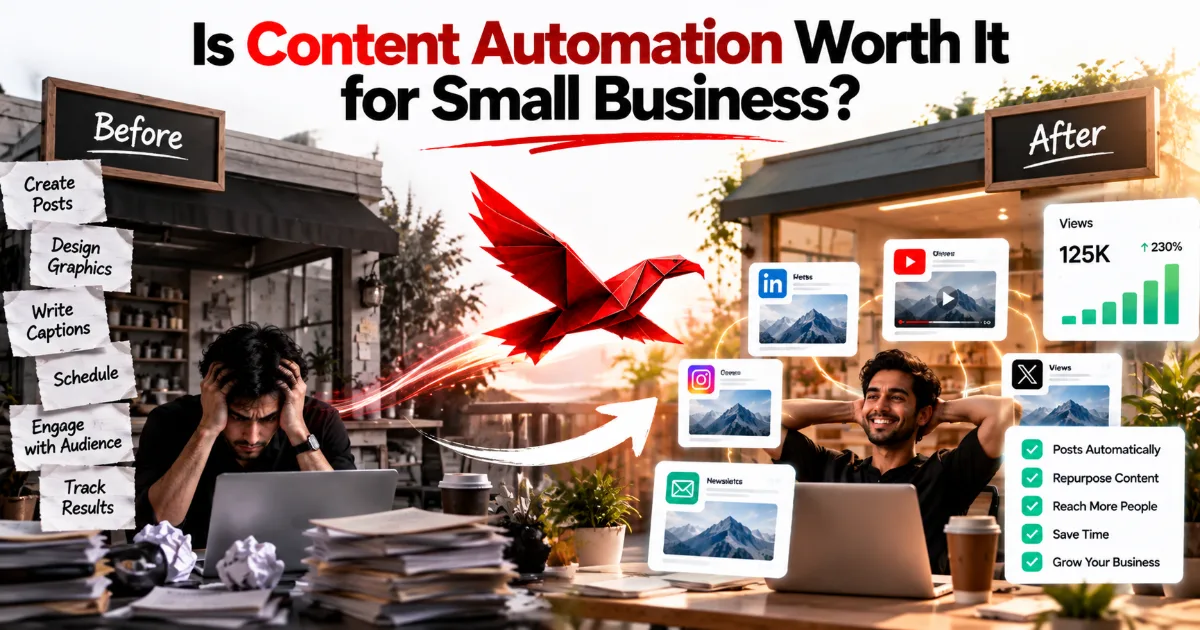
Is Content Automation Worth It for a Small Business?
Worth it when you have real expertise, repeatable work and one person to review. The readiness signs, the risks, and a 30-day test you can run first.
Read
Content Automation Services vs Hiring a Content Team
Hiring a writer, a strategist, an editor and a social manager, or building a system your people run. Role by role, with the management overhead, the hybrid and the break-even logic.
Read
Content Automation Agency vs Content Agency: What Are You Actually Buying?
A content agency sells finished posts; a content automation agency should sell the machine that makes them, built in your accounts. How to read a proposal and tell which one you are being sold.
Read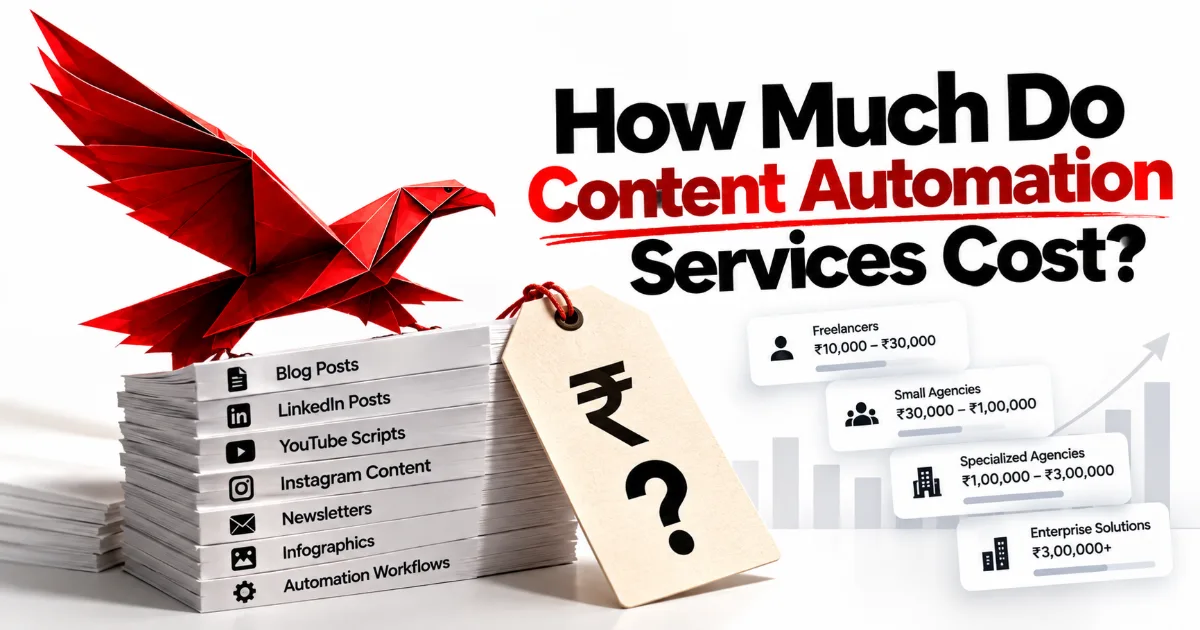
How Much Do Content Automation Services Cost?
There is no honest number before discovery, but there is an honest structure. The six things that decide what a build costs, the three ways it is sold, and the traps hidden in a cheap quote.
Read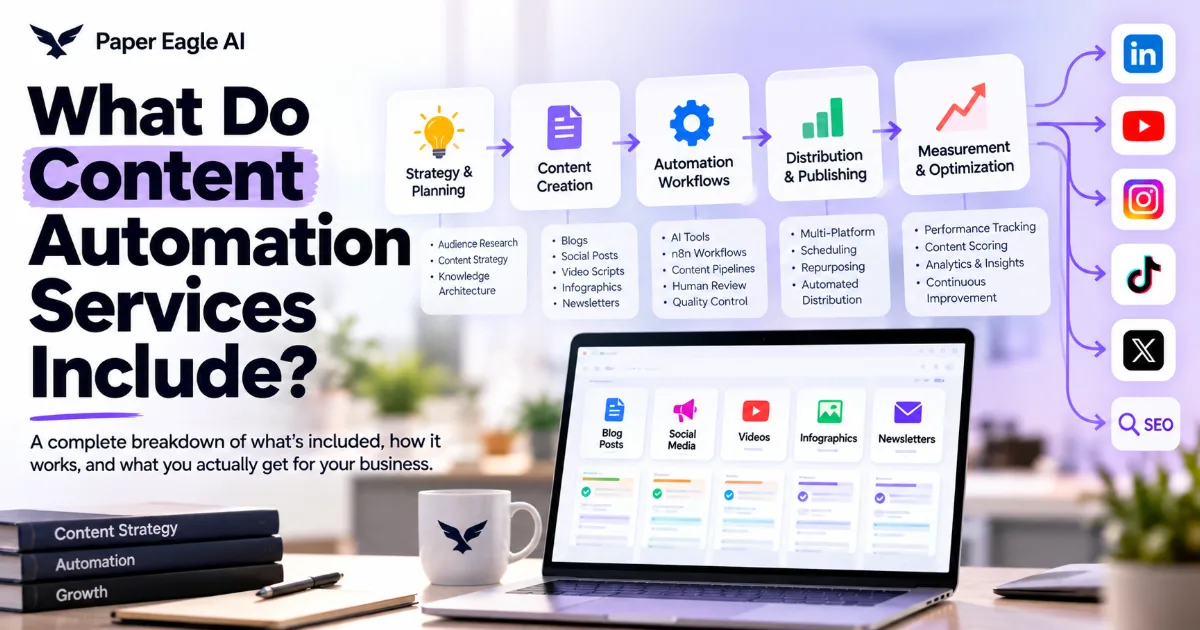
Content Automation Services: What Businesses Actually Get
What a content automation service actually delivers: knowledge capture, strategy, production, review, distribution, measurement and a system you own outright — plus who should buy it and who shouldn't yet.
Read
How to Build a Content Automation System From Scratch
The ten stages of a content automation system in the order they have to be built — the folder, the n8n board, the review gate and the first six weeks, done once from scratch.
Read
Content Automation for Founder-Led Businesses
How a founder-led business automates its content in five steps: the audit, the capture budget, the pipeline, the approval gate and routing to each platform.
Read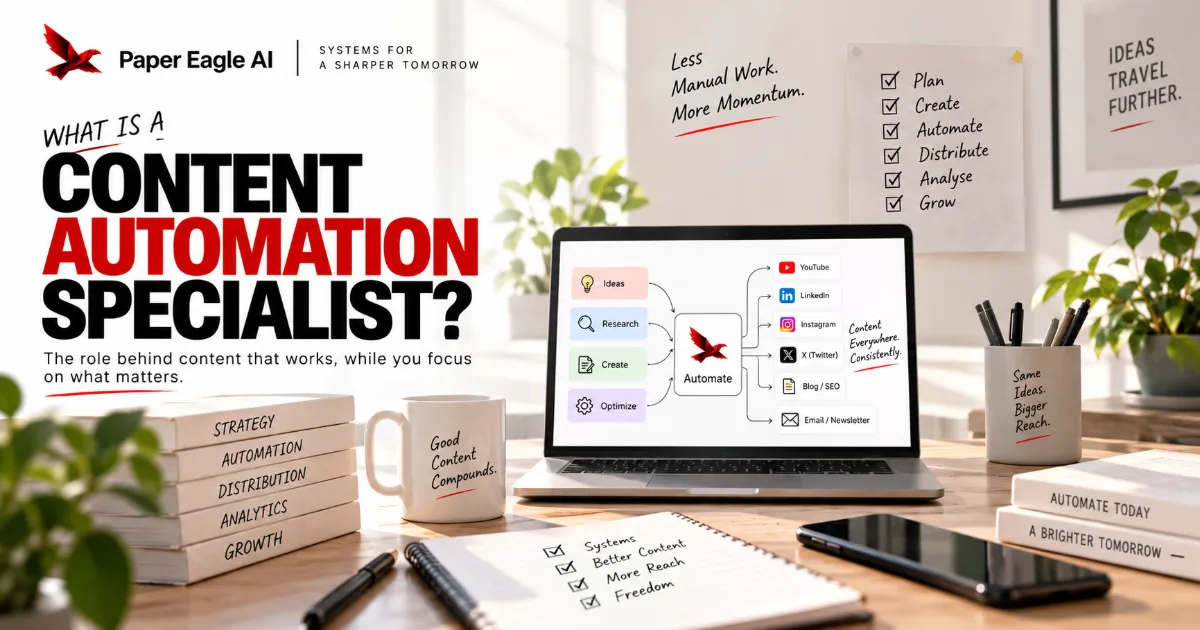
What Is a Content Automation Specialist?
The role sits between your expertise and everything you publish. Here is the job description, the skills it really needs, and what it does for a med spa, a law firm, a startup and a creator.
Read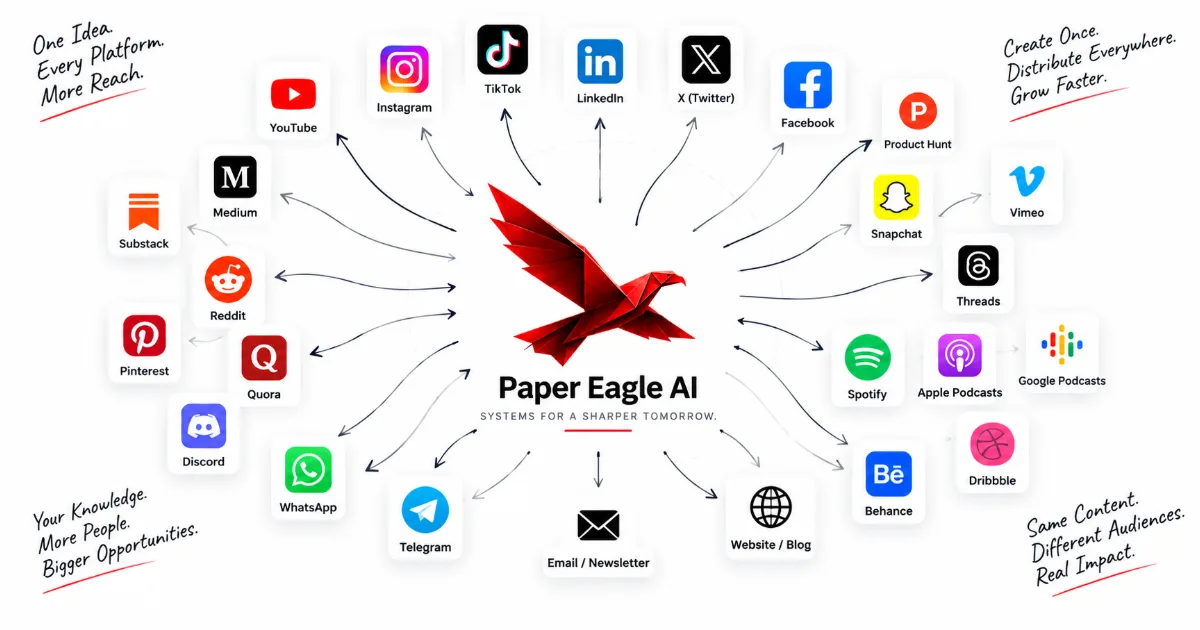
Paper Eagle AI: The Best Content Automation Agency, and Why
What separates a content automation agency worth hiring: it removes the repetitive work and leaves the creative decisions with you. Here's what we do, what others do, and what we won't promise.
Read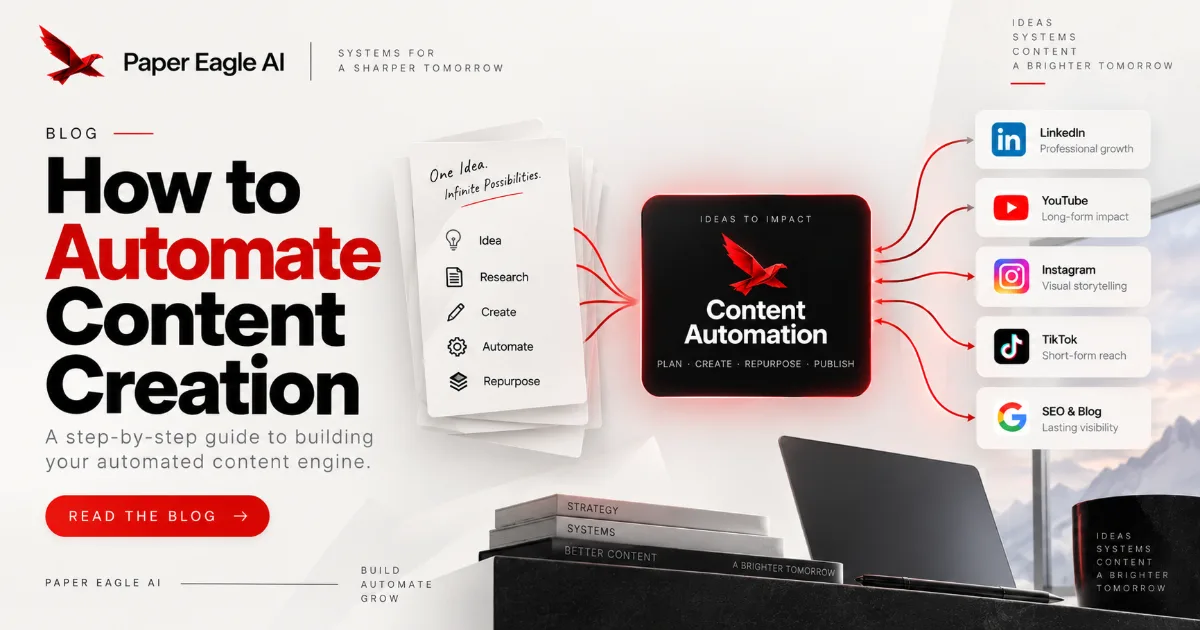
How to Automate Your Content Creation Process in 2026
Most attempts automate the drafting, which is the one step that needed judgement. The four layers, in the order they have to be built.
Read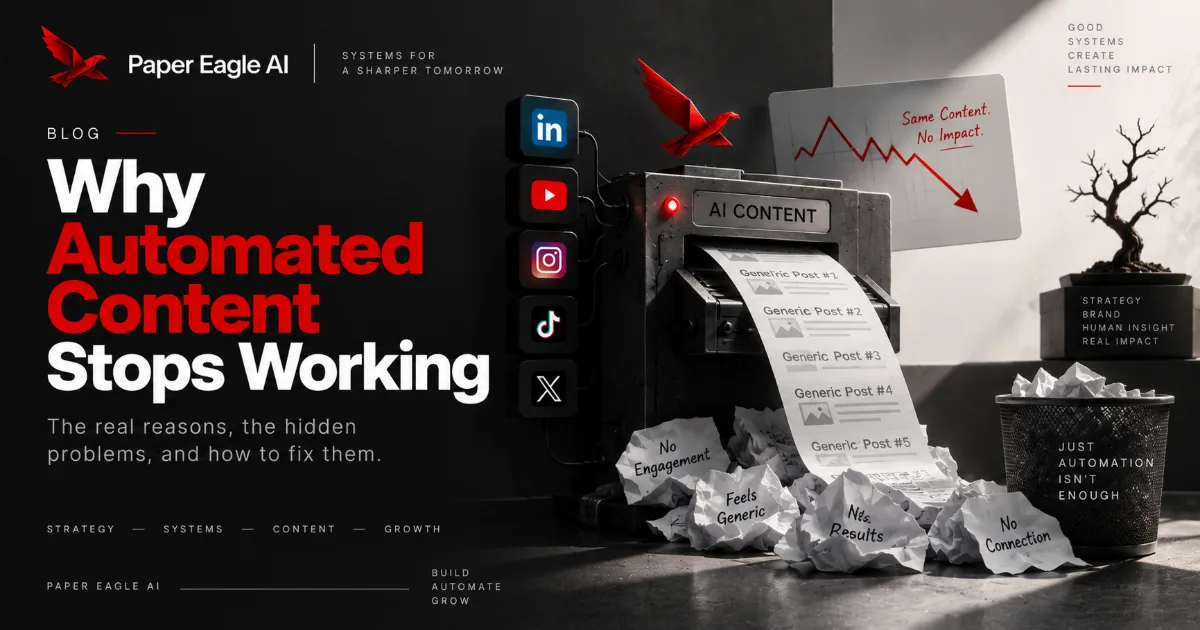
Why Automated Content Stops Working
It worked in month one and nobody can say when it stopped. Four things decay underneath a content workflow, none of them the software — and the fix is almost never a rebuild.
Read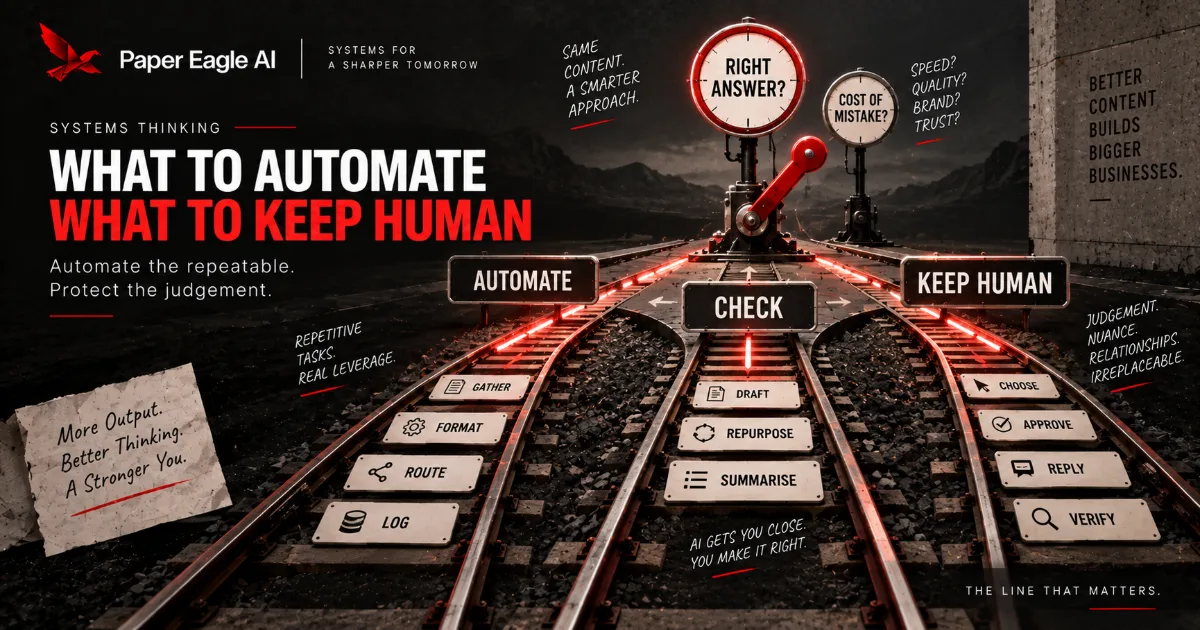
What to Automate in Your Content, and What Not To
"How much can we automate?" is the wrong question. Four questions place any step on one side of the line — and the four that should never cross it are shorter, and more important, than most people expect.
ReadWhen you would rather have it built.
Every guide here describes work we do for clients. If you would rather not build it yourself, these pages describe what we build and how the engagement runs, and our content automation pricing sets out what each setup costs. We build it in Claude Code, for the writing and the checks, and n8n, for the schedules, the approvals and the publishing.
Talk it through with us.
If something here describes a problem you have, a short conversation is the quickest way to find out whether a system would fix it, and what it would take to build. No pitch: if we can't help, we'll say so.
Start a Conversation