Content operating system guides.
A Content Operating System is the structure underneath a business's content: its knowledge, its voice, the workflows that turn both into posts, and the review and measurement that keep the output honest. These guides explain each part and how the parts fit together.
The system, not the tools.
Start with what a Content Operating System is if the term is new. Two comparisons follow from it: a Content OS against a content agency, and whether ChatGPT alone is enough. Both come down to the same question — who holds the thinking, and what is left when the arrangement ends.
The rest are about running one. The Content OS a specialist builds lays out the architecture for different kinds of business. A content audit tells you what you already have before you build anything. Content strategy for founder-led businesses covers what to publish when the founder's time is the constraint, and how to measure a content system separates the signals that mean something from a busy dashboard.
Two pages sit underneath a Content OS. The business knowledge guides cover the knowledge it is built on, from pillars and clusters to process documentation, and the systems thinking guides hold the reasoning behind it. For the comparison readers ask about most, the ChatGPT content guides cover what a general AI tool does well and the gaps it leaves.
Where Medium Sits in a Content Operating System
Medium is a second home. The website keeps the original, the system adapts and checks the story, and a person imports it.
Read
TikTok Speed Without Skipping the Review: A Content Operating System for TikTok
TikTok rewards speed. The system approves facts and answers once, so each clip is checked in minutes, and a person still posts.
Read
Which Website SEO Chores a Content Operating System Can Run Without You
Website SEO is mostly upkeep. The system runs the checks on a schedule, inside Search Console's limits, and a person decides what to refresh.
Read
A Blog Content Operating System Should Slow You Down Before Google Does
The blog is where every channel points back to, so its content system publishes fewer, checked posts, at permanent addresses the business owns.
Read
Why a Content Operating System for Instagram Starts With the Asset Library
On Instagram the system starts from the pictures: an asset library of approved, rights-checked visuals and templates, then the caption.
Read
A Content Operating System for YouTube Is Built Around the Part You Cannot Automate
On YouTube the recording session is the fixed point: the system prepares briefs before it and turns the transcript into metadata and knowledge after.
Read
One Company Voice From Five Contributors: A Content Operating System for a LinkedIn Page
Several people can feed a company page without it sounding like several people: a role map, a contributor brief, one approver and a log.
Read
What a Content Operating System Runs on a LinkedIn Profile, and What the Founder Keeps
On a LinkedIn profile the system drafts and publishes from the founder's own thinking, and the founder keeps every comment, like and reply.
Read
What a Content Operating System Can Still Do on X (Formerly Twitter)
On X the system schedules original posts and a person keeps the replies, because X forbids keyword auto-replies and automated likes.
Read
A Content Operating System for Substack Has to Pass Substack's Purpose Test
On Substack the system prepares the issue and a person sends it, because Substack has no posting API and forbids a newsletter that exists for SEO.
Read
Can a Content Operating System Run Reddit Without Breaking Its Rules?
On Reddit the system mostly listens. It finds the questions people ask, drafts answers from what the business knows, and a person who belongs to the community posts them.
ReadHow to Document a Content Automation System So Someone Else Can Run It
A content automation system is documented when someone else can run it. The five documents it needs, how to write the runbook and decision log, and the handover test that proves they work.
Read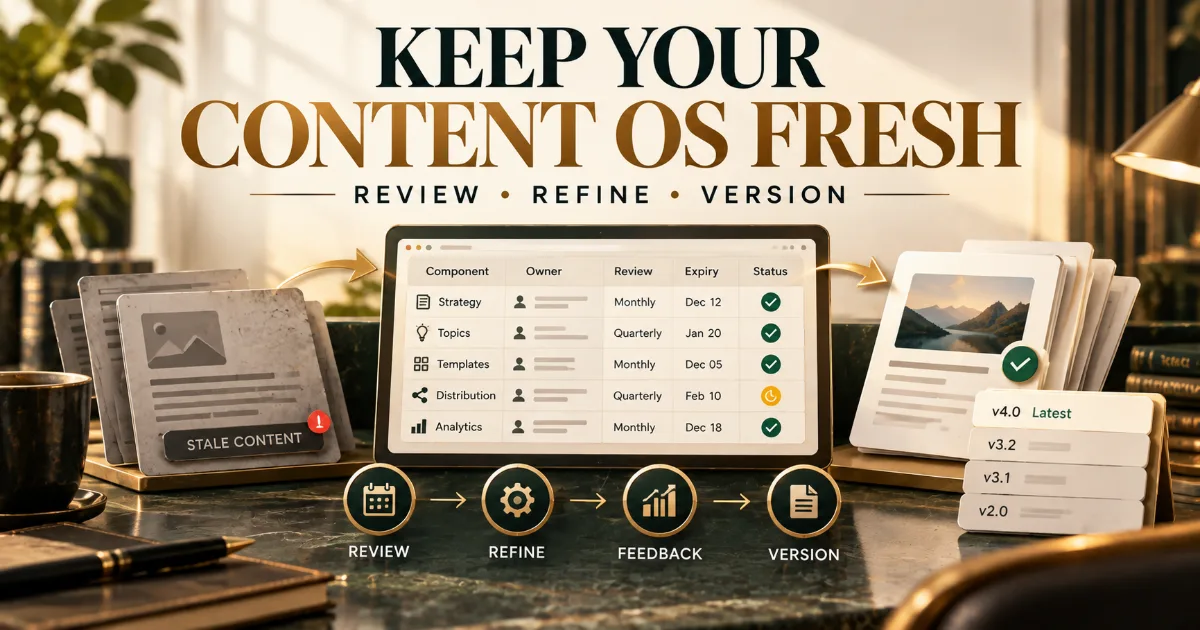
How to Keep a Content Operating System From Going Stale
A Content OS goes stale one part at a time. The register, review cadence, triggers, feedback routes and versioning that keep every part current after handover.
Read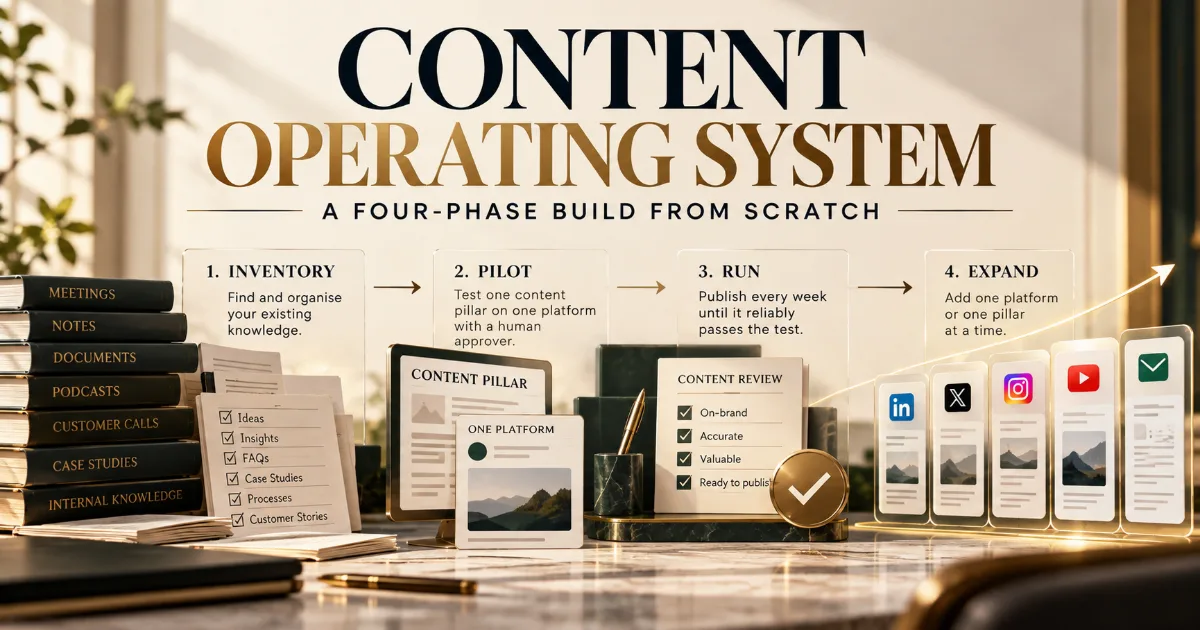
How to Build a Content Operating System From Scratch
Most Content OS builds stall because everything is designed before anything publishes. Here is the build as a phased rollout, with the test each phase must pass.
Read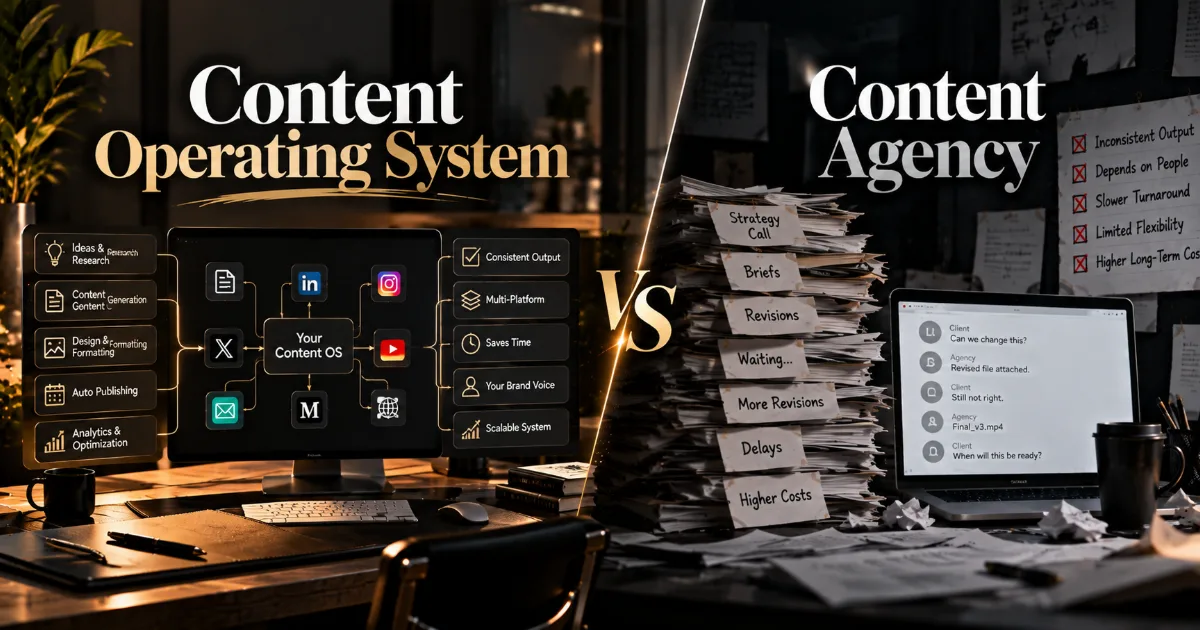
Content Operating System vs Content Agency: Which Builds a Lasting Asset?
An agency leaves you the posts; a Content OS also leaves the knowledge, voice and workflows that made them. Five content assets, which model builds each, and how each one decays.
Read
Content Automation Specialist for Content Operating Systems
What a content automation specialist builds when the deliverable is a Content Operating System: the ten stages, and what it looks like for a law firm, a med spa, a plumber, a startup, a product business or an agency.
Read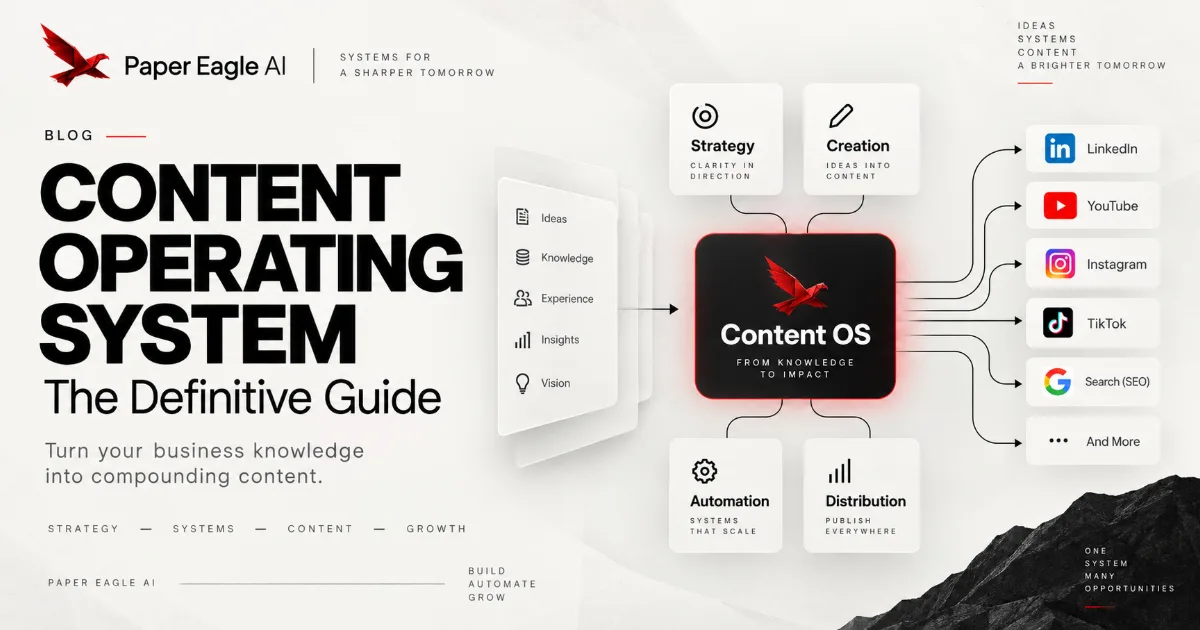
What Is a Content Operating System? The Definitive Guide
A Content OS turns what your business knows into content it publishes consistently — architecture, strategy, workflows, distribution, measurement. What one is, and how to build it.
Read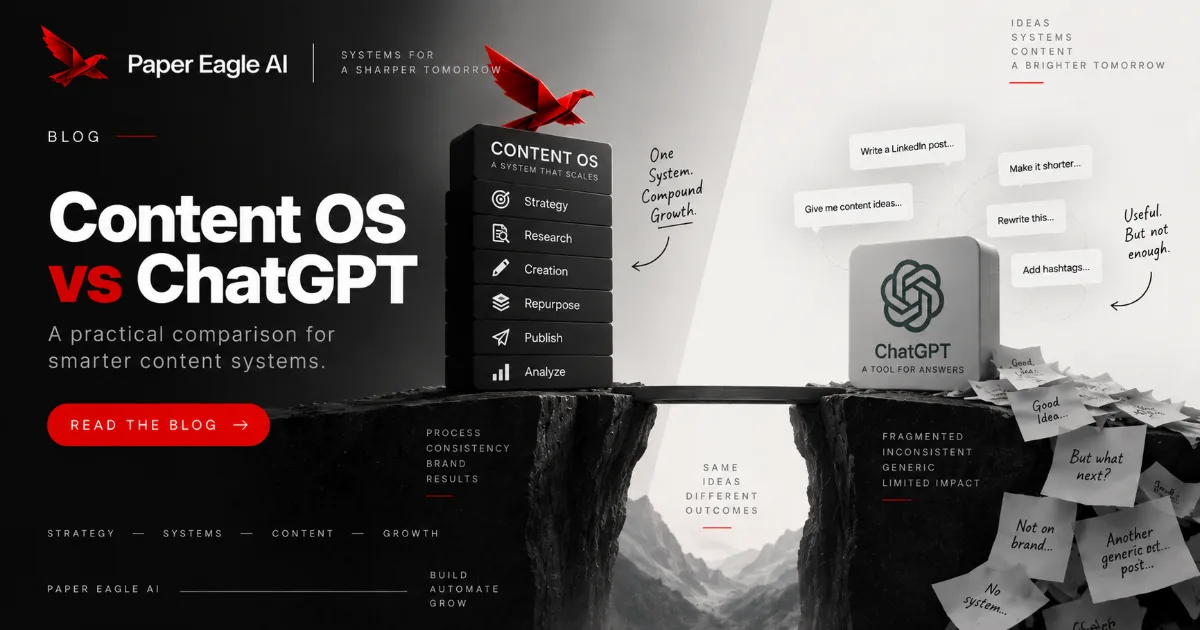
Can You Just Use ChatGPT for Content?
You have the same models everyone else has, so the model can't be the advantage. A fair look at what a general AI tool does well, the five things it leaves untouched, and when using it on its own is genuinely the right call.
Read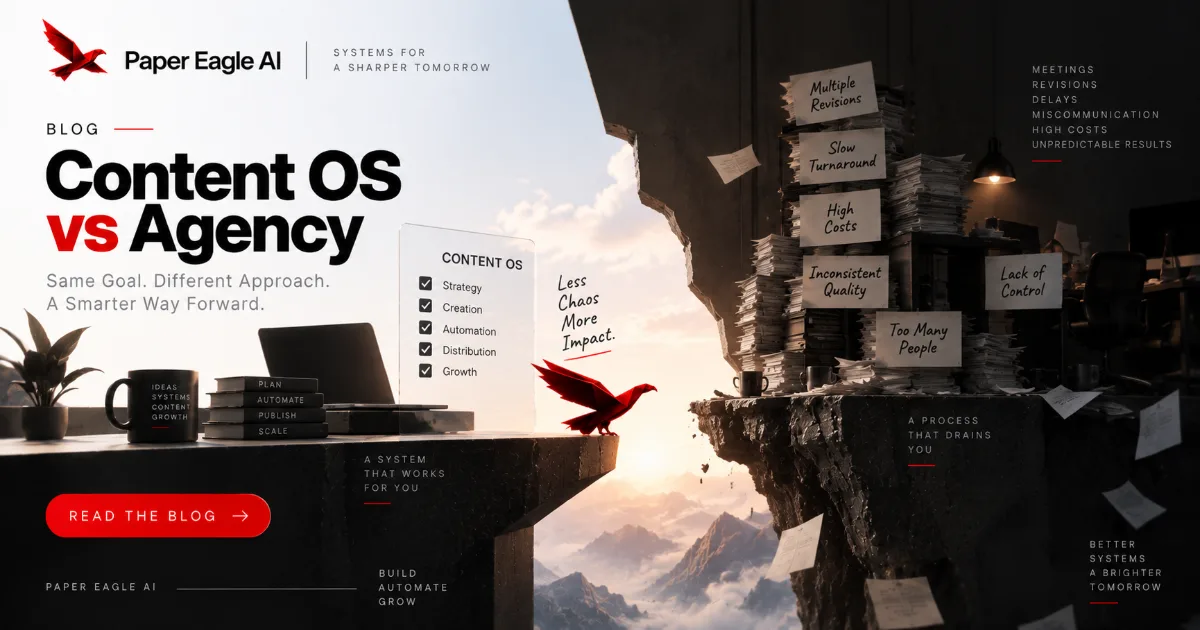
Content OS vs. Content Agency: What Is the Difference?
Most businesses think content comes down to two choices: hire an agency or build an in-house team. There's a third — build a system you own. Here's how a Content OS differs from an agency, and when it's the better call.
Read
How to Conduct a Content Audit: Step-by-Step Guide
Before you build a Content OS, you need to know what you're working with. A content audit shows you what you already have, how it's performing, and where the gaps are. This guide walks through the whole process, step by step.
Read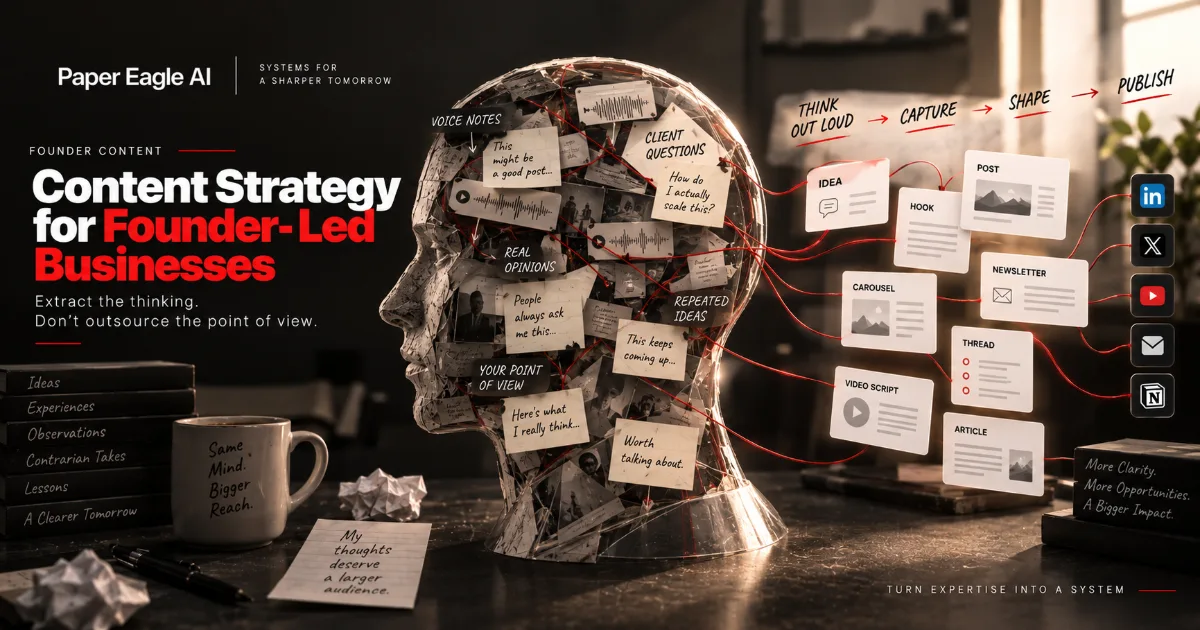
Content Strategy for Founder-Led Businesses
Founder-led businesses have a real edge: hard-won expertise a competitor can't fake. The hard part is turning that expertise into content that brings in clients. Here's a strategy built for founders, not marketing departments.
Read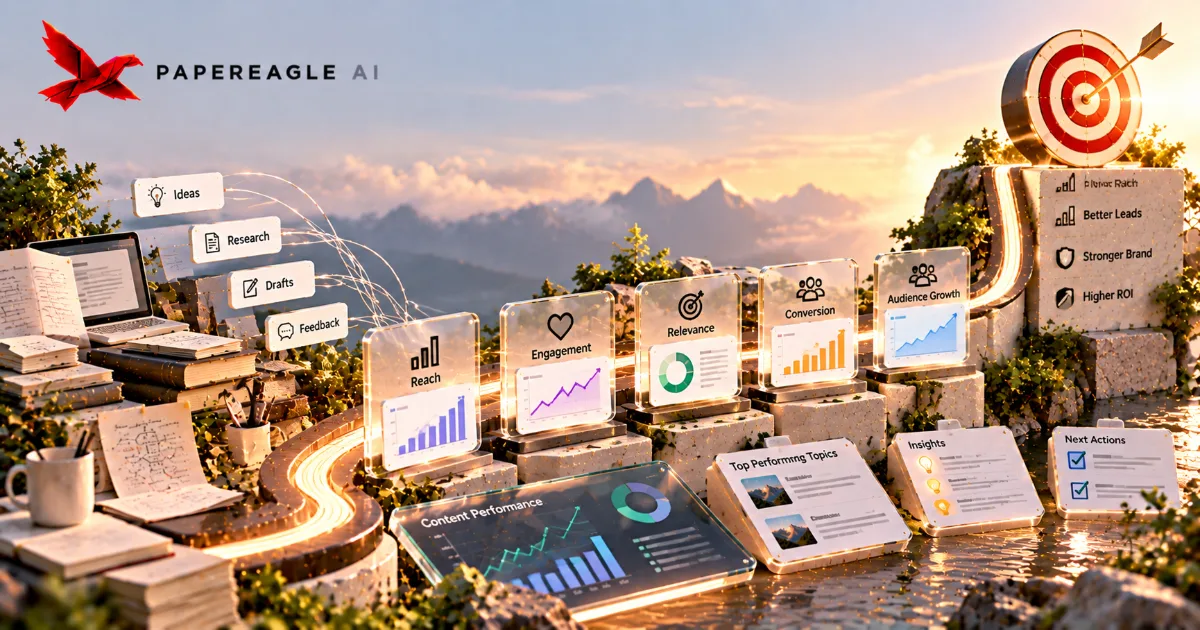
How to Measure Whether Your Content System Works
Posts published and a green dashboard answer a question nobody asked. The four signals that mean something, when each one becomes readable, and how to tell a real result from noise.
ReadThe whole system, built for you.
A Content OS is what we build for clients, from the knowledge base to the handoff. These pages describe the deliverable, and custom Content OS pricing sets out where its price starts. We build the Content OS in Claude Code, which reads the knowledge base as files, and n8n, which runs its workflows and keeps the record.
Talk it through with us.
If something here describes a problem you have, a short conversation is the quickest way to find out whether a system would fix it, and what it would take to build. No pitch: if we can't help, we'll say so.
Start a Conversation