Business knowledge guides.
Every useful piece of content starts as something a business already knows — how it decides, what it has learned, what its clients keep asking. These guides cover how to capture that knowledge and organise it, so the content built on top of it compounds instead of starting from zero.
Knowledge first, then content.
Most content tools start with generation. We start with the knowledge, because content written from a blank prompt sounds like everyone else's. The knowledge architecture framework is the structure, how to organize business knowledge is the practical version, and knowledge pillars are how you decide what the business has earned the right to talk about.
Content clusters are where that knowledge becomes a publishing plan. Process documentation and a decision framework capture the operating rules a system needs before it can write in your voice, and why templates fail explains why borrowed structure never does.

How to Organize Your Business Knowledge So It Compounds
Most business knowledge is scattered — stuck in people's heads, buried in old docs, lost in Slack threads. Organize it deliberately and it starts to compound, each piece worth more as it connects to the rest. Here's how to build a knowledge architecture that grows in value over time.
Read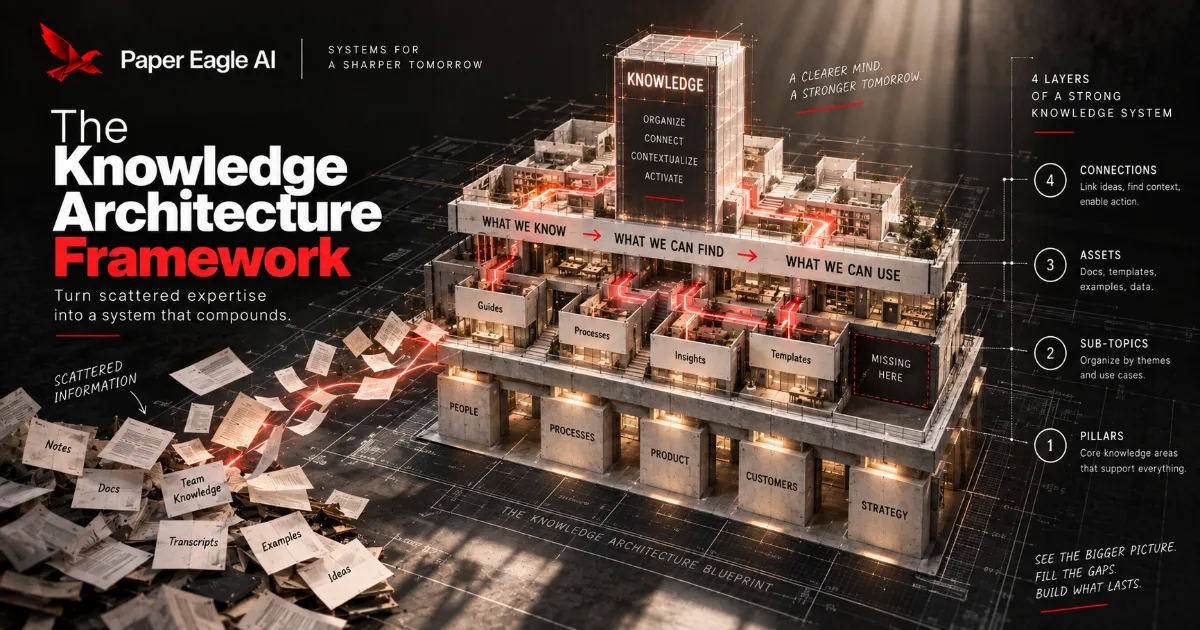
The Knowledge Architecture Framework
Before you can build a Content OS, you need knowledge architecture underneath it. This framework helps you audit, organize, and maintain what your business knows — so it becomes an asset that grows instead of a mess that spreads.
Read
Why Your Business Needs a Decision Framework
If every decision runs through you, you're the bottleneck. A decision framework lets your team make good calls without waiting on you every time. Here's how to build one.
Read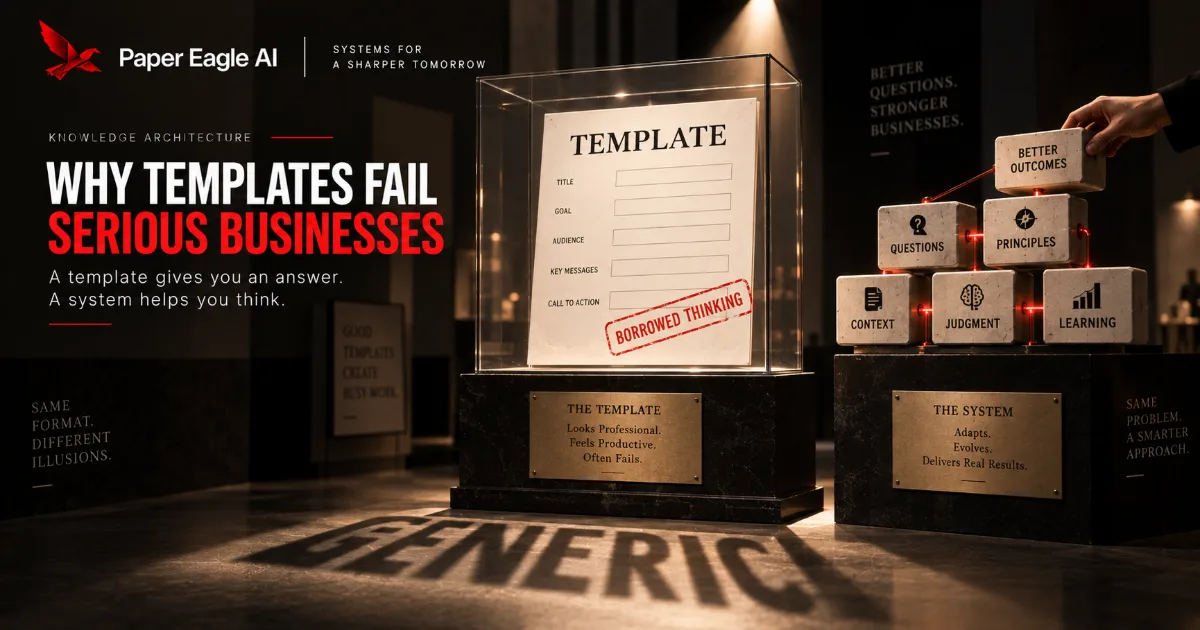
Why Templates Fail for Serious Businesses
Templates promise speed and convenience. What they deliver is generic. For a business that takes its work seriously, a template is a trap. Here's why — and what to build instead.
Read
How to Identify Your Knowledge Pillars
The first step in knowledge architecture is naming what you actually know. This method helps you find, group, and rank your expertise into a handful of clear pillars — the foundation everything else in your Content OS sits on.
Read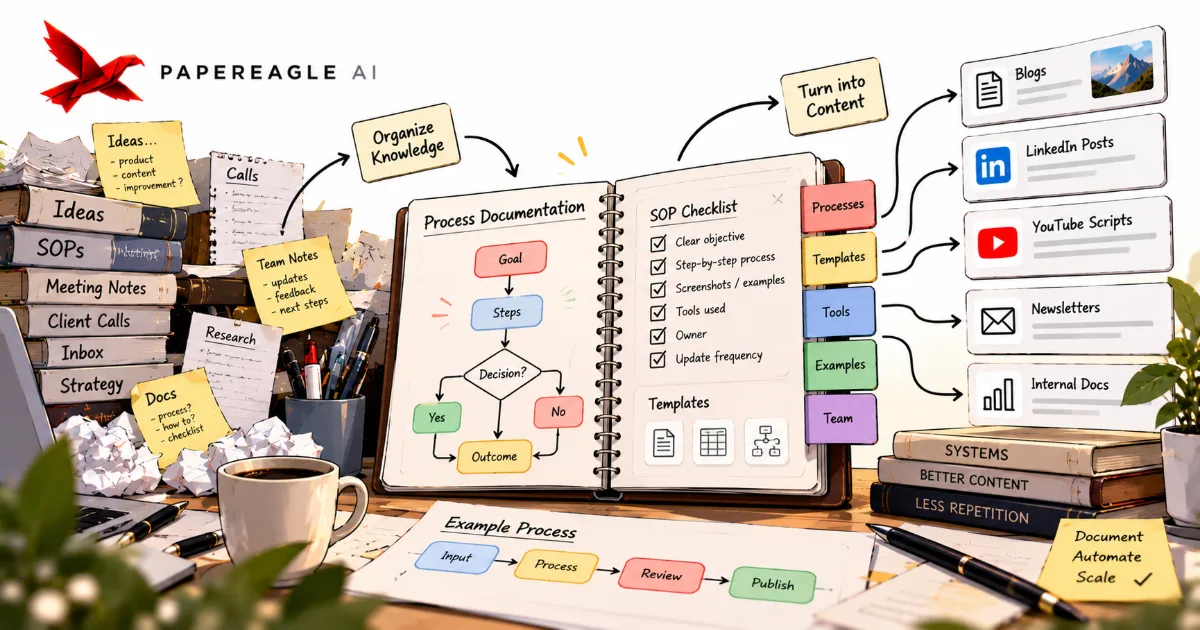
Process Documentation: A Practical Guide
Why process documentation matters, what's worth writing down, and how to make docs your team will actually use. Includes a template, examples, and a way to keep them current. Turn what's in people's heads into something the whole team can rely on.
Read
Content Clusters: The Bridge Between Knowledge and Content
How to organize your knowledge into clusters that serve your audience, answer real search intent, and build topical authority. Includes examples, a cluster planning template, and a maintenance workflow.
ReadWhere the knowledge goes next.
The knowledge base is the first layer of every content system we build. These pages show what sits on top of it.
Talk it through with us.
If something here describes a problem you have, a short conversation is the quickest way to find out whether a system would fix it, and what it would take to build. No pitch: if we can't help, we'll say so.
Start a Conversation